
Rupee Hits Historic Low of 96.14 Against US Dollar, Here’s How It May Impact Your Daily Expenses

The Indian Rupee touched a historic low of 96.14 against the U.S. Dollar on Friday, raising concerns among citizens and financial markets alike. The sharp fall in the Rupee came as the global dollar index strengthened to 99.28, while Brent crude oil prices surged to $109.20 per barrel due to shipping disruptions in the Strait of Hormuz.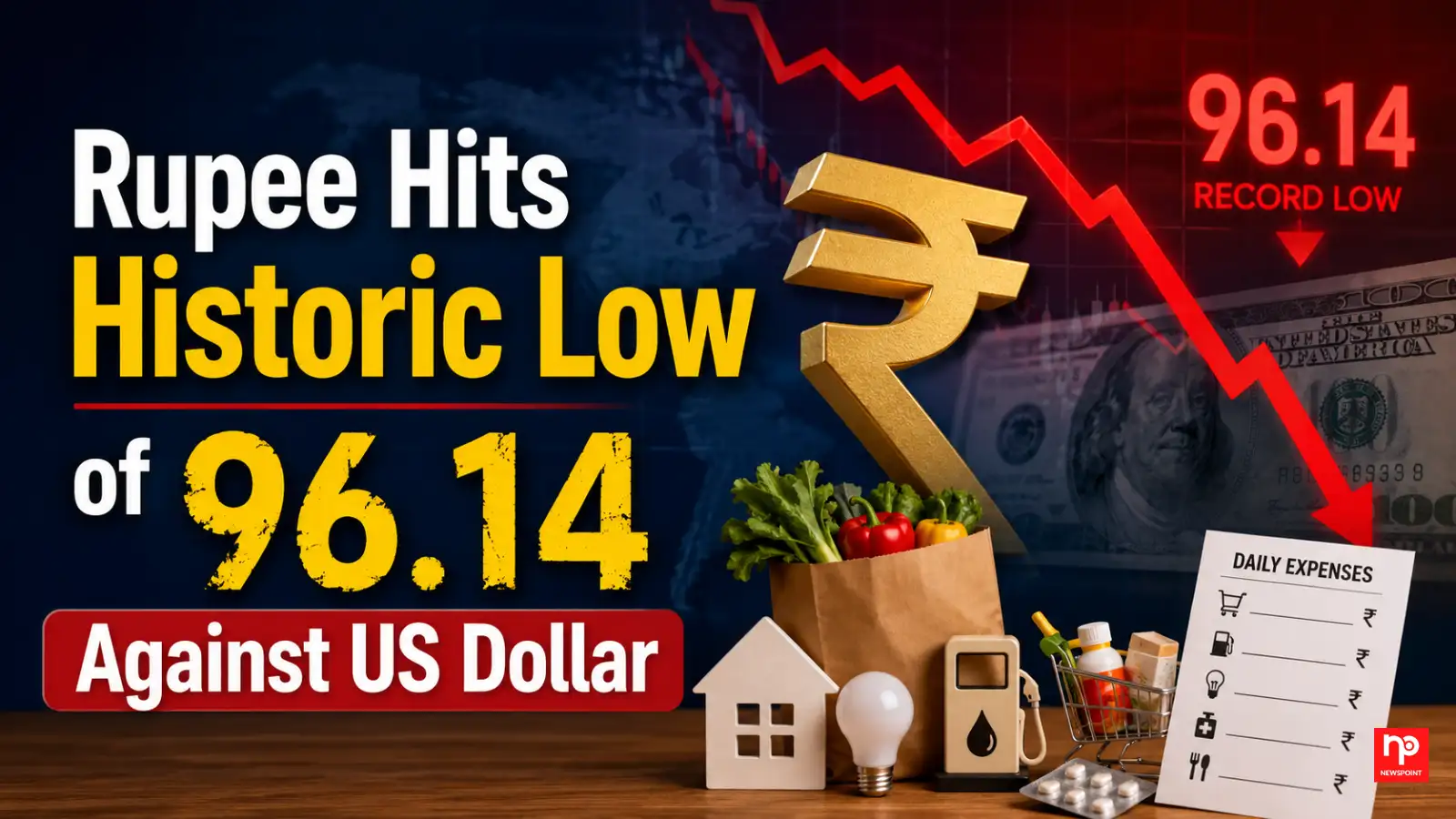
Whenever the Rupee weakens against the Dollar, people naturally begin to worry about inflation, rising prices, and the impact on household expenses. However, financial experts believe there is no reason to panic immediately. Instead, they suggest preparing for gradual changes that could affect everyday spending and long-term financial planning.
The ongoing disruptions in the Strait of Hormuz, one of the world’s busiest oil shipping routes, have added pressure on global energy markets. As crude oil becomes more expensive internationally, India ends up spending more dollars on imports, which weakens the Rupee further.
"We do not expect sudden hikes in TCS rates or sharp, restrictive cuts to the Liberalised Remittance Scheme (LRS) limits," said Abhishek Bhilwaria, an AMFI-registered Mutual Fund Distributor (MFD).
He also pointed out that the government recently simplified overseas spending rules by introducing a flat 2% TCS on foreign tour packages. According to him, policymakers are more likely to use targeted import duties and compliance checks rather than making sudden tax changes.
"Your regular transactions are secure," Bhilwaria added.
As fuel import costs rise, transportation and logistics become more expensive. This eventually affects the prices of food items, edible oils, packaged goods, and other essentials.
"The strategy of using gold import duties to save forex fails to protect the common man once Brent crude stays above $110 to $115 per barrel," Bhilwaria explained.
"A weak Rupee multiplying against high global oil prices inflates the national import bill. This energy cost spike quickly hits domestic transport and logistics. That is where the average citizen feels it, as a gradual price rise in daily food items, edible oils, and essential packaged goods."
Vinay Goel, Chairman of Balaji Wealth Group, also believes crude oil remains the biggest trigger for inflation in India.
“The deeper problem is that crude oil, not gold, is India’s true inflation transmission mechanism. Its cost travels downstream through trucking, cold chains, and last-mile distribution, embedding itself into food prices before policy can respond.”
According to Bhilwaria, "A 5.5% slide in the Rupee creates a practical purchasing power loss of roughly ₹2,500 to ₹3,500 for a middle-class family working with a fixed ₹50,000 monthly budget."
This means families may gradually notice higher grocery bills, rising transport costs, and more expensive daily necessities.
Bhilwaria suggested that families can reduce fuel-related expenses by using public transport or carpooling whenever possible. He also advised consumers to choose local and seasonal products instead of imported packaged goods.
“Households can counter fuel inflation simply by using public transport or carpooling. Consumers can swap costly imported packaged goods for local, seasonal produce. It is also smart to move discretionary savings into short-term fixed deposits or digital gold ETFs to beat inflation without paying heavy physical gold making charges.”
"Indian families are adjusting to the currency shock by picking more cost-effective international destinations instead of lowering their academic standards," Bhilwaria stated.
According to experts, countries like Germany and the UAE are becoming increasingly popular among Indian students because they offer affordable education and lower currency risk.
"Germany has become a top alternative because its public university system is tuition-free. This reduces total study costs to a fraction of traditional Western programs. Similarly, the UAE is drawing a massive number of Indian students because it hosts major global branch campuses. This alternative cuts down currency exchange risks and keeps travel and living expenses highly manageable."
Goel also shared a similar view.
“Rupee depreciation is acting as “hidden inflation for Indian students,” where even a flat university fee in USD translates to significantly more rupees.”
However, he believes students now have more affordable global education choices.
“Germany’s near-zero-tuition public universities and France’s accessible English programs are emerging as serious alternatives, with the UAE gaining appeal due to geographical proximity and rupee-relative affordability. We are not seeing a downgrade, we are seeing a rational repricing of the ROI on education. Germany and the UAE will be the biggest beneficiaries,” states Goel.
The record-low Rupee is a reminder for families to review their monthly budgets, control unnecessary expenses, plan investments wisely, and prepare for possible inflation in the coming months.
For now, India’s banking system and regular financial transactions remain stable. However, with global oil prices still volatile, the pressure on household expenses could continue if the Rupee remains weak for a longer period.
Whenever the Rupee weakens against the Dollar, people naturally begin to worry about inflation, rising prices, and the impact on household expenses. However, financial experts believe there is no reason to panic immediately. Instead, they suggest preparing for gradual changes that could affect everyday spending and long-term financial planning.
Why Is the Indian Rupee Falling?
The recent decline in the Indian Rupee is mainly linked to rising global crude oil prices and a stronger U.S. Dollar. Since India imports more than 85 percent of its crude oil needs, any increase in oil prices directly affects the country’s import bill.The ongoing disruptions in the Strait of Hormuz, one of the world’s busiest oil shipping routes, have added pressure on global energy markets. As crude oil becomes more expensive internationally, India ends up spending more dollars on imports, which weakens the Rupee further.
Will the Government Restrict Foreign Spending?
Many people fear that a weak Rupee could lead to restrictions on foreign transactions, overseas travel spending, or international fund transfers. However, market experts say there is no sign of panic-driven government action at this stage."We do not expect sudden hikes in TCS rates or sharp, restrictive cuts to the Liberalised Remittance Scheme (LRS) limits," said Abhishek Bhilwaria, an AMFI-registered Mutual Fund Distributor (MFD).
He also pointed out that the government recently simplified overseas spending rules by introducing a flat 2% TCS on foreign tour packages. According to him, policymakers are more likely to use targeted import duties and compliance checks rather than making sudden tax changes.
"Your regular transactions are secure," Bhilwaria added.
How Rising Oil Prices Affect Everyday Life
While there may not be immediate regulatory changes, the impact of a weak Rupee and expensive crude oil will slowly be felt in everyday expenses.As fuel import costs rise, transportation and logistics become more expensive. This eventually affects the prices of food items, edible oils, packaged goods, and other essentials.
"The strategy of using gold import duties to save forex fails to protect the common man once Brent crude stays above $110 to $115 per barrel," Bhilwaria explained.
"A weak Rupee multiplying against high global oil prices inflates the national import bill. This energy cost spike quickly hits domestic transport and logistics. That is where the average citizen feels it, as a gradual price rise in daily food items, edible oils, and essential packaged goods."
Vinay Goel, Chairman of Balaji Wealth Group, also believes crude oil remains the biggest trigger for inflation in India.
“The deeper problem is that crude oil, not gold, is India’s true inflation transmission mechanism. Its cost travels downstream through trucking, cold chains, and last-mile distribution, embedding itself into food prices before policy can respond.”
How Much Could It Affect a Middle-Class Family?
For families living on a fixed monthly income, the falling Rupee could quietly reduce purchasing power over time.According to Bhilwaria, "A 5.5% slide in the Rupee creates a practical purchasing power loss of roughly ₹2,500 to ₹3,500 for a middle-class family working with a fixed ₹50,000 monthly budget."
This means families may gradually notice higher grocery bills, rising transport costs, and more expensive daily necessities.
Smart Ways to Manage Rising Costs
Financial experts recommend practical lifestyle changes instead of worrying excessively about the falling Rupee.Bhilwaria suggested that families can reduce fuel-related expenses by using public transport or carpooling whenever possible. He also advised consumers to choose local and seasonal products instead of imported packaged goods.
“Households can counter fuel inflation simply by using public transport or carpooling. Consumers can swap costly imported packaged goods for local, seasonal produce. It is also smart to move discretionary savings into short-term fixed deposits or digital gold ETFs to beat inflation without paying heavy physical gold making charges.”
Foreign Education May Become More Expensive
The falling Rupee is also affecting families planning to send their children abroad for higher education. As the Dollar strengthens, tuition fees and living costs in countries like the United States and the United Kingdom become significantly more expensive in Rupee terms."Indian families are adjusting to the currency shock by picking more cost-effective international destinations instead of lowering their academic standards," Bhilwaria stated.
According to experts, countries like Germany and the UAE are becoming increasingly popular among Indian students because they offer affordable education and lower currency risk.
"Germany has become a top alternative because its public university system is tuition-free. This reduces total study costs to a fraction of traditional Western programs. Similarly, the UAE is drawing a massive number of Indian students because it hosts major global branch campuses. This alternative cuts down currency exchange risks and keeps travel and living expenses highly manageable."
Goel also shared a similar view.
“Rupee depreciation is acting as “hidden inflation for Indian students,” where even a flat university fee in USD translates to significantly more rupees.”
However, he believes students now have more affordable global education choices.
“Germany’s near-zero-tuition public universities and France’s accessible English programs are emerging as serious alternatives, with the UAE gaining appeal due to geographical proximity and rupee-relative affordability. We are not seeing a downgrade, we are seeing a rational repricing of the ROI on education. Germany and the UAE will be the biggest beneficiaries,” states Goel.
What Should Citizens Do Now?
Experts believe the current situation should not create panic, but it should encourage smarter financial planning.The record-low Rupee is a reminder for families to review their monthly budgets, control unnecessary expenses, plan investments wisely, and prepare for possible inflation in the coming months.
For now, India’s banking system and regular financial transactions remain stable. However, with global oil prices still volatile, the pressure on household expenses could continue if the Rupee remains weak for a longer period.
Next Story