
SIP vs PPF: Which Investment Grows Your Rs 1 Lakh Per Year Faster Over 15 Years?

If you're planning to invest long-term and grow your wealth steadily, two options often come to mind: the Systematic Investment Plan (SIP) and the Public Provident Fund (PPF). Both offer consistent saving habits and have gained popularity among Indian investors. But which one can generate a larger corpus in 15 years with an annual investment of Rs 1 lakh? According to experts, while both have unique advantages, the outcome in terms of wealth creation varies significantly. Here's a detailed comparison based on returns, risk, flexibility, and maturity value.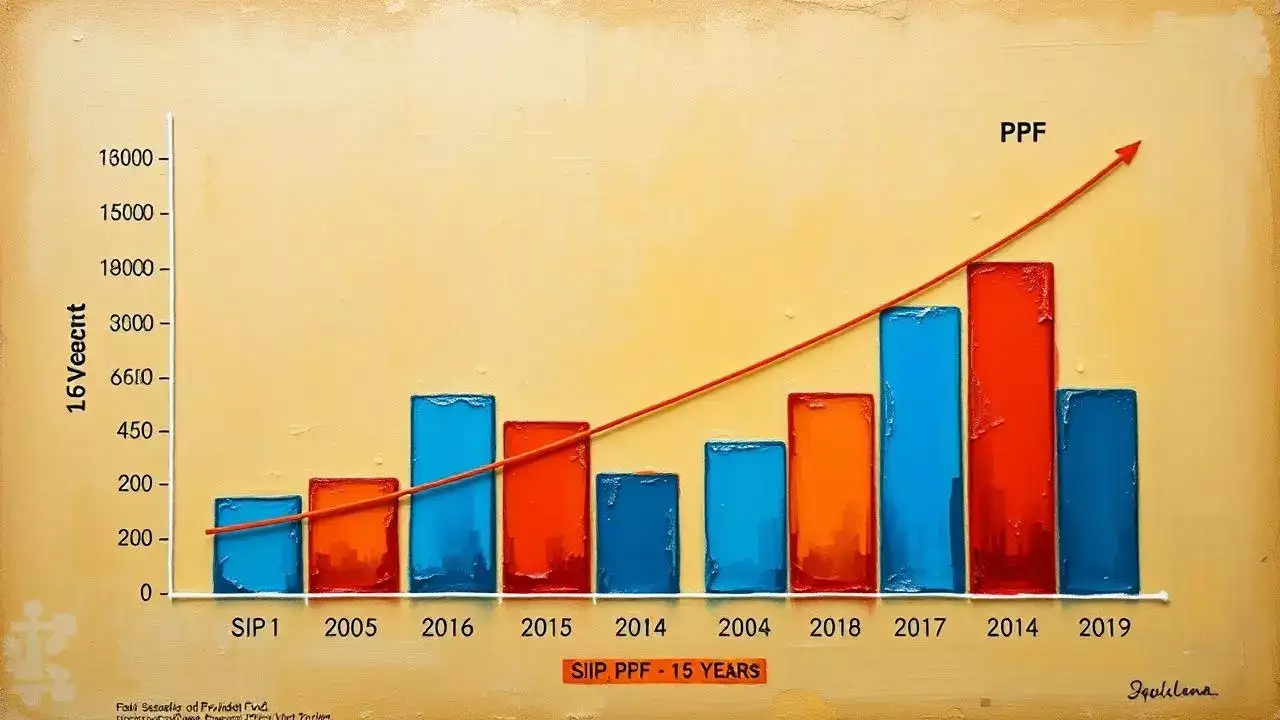
While SIP may yield a higher corpus than PPF over a 15-year horizon with the same annual investment, the final decision should align with your comfort level, financial objectives, and investment horizon. Diversifying across both options can help mitigate risk while optimising returns.
Understanding SIP: A Market-Linked Wealth Builder
A Systematic Investment Plan allows individuals to invest a fixed amount in mutual fund schemes regularly, commonly on a monthly basis. SIPs are popular for their flexibility, lower entry barrier, and compounding effect. Since they are market-linked, returns vary depending on market performance, but long-term investments generally tend to yield attractive gains.Key Features of SIP
- Flexible investment amount and duration
- Potentially higher returns due to equity exposure
- Option to stop or pause the investment
- Diversification through mutual funds
PPF: A Government-Backed, Low-Risk Option
The Public Provident Fund (PPF) is one of the most trusted government-backed savings schemes in India. It offers guaranteed, tax-free returns and is known for its safety and stability. The 15-year lock-in period encourages disciplined saving and long-term financial planning.Key Features of PPF
- Minimum investment: Rs 500; Maximum: Rs 1.5 lakh per year
- 15-year lock-in period with partial withdrawal facility after the 7th year
- Interest rate fixed by the government (currently 7.1%)
- Tax benefits under Section 80C of the Income Tax Act
You may also like
- High number of SIR notices result of rule change after Bihar experience
- Indore BRTS Commuters Flag Longer Travel Times And Ticketing Irregularities
- World Alzheimer's Day Highlights Need For Timely Dementia Diagnosis In Bhopal
- SIR assault on Constitution, says Congress
- BJP: Rahul should consider becoming stand-up comedian
Interest Rate Comparison: SIP vs PPF
While PPF currently offers an interest rate of 7.1% per annum, SIP returns are not fixed. For our comparative analysis, we consider a conservative annualised return of 12% for SIPs based on past market performance.Corpus Estimation Over 15 Years with Rs 1 Lakh Annually
Let’s consider you invest Rs 1 lakh per annum into each option.SIP Projections
- Monthly Investment: Rs 8,333
- Total Investment: Rs 14,99,940 over 15 years
- Assumed Annual Return: 12%
- Estimated Corpus: Rs 39,65,936
PPF Projections
- Annual Investment: Rs 1,00,000
- Total Investment: Rs 15,00,000 over 15 years
- Fixed Annual Return: 7.1%
- Estimated Corpus: Rs 27,12,139
Which One Should You Choose?
According to investment advisors, the choice between SIP and PPF depends on your financial goals and risk profile. SIPs are better suited for those seeking higher returns and can tolerate short-term market fluctuations. PPF, on the other hand, ensures capital protection and stable earnings, ideal for conservative investors.Combining Both for a Balanced Portfolio
Many experts recommend a blended approach, investing in both SIP and PPF to strike a balance between safety and growth. This way, investors can enjoy the security of fixed returns while tapping into the growth potential of equity markets.While SIP may yield a higher corpus than PPF over a 15-year horizon with the same annual investment, the final decision should align with your comfort level, financial objectives, and investment horizon. Diversifying across both options can help mitigate risk while optimising returns.






Loving Newspoint? Download the app now
