
Traditional Indian Foods Made for India’s Harshest Weather Conditions

India’s traditional food culture was shaped by far more than taste. Long before refrigerators, packaged foods and modern food-delivery networks, communities had to make meals that worked with the climate around them. In Rajasthan, where summer temperatures can become brutal, people developed cooling drinks and foods that could be stored without sophisticated refrigeration. In the Himalayan regions, meals became warming, filling and energy-dense. In coastal areas, preservation techniques helped communities cope with humidity and seasonal shortages. These foods were practical responses to difficult environments, passed from one generation to another. Many remain part of everyday cooking today, offering an intriguing lesson in how food can become a form of climate adaptation.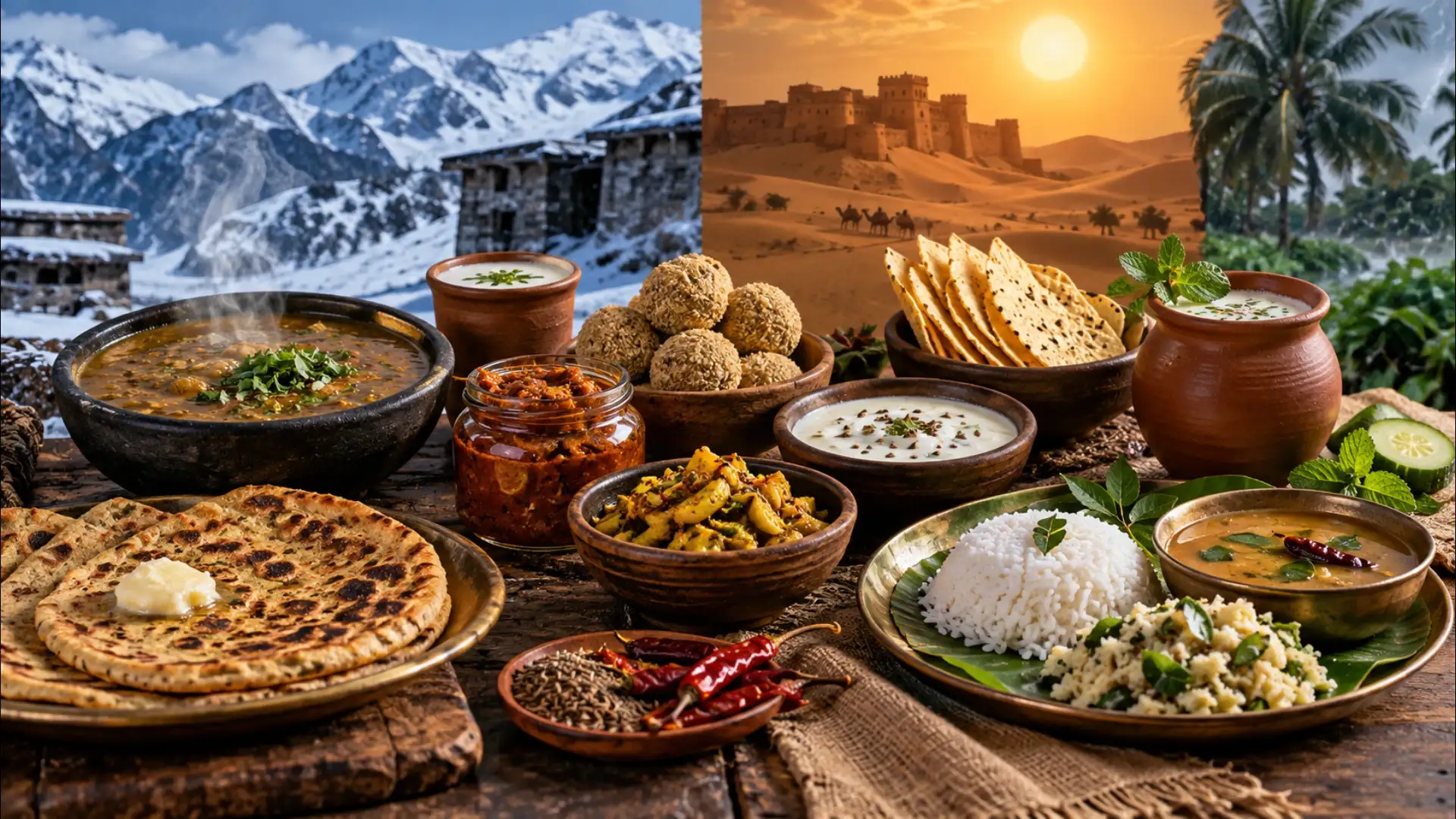
Commonly made from roasted gram, sattu can be mixed with water, salt, spices and sometimes lemon to create a simple drink. It is particularly associated with Bihar, Jharkhand, Uttar Pradesh and parts of eastern India.
Roasting the grain helps improve its shelf life, while the powdered form is easy to transport and prepare. A person working outdoors can mix it with water without needing a kitchen or elaborate cooking process.
Its appeal in hot weather is practical as well as nutritional. Sattu provides protein and carbohydrates, while the drink supplies fluids.
For agricultural workers and labourers, this combination historically made it a convenient summer food.
In the desert regions, water can be scarce and fresh vegetables were historically difficult to obtain throughout the year. This encouraged the development of foods that could survive storage.
Bajra, or pearl millet, became an important staple because it grows in relatively dry conditions. Bajra rotis are filling and energy-rich, making them useful in a region where agriculture can be challenging.
Ker Sangri is another distinctive example. Made from desert beans and berries, the ingredients can be dried and stored for extended periods before being cooked.
This is where traditional cuisine becomes particularly interesting. Preservation was not simply a culinary preference. It was a survival strategy.
Communities living in cold environments traditionally relied on foods that provided substantial energy and warmth. Thukpa, a noodle soup associated with Himalayan and Tibetan culinary traditions, is a good example of a meal suited to cold conditions.
Hot broth, noodles and vegetables create a filling meal that can be adapted according to available ingredients.
In Ladakh, barley has historically been an important crop despite the harsh environment. Tsampa, made from roasted barley flour, can be prepared relatively simply and has long been associated with high-altitude communities.
Such foods make sense in places where growing seasons are short and energy requirements can be high.
Fermentation is particularly important. Foods such as bamboo shoot preparations, fermented soybean products and regional pickles demonstrate how controlled microbial activity could extend the usefulness of seasonal ingredients.
In the humid north-east, fermentation became deeply integrated into local food cultures.
These techniques also produced distinctive flavours while helping communities preserve foods when fresh produce was unavailable.
Mangoes, lemons, chillies and other seasonal ingredients can be preserved using combinations of salt, oil, spices and acidity. Properly prepared pickles can remain usable long after the original fruit has disappeared from markets.
Historically, this mattered because food availability changed with the seasons.
A jar of pickle could add flavour to a simple meal of rice, roti or millet even when fresh vegetables were limited.
The technique therefore helped reduce dependence on constantly available fresh produce.
Coconut, rice, seafood and tropical fruits became central to many coastal cuisines because they suited the local environment. At the same time, drying, salting and smoking helped preserve ingredients in warm and humid conditions.
In several coastal communities, dried fish could be stored for longer periods than fresh fish, providing an important source of food when fishing conditions were poor.
The preservation technique was as important as the ingredient itself.
Millets are increasingly being discussed for their resilience in dry conditions. Fermented foods remain popular, while sattu and regional preservation techniques continue to feature in contemporary diets.
There is also a larger lesson here. Traditional cuisines often evolved through generations of observation. Communities learnt which crops survived drought, which foods stored well and which meals provided energy during demanding work.
That accumulated knowledge can still be useful as India faces rising temperatures, changing rainfall patterns and increasing pressure on agricultural systems.
Sattu : A Practical Food for the North Indian Heat
Sattu is one of the clearest examples of traditional food designed around a demanding climate.Commonly made from roasted gram, sattu can be mixed with water, salt, spices and sometimes lemon to create a simple drink. It is particularly associated with Bihar, Jharkhand, Uttar Pradesh and parts of eastern India.
Roasting the grain helps improve its shelf life, while the powdered form is easy to transport and prepare. A person working outdoors can mix it with water without needing a kitchen or elaborate cooking process.
Its appeal in hot weather is practical as well as nutritional. Sattu provides protein and carbohydrates, while the drink supplies fluids.
For agricultural workers and labourers, this combination historically made it a convenient summer food.
Rajasthan’s Foods Built Around Heat and Scarcity
Rajasthan's cuisine reflects one of India's most demanding environments.In the desert regions, water can be scarce and fresh vegetables were historically difficult to obtain throughout the year. This encouraged the development of foods that could survive storage.
Bajra, or pearl millet, became an important staple because it grows in relatively dry conditions. Bajra rotis are filling and energy-rich, making them useful in a region where agriculture can be challenging.
Ker Sangri is another distinctive example. Made from desert beans and berries, the ingredients can be dried and stored for extended periods before being cooked.
This is where traditional cuisine becomes particularly interesting. Preservation was not simply a culinary preference. It was a survival strategy.
The Himalayan Logic of Warming Food
Travel north into the Himalayan regions and the logic changes.Communities living in cold environments traditionally relied on foods that provided substantial energy and warmth. Thukpa, a noodle soup associated with Himalayan and Tibetan culinary traditions, is a good example of a meal suited to cold conditions.
Hot broth, noodles and vegetables create a filling meal that can be adapted according to available ingredients.
In Ladakh, barley has historically been an important crop despite the harsh environment. Tsampa, made from roasted barley flour, can be prepared relatively simply and has long been associated with high-altitude communities.
Such foods make sense in places where growing seasons are short and energy requirements can be high.
Fermentation as a Climate-Smart Technique
India's traditional cuisines also developed sophisticated ways of preserving food without modern refrigeration.Fermentation is particularly important. Foods such as bamboo shoot preparations, fermented soybean products and regional pickles demonstrate how controlled microbial activity could extend the usefulness of seasonal ingredients.
In the humid north-east, fermentation became deeply integrated into local food cultures.
These techniques also produced distinctive flavours while helping communities preserve foods when fresh produce was unavailable.
Pickles That Outlast the Season
Indian pickles are another remarkable example of climate adaptation.Mangoes, lemons, chillies and other seasonal ingredients can be preserved using combinations of salt, oil, spices and acidity. Properly prepared pickles can remain usable long after the original fruit has disappeared from markets.
Historically, this mattered because food availability changed with the seasons.
A jar of pickle could add flavour to a simple meal of rice, roti or millet even when fresh vegetables were limited.
You may also like
- Ex-Tehelka editor-in-chief Tarun Tejpal surrenders before Goa court in 2013 rape case
- Man tied up, brutally assaulted during robbery in Keralam
- Mumbai Cybercrime Surge: 3,689 Online Fraud Cases Reported In 7 Months, Only 847 Detected
- Mumbai Lake Levels Rise To 97.48% After Heavy Rain In Catchment Areas
- Manoj Jarange Patil Alleges Conspiracy To Kill Him Ahead Of Mumbai March, Says 'Will Not Bow'
The technique therefore helped reduce dependence on constantly available fresh produce.
Coastal India and the Challenge of Humidity
Along India's coastline, food traditions developed under very different conditions.Coconut, rice, seafood and tropical fruits became central to many coastal cuisines because they suited the local environment. At the same time, drying, salting and smoking helped preserve ingredients in warm and humid conditions.
In several coastal communities, dried fish could be stored for longer periods than fresh fish, providing an important source of food when fishing conditions were poor.
The preservation technique was as important as the ingredient itself.
Why These Foods Still Matter
Modern refrigeration and supermarkets have changed India's relationship with food, but traditional climate-conscious dishes have not disappeared.Millets are increasingly being discussed for their resilience in dry conditions. Fermented foods remain popular, while sattu and regional preservation techniques continue to feature in contemporary diets.
There is also a larger lesson here. Traditional cuisines often evolved through generations of observation. Communities learnt which crops survived drought, which foods stored well and which meals provided energy during demanding work.
That accumulated knowledge can still be useful as India faces rising temperatures, changing rainfall patterns and increasing pressure on agricultural systems.






Loving Newspoint? Download the app now
