
Why Are Kolams Drawn Outside Tamil Homes? Know The Tradition Behind The Patterns

Step outside a traditional Tamil home early in the morning and you may notice delicate patterns spread across the entrance. Made with rice flour or other materials, these drawings are known as kolams and are an important part of everyday cultural life in Tamil Nadu.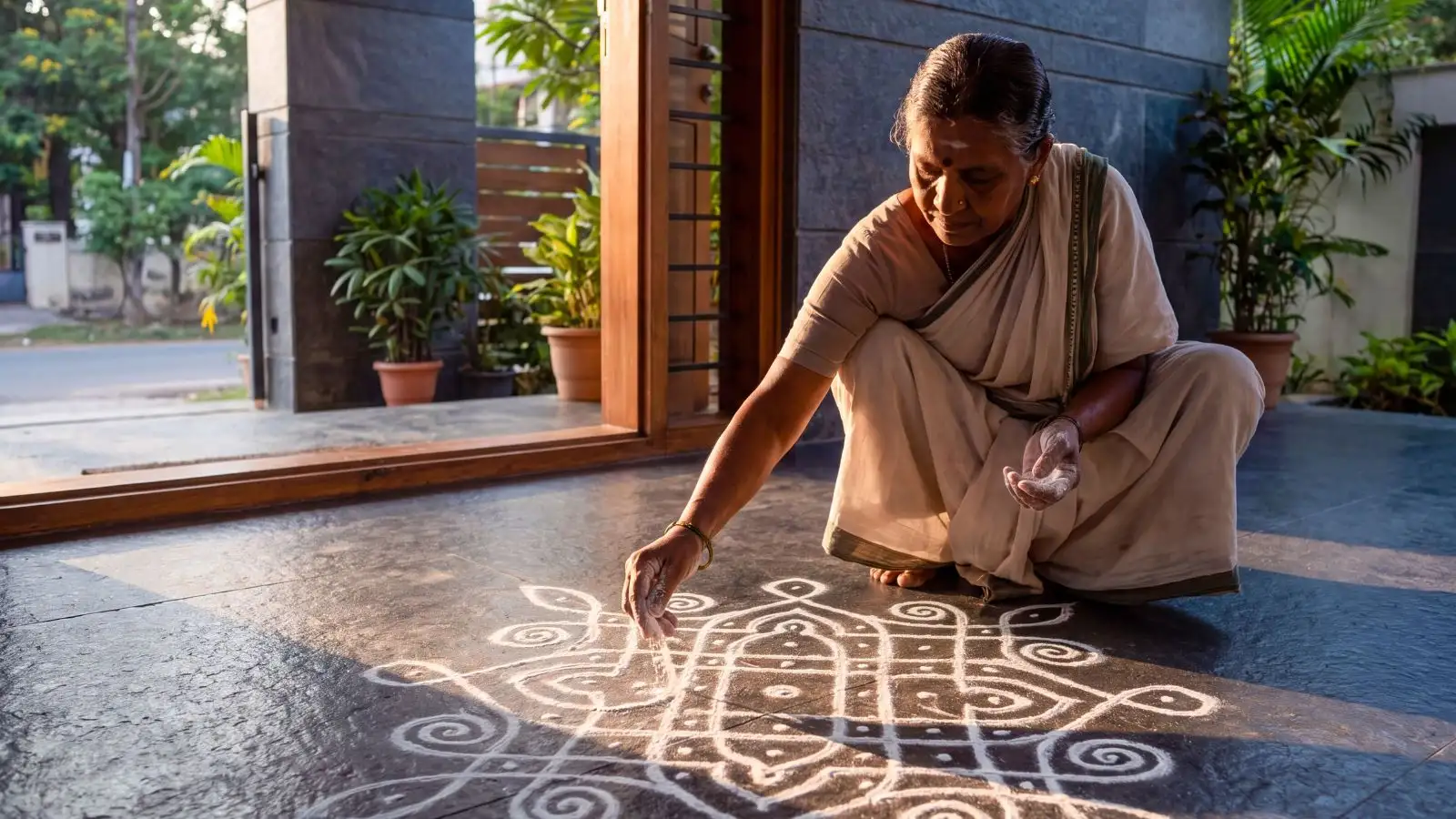
From simple geometric designs to intricate patterns created with dots and curved lines, kolams can transform an ordinary entrance into a beautiful work of art. But the practice is about more than decoration. It is connected with ideas of auspiciousness, hospitality, discipline and community, while also reflecting the creativity passed from one generation to another.
Many kolams are created around a series of dots. Lines are then drawn around or between these dots to form symmetrical and repeating patterns. Some designs are small and simple, while others can be highly detailed.
The designs are not necessarily fixed. A person may create a different pattern each day, allowing the practice to combine tradition with creativity.
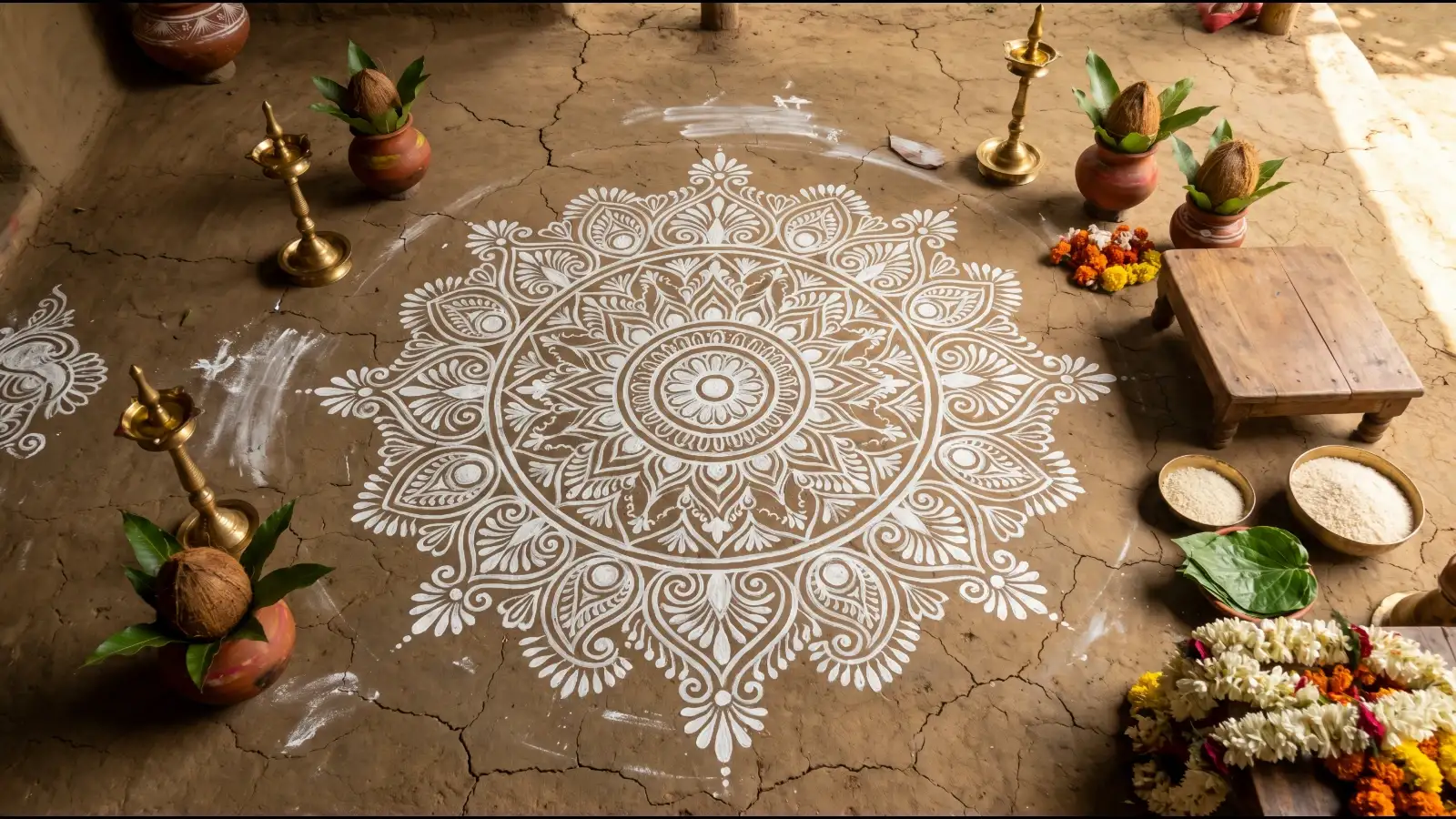
Tamil Nadu Tourism describes kolam as a customary practice that symbolises auspiciousness and good luck. In Hindu tradition, some people also associate the practice with welcoming Goddess Lakshmi, regarded as the goddess of wealth and prosperity, into the household. These religious interpretations can vary between families and communities.
So, for many households, the kolam is both a cultural tradition and a meaningful part of daily life.
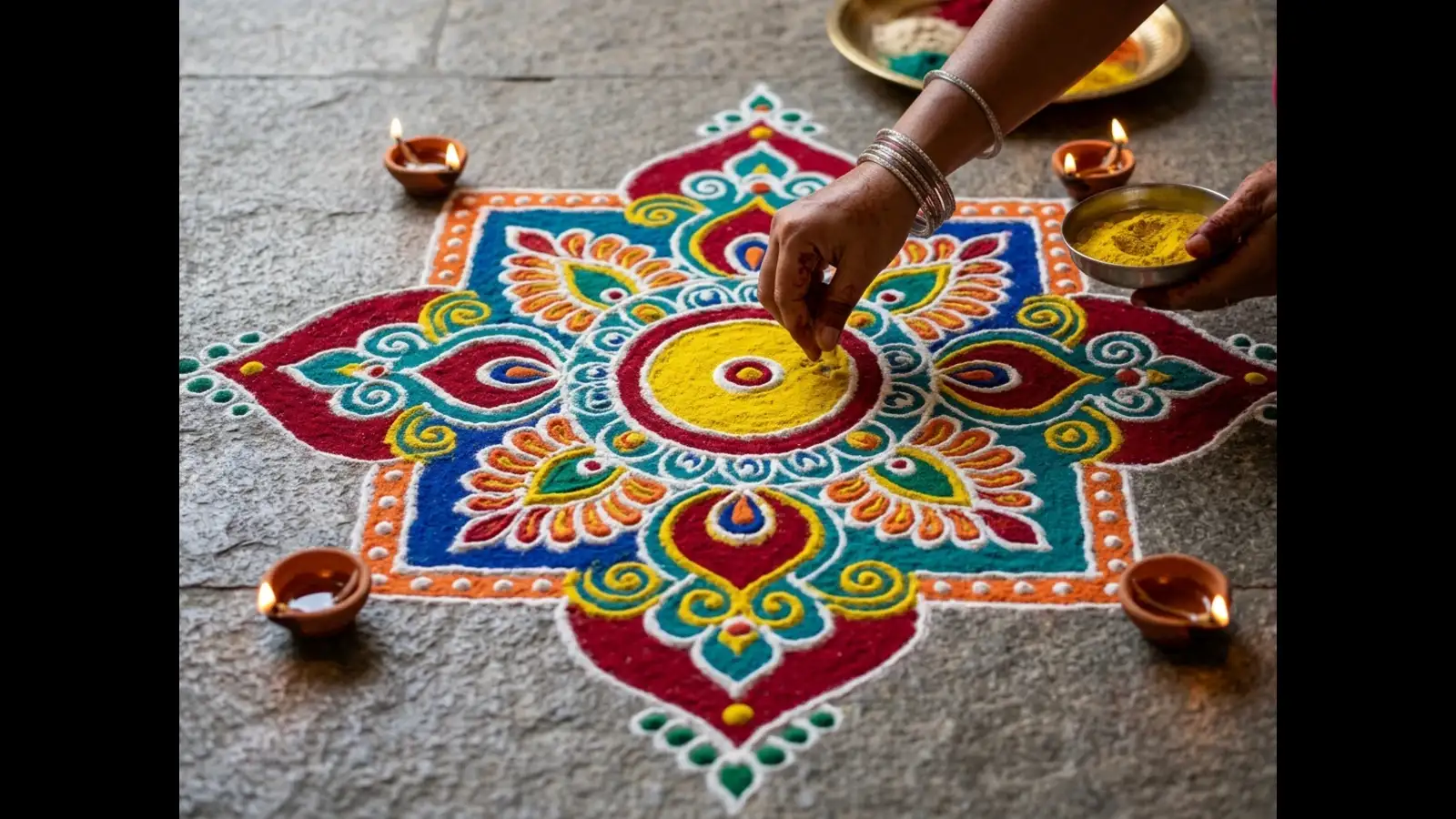
Tamil Nadu Tourism notes that rice flour was traditionally used so that ants, birds and other small creatures could feed on it. This gives the practice an additional association with sharing food with other living beings.
This also explains why the traditional kolam is not simply intended to remain untouched as a permanent piece of artwork.
The process requires concentration and patience, particularly when the design involves numerous dots and continuous lines. Over time, people can learn increasingly complicated patterns and develop their own ways of creating them.
The practice has traditionally been associated with women in many Tamil households, although kolam is not limited by gender today. It can be learned and practised by anyone interested in the art and tradition.
Pongal is one of the occasions strongly associated with kolam decorations. During the harvest festival, homes and outdoor spaces are decorated, and kolams form an important part of the visual celebration. Tamil Nadu Tourism also describes kolams being drawn at home entrances during occasions such as Puthandu, the Tamil New Year.
During such occasions, the designs may include additional decorative elements and colours, making them more elaborate than everyday kolams.
Some traditional designs use a dot grid and carefully arranged lines. Others are based on geometric repetition. This gives kolam a distinctive visual character and makes it both a traditional practice and a form of everyday artistic expression.
The temporary nature of the design is also significant. A kolam is created, used, erased and recreated, making the practice part of a continuing daily rhythm rather than a one-time decoration.
The patterns may be remembered rather than copied from a written source, allowing traditional designs to continue while new variations are introduced. This combination of repetition and creativity has helped kolam remain part of Tamil cultural life.
Today, kolams can be seen not only outside traditional houses but also at festivals, cultural events and competitions. Their designs have also found their way into modern forms of art, fashion and decoration.
For many Tamil households, however, the kolam represents an auspicious beginning to the day, a welcoming entrance and a connection with tradition. Its use of simple materials and its temporary nature make it particularly distinctive.
What may appear to be a few lines drawn at a doorstep therefore carries a much deeper cultural story. The kolam brings together art, routine, celebration and tradition, keeping an old practice visible in everyday life.
From simple geometric designs to intricate patterns created with dots and curved lines, kolams can transform an ordinary entrance into a beautiful work of art. But the practice is about more than decoration. It is connected with ideas of auspiciousness, hospitality, discipline and community, while also reflecting the creativity passed from one generation to another.
What Is A Kolam?
A kolam is a traditional floor drawing commonly made at the entrance of homes. Rice flour has traditionally been used, although coloured powders and other materials are also used for some designs, particularly during festivals and special occasions.Many kolams are created around a series of dots. Lines are then drawn around or between these dots to form symmetrical and repeating patterns. Some designs are small and simple, while others can be highly detailed.
The designs are not necessarily fixed. A person may create a different pattern each day, allowing the practice to combine tradition with creativity.
Why Are Kolams Drawn Outside The Home?
The entrance has a special place in the tradition because it is the point where the household meets the outside world. Drawing a kolam there is traditionally associated with welcoming people and beginning the day with an auspicious symbol.Tamil Nadu Tourism describes kolam as a customary practice that symbolises auspiciousness and good luck. In Hindu tradition, some people also associate the practice with welcoming Goddess Lakshmi, regarded as the goddess of wealth and prosperity, into the household. These religious interpretations can vary between families and communities.
So, for many households, the kolam is both a cultural tradition and a meaningful part of daily life.
The Tradition Of Using Rice Flour
One of the interesting aspects of traditional kolam is the use of rice flour. Unlike a permanent decoration, a rice-flour kolam is temporary. It gradually disappears as people walk over it, weather affects it or small creatures feed on the flour.Tamil Nadu Tourism notes that rice flour was traditionally used so that ants, birds and other small creatures could feed on it. This gives the practice an additional association with sharing food with other living beings.
This also explains why the traditional kolam is not simply intended to remain untouched as a permanent piece of artwork.
Kolam And The Morning Routine
In many traditional households, creating a kolam is part of the morning routine. The area outside the entrance is cleaned before the design is made.The process requires concentration and patience, particularly when the design involves numerous dots and continuous lines. Over time, people can learn increasingly complicated patterns and develop their own ways of creating them.
The practice has traditionally been associated with women in many Tamil households, although kolam is not limited by gender today. It can be learned and practised by anyone interested in the art and tradition.
Why Are Kolams Especially Important During Festivals?
Kolams become more elaborate during festivals and special occasions. Larger and colourful designs may be created to mark celebrations and make the entrance look festive.Pongal is one of the occasions strongly associated with kolam decorations. During the harvest festival, homes and outdoor spaces are decorated, and kolams form an important part of the visual celebration. Tamil Nadu Tourism also describes kolams being drawn at home entrances during occasions such as Puthandu, the Tamil New Year.
During such occasions, the designs may include additional decorative elements and colours, making them more elaborate than everyday kolams.
More Than Just A Decoration
A kolam can look simple when viewed from a distance, but creating one can require considerable attention to symmetry, spacing and continuity.Some traditional designs use a dot grid and carefully arranged lines. Others are based on geometric repetition. This gives kolam a distinctive visual character and makes it both a traditional practice and a form of everyday artistic expression.
The temporary nature of the design is also significant. A kolam is created, used, erased and recreated, making the practice part of a continuing daily rhythm rather than a one-time decoration.
A Tradition Passed Through Generations
Kolam is also a way of transmitting cultural knowledge. Children can learn designs by watching older family members and gradually practising them themselves.The patterns may be remembered rather than copied from a written source, allowing traditional designs to continue while new variations are introduced. This combination of repetition and creativity has helped kolam remain part of Tamil cultural life.
Today, kolams can be seen not only outside traditional houses but also at festivals, cultural events and competitions. Their designs have also found their way into modern forms of art, fashion and decoration.
What Does The Kolam At The Doorstep Represent?
There is no single meaning attached to every kolam. Its significance can depend on the occasion, family tradition, design and religious or cultural beliefs of the people creating it.For many Tamil households, however, the kolam represents an auspicious beginning to the day, a welcoming entrance and a connection with tradition. Its use of simple materials and its temporary nature make it particularly distinctive.
What may appear to be a few lines drawn at a doorstep therefore carries a much deeper cultural story. The kolam brings together art, routine, celebration and tradition, keeping an old practice visible in everyday life.
Next Story