
10 Eco-Friendly Diwali Decoration Ideas for a Greener Festival

The smell of marigolds, the flicker of diyas, the chalk-white rangoli spreading across a clean floor, Diwali's most enduring images are already rooted in the natural world. The shift toward eco-friendly decoration is less about giving things up and more about returning to what the festival looked like before mass-produced plastic arrived.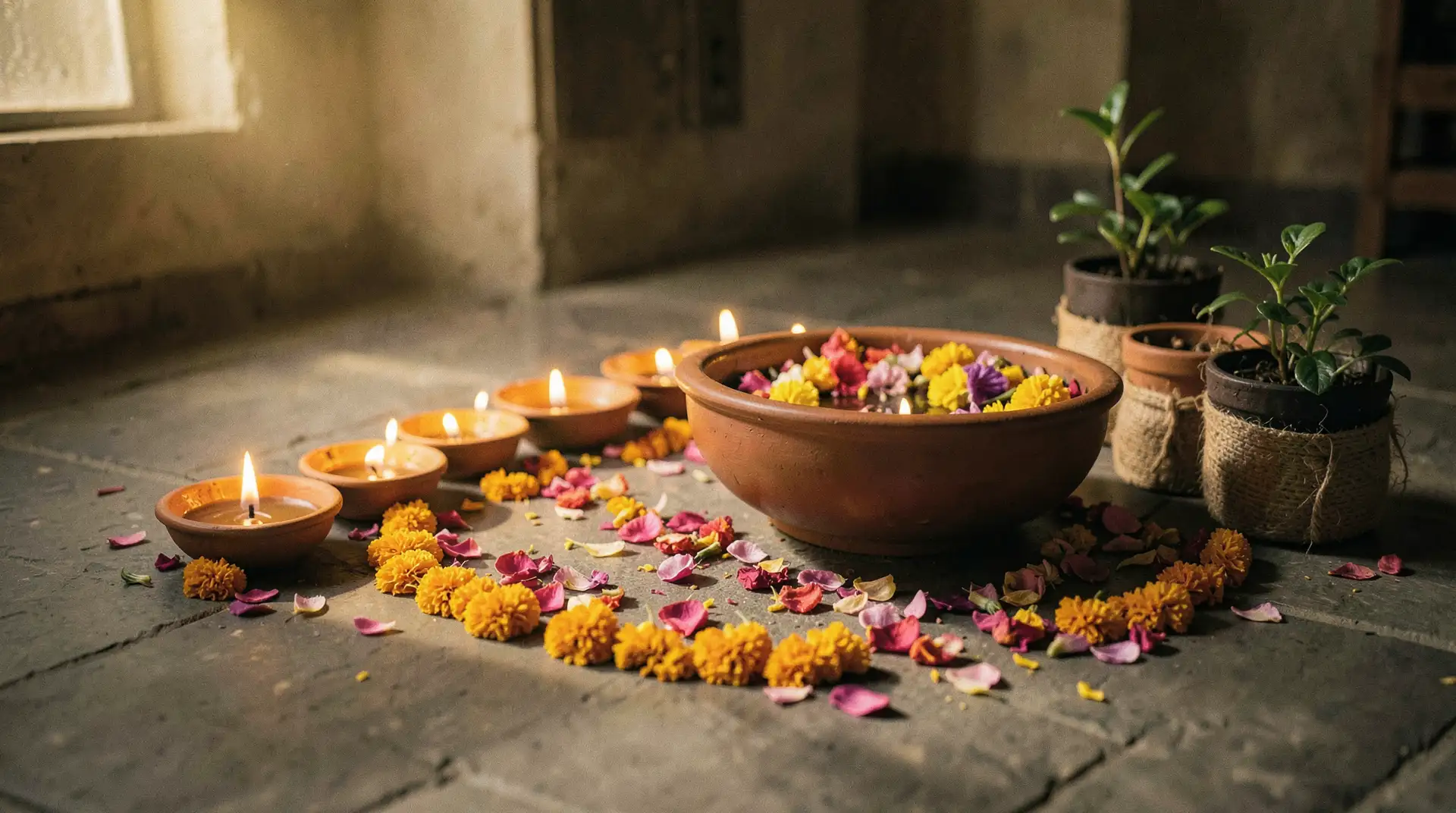
The ten ideas above share one quality: they are not substitutes for the real festival, they are closer to what the real festival originally looked like. The plastic and the synthetic glitter arrived late. The clay, the flowers, the leaves, and the cotton wick were always there.
1. Fresh Flower Rangoli Instead of Synthetic Colours
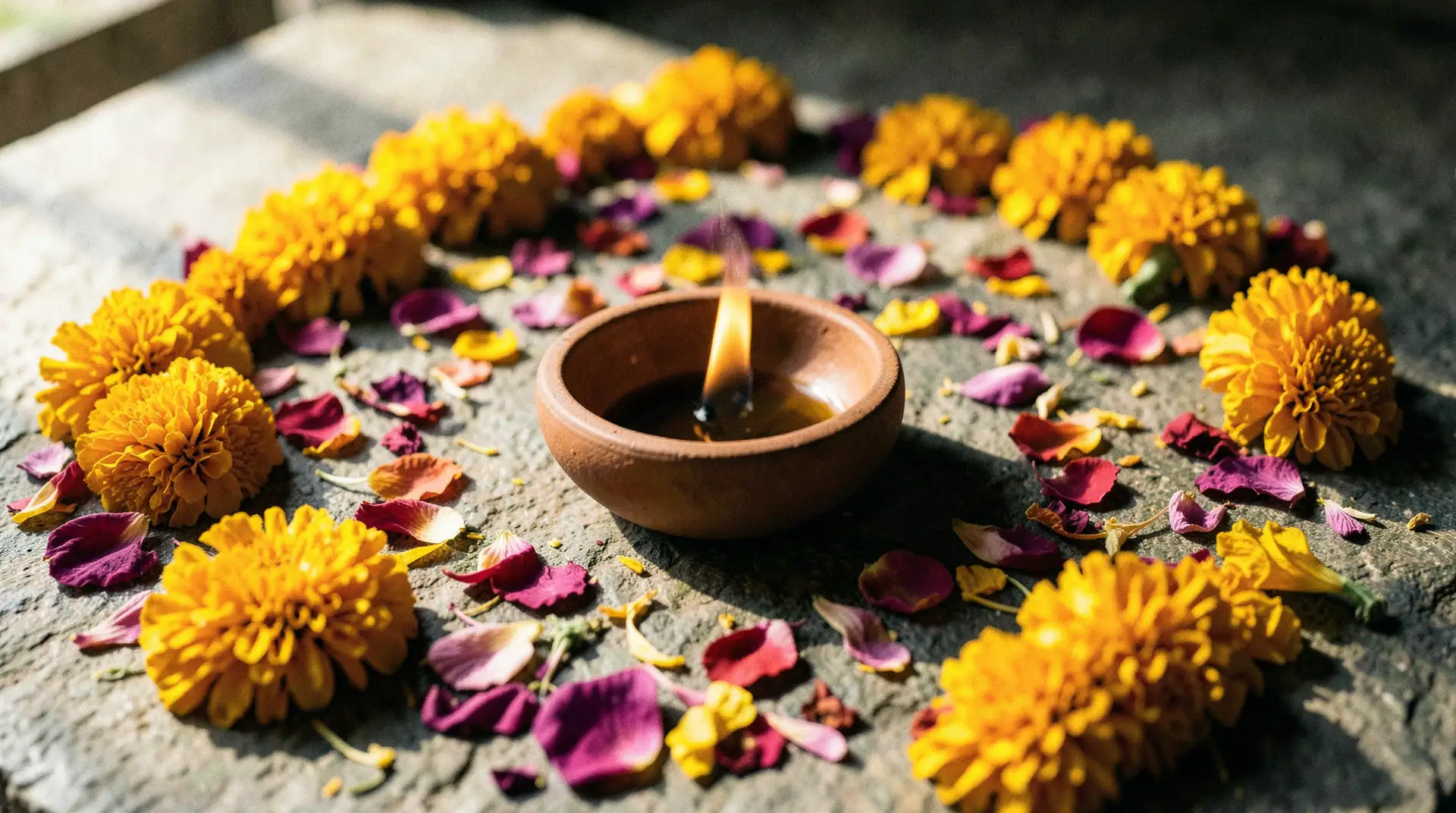
Loose petals of marigold, rose, and jasmine arranged on the floor create a rangoli that is vivid, fragrant, and entirely compostable. The technique is forgiving, petals can be nudged into place by hand, and the design can be as simple or as intricate as the maker's patience allows. After the festival, the petals go into the garden or the compost bin rather than a landfill.2. Clay Diyas Over Plastic Tea Lights
Unglazed clay diyas are made by potters across India using local soil and a wheel. They burn cleanly with mustard or sesame oil and a cotton wick. Plastic tea lights, by contrast, are single-use and non-recyclable. Buying clay diyas also puts money directly into the hands of kumhars, the potter communities whose trade shrinks a little more each season that plastic alternatives dominate.3. Earthen and Terracotta Lamps as Centrepieces
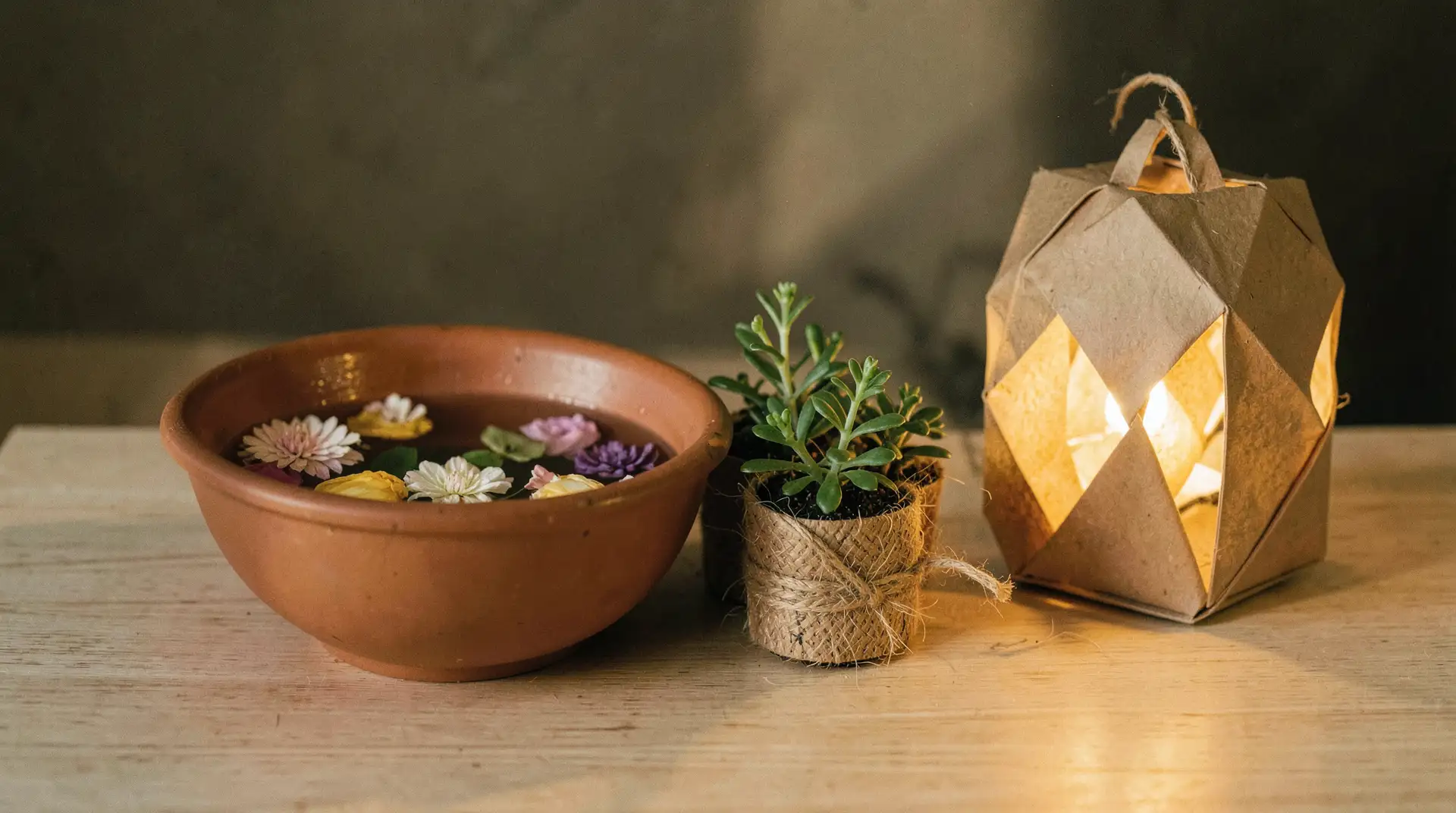
Larger terracotta lamps, bowls, and vases make striking centrepieces without any paint or glitter. A wide terracotta bowl filled with water and floating flowers holds the eye as well as any imported decoration. These pieces last for years if handled carefully, and when they eventually break, they return to soil.4. Banana Leaf and Mango Leaf Torans
The toran, the hanging garland above a door, is traditionally made from fresh mango leaves strung on a cotton thread. Banana leaves can be folded and cut into geometric shapes and added to the string. Both materials are available at vegetable markets during the festival season, both carry meaning in Indian tradition, and both decompose without leaving anything behind.5. Reusable Fabric Bunting and Lanterns
Cotton or silk fabric cut into triangles and strung on jute twine makes bunting that can be stored and reused each year. Fabric lanterns with a wire frame and a cloth shade last a decade with minimal care. The initial investment is higher than buying disposable paper lanterns, but the cost per use drops to almost nothing within two or three years.6. Recycled Paper Lanterns Made at Home
Old newspapers, brown paper bags, and kraft paper can be folded, cut, and glued into lanterns that hold a small battery-powered LED. The paper lantern tradition is strong across Asia, and the basic fold is simple enough for children. A lantern made from last month's newspaper carries a certain charm that a factory-made one does not.7. Potted Plants as Table Decoration
A row of small potted plants, tulsi, money plant, or seasonal flowering plants, arranged along a windowsill or a balcony railing does the work of a display without producing any waste. After the festival, the plants stay and keep growing. Wrapping the pots in jute or recycled fabric adds a festive touch without adding plastic.8. Natural Beeswax or Soy Candles
Paraffin candles are a petroleum byproduct and release soot when burned indoors. Beeswax and soy candles burn longer, release less smoke, and are made from renewable materials. They are available at craft stores and organic markets. The scent of beeswax, faintly of honey, adds something to a room that a paraffin candle does not.9. Seed Paper for Gifting and Decoration
Seed paper is handmade paper embedded with flower or vegetable seeds. It can be cut into shapes, used as gift tags, or folded into small decorative envelopes. After the festival, the recipient plants it in soil and waters it. The paper disappears and something grows. It is one of the few decorative materials that improves after it is thrown away.10. Upcycled Glass Jars as Diya Holders
Empty glass jars, jam jars, pickle jars, sauce bottles, make excellent holders for small diyas or tea lights. Wrapped with jute twine, painted with natural colours, or left plain, they catch and scatter light in a way that is genuinely beautiful. Glass is indefinitely reusable, and the jars cost nothing beyond a little cleaning and imagination.The ten ideas above share one quality: they are not substitutes for the real festival, they are closer to what the real festival originally looked like. The plastic and the synthetic glitter arrived late. The clay, the flowers, the leaves, and the cotton wick were always there.
Next Story