10 Indian Dishes You Won’t Find on Most Restaurant Menus

Ask someone to name Indian food and the answers are likely to include biryani, butter chicken, samosas, naan and dosa. All are deservedly popular, but they represent only a small part of India's extraordinary culinary map. Many Indian dishes remain firmly rooted in particular communities, villages and family kitchens, rarely appearing on mainstream restaurant menus. Some use ingredients that are highly seasonal, while others require preparation methods that are difficult to reproduce commercially. From Assam's eri polu and Karnataka's ragi mudde to Madhya Pradesh's bhutte ka kees, these lesser-known Indian dishes reveal just how much of the country's food culture remains undiscovered.
Hero Image


A Country of Thousands of Food Traditions

India's regional cuisines developed around local climates, crops, communities and religious traditions. That is why a dish considered ordinary in one state may seem completely unfamiliar elsewhere.

In Jharkhand, for example, dhuska is a traditional rice and lentil preparation, while chilka roti uses a fermented rice and lentil batter. Seasonal foods such as rugdha are closely connected to the monsoon and local forest produce.


Ten Dishes Worth Looking For

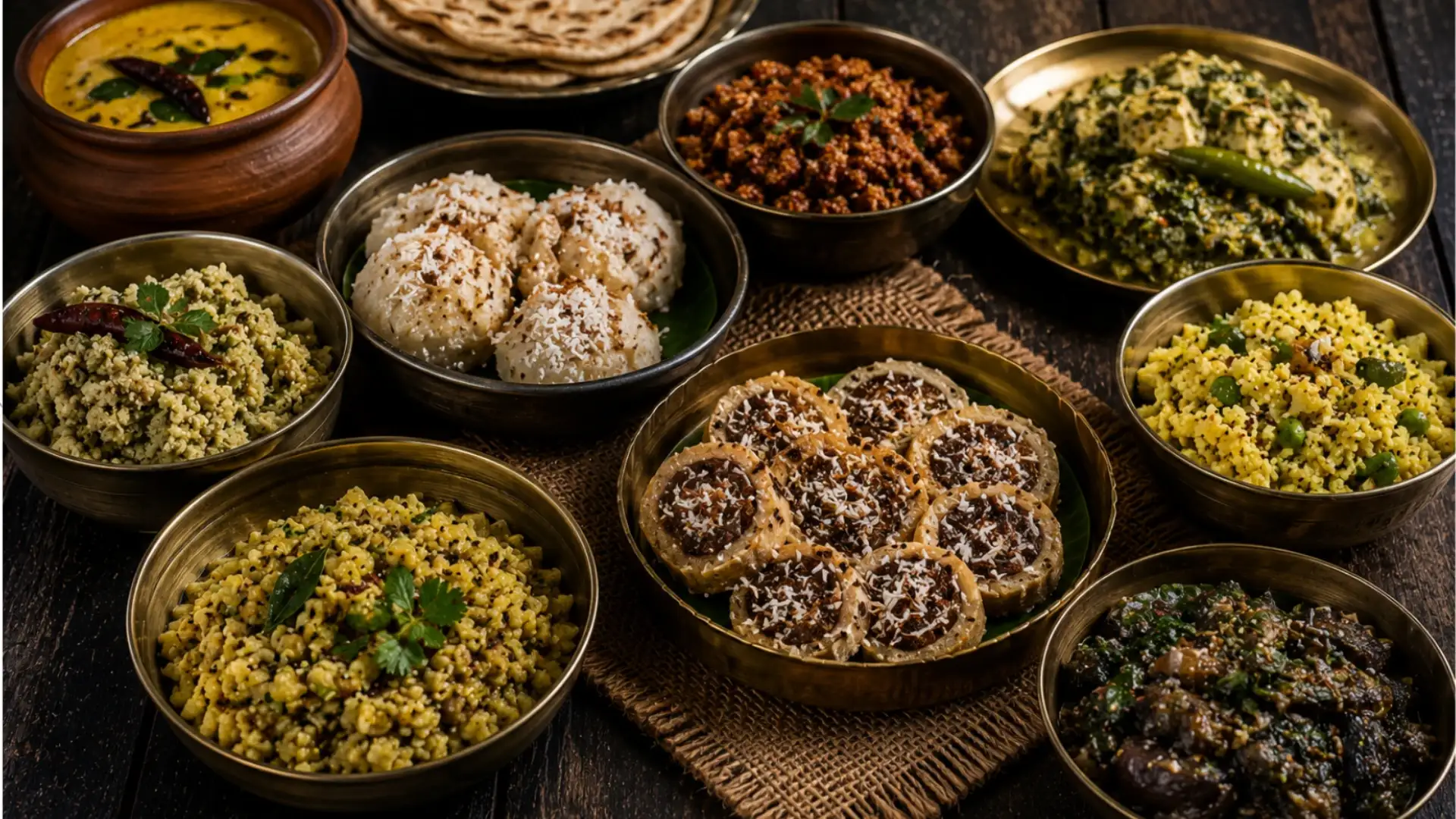
Among the most interesting lesser-known Indian dishes are eri polu from Assam, made with silkworm pupae; ragi mudde from Karnataka, a simple but filling finger-millet preparation; and bhutte ka kees from Madhya Pradesh, which combines grated corn with milk, spices and ghee.

Other discoveries include patoleo from Goa, a sweet rice-and-coconut preparation steamed inside turmeric leaves, sattu paratha from Bihar, chulli oil pickles from Himachal Pradesh, dhuska from Jharkhand, chilka roti, rugdha and kurthi dal.


The point is not that these foods are completely unknown. Many are treasured locally. The problem is that they rarely travel beyond their traditional communities.

Why Restaurants Often Leave Them Out

Restaurant menus tend to favour dishes that customers already recognise. There are also practical concerns. A seasonal ingredient may be difficult to source consistently, while an old recipe may require lengthy preparation or specialised knowledge.

Some recipes were never written down either. Culinary traditions have often been passed from one generation to another through observation rather than measurements.

Why These Foods Deserve Attention

Discovering lesser-known Indian dishes is about more than finding something unusual for dinner. These recipes preserve knowledge about local crops, cooking techniques and communities.


The next time you visit an Indian restaurant, it may be worth looking beyond the familiar favourites. The most memorable dish on the menu could be the one whose name you have never heard before.