
10 Indian Places Where Mountains, Deserts and Green Landscapes Come Together

India's geography is full of contradictions. In some parts of the country, snow-covered mountains rise above green valleys, while elsewhere dry desert landscapes suddenly give way to surprisingly fertile oases. There are also regions where rocky highlands, grasslands, forests and arid terrain exist remarkably close to one another. These contrasts are not simply beautiful to photograph. They influence agriculture, wildlife, architecture and the way local communities live. From Ladakh and Rajasthan to the northeastern hills and the Western Ghats, these places in India where mountains, desert and greenery meet reveal just how dramatically the country's landscapes can change within relatively short distances.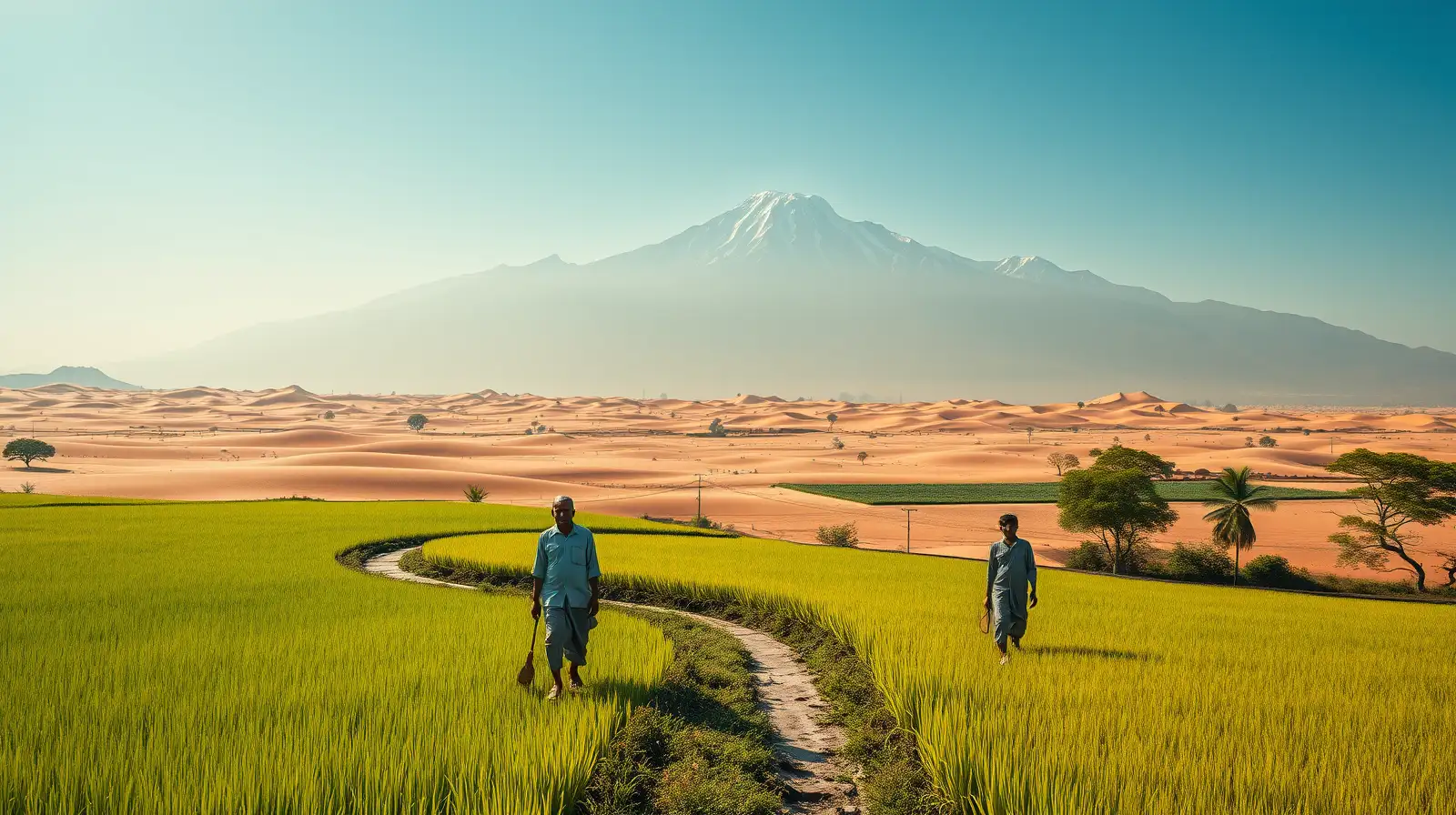
The Shyok and Nubra rivers provide water in an otherwise extremely dry environment. Around Hunder, sand dunes add another unexpected feature, with Bactrian camels traditionally associated with the region.
The result is a landscape where snow-covered mountains, desert-like sand and cultivated greenery appear within the same frame.
The difference becomes particularly noticeable when travelling between the high mountain passes and settlements along the river. Poplar and willow trees stand out against the surrounding barren slopes, showing how strongly water determines where vegetation can survive.
Villages such as Tabo, Kaza and Kibber depend on streams and meltwater to cultivate small agricultural areas. Bright green fields can therefore appear unexpectedly amid enormous brown mountains.
The contrast is particularly dramatic during summer when crops are growing.
The region lies near the transition between wetter and drier Himalayan landscapes. As a result, some slopes remain relatively barren while river valleys support forests, farms and settlements.
This geographical transition gives Lahaul a distinctive appearance.
Travelling through the region can take visitors from lush lower elevations to increasingly dry high-altitude terrain. The changing vegetation is closely linked to altitude and rainfall.
Apple cultivation has also become a major part of the region's agricultural economy.
High Himalayan peaks surround deep valleys covered in forests and grasslands. During warmer months, vegetation gives the landscape a rich green appearance, while winter can bring snow to higher elevations.
The region's Buddhist monasteries add an important cultural dimension to its dramatic geography.
The region's short summer growing season is crucial for communities living in this remote Himalayan environment. During winter, frozen rivers have historically provided unusual routes through the landscape.
Its combination of barren peaks and cultivated valley floors is particularly striking.
While much of the state is associated with arid terrain, Mount Abu rises as a forested hill station in the Aravalli Range. Its cooler climate, wooded slopes and lakes create a sharp contrast with the desert-like landscapes found elsewhere in Rajasthan.
The geological age of the Aravallis also makes the region particularly interesting from a natural-history perspective.
The golden dunes of the Thar surround a historic city whose survival has always depended on carefully managing scarce water. Yet irrigated areas and seasonal vegetation can appear around settlements, creating small pockets of greenery within the arid landscape.
The city's historic architecture also reflects centuries of adaptation to desert conditions.
The Khasi Hills are among the wettest regions on Earth, supporting dense forests, grasslands, waterfalls and deeply cut valleys. The landscape demonstrates how dramatically India's environment changes when abundant rainfall replaces the dryness experienced in western and northern regions.
Places such as Cherrapunji and Mawsynram are particularly famous for extreme rainfall.
Today, these regions are also increasingly important for tourism. But fragile mountain ecosystems can be damaged by unmanaged construction, waste and excessive water use. Sustainable tourism is therefore essential if these dramatic contrasts are to survive.
Nubra Valley, Ladakh
Nubra is one of Ladakh's most striking geographical contrasts. Barren Himalayan mountains surround a valley containing green agricultural fields and villages.The Shyok and Nubra rivers provide water in an otherwise extremely dry environment. Around Hunder, sand dunes add another unexpected feature, with Bactrian camels traditionally associated with the region.
The result is a landscape where snow-covered mountains, desert-like sand and cultivated greenery appear within the same frame.
Leh and the Indus Valley, Ladakh
Around Leh, the stark mountains of Ladakh meet the greener patches created by the Indus River and irrigation.The difference becomes particularly noticeable when travelling between the high mountain passes and settlements along the river. Poplar and willow trees stand out against the surrounding barren slopes, showing how strongly water determines where vegetation can survive.
Spiti Valley, Himachal Pradesh
Spiti is India's classic cold-desert landscape, but calling it barren tells only half the story.Villages such as Tabo, Kaza and Kibber depend on streams and meltwater to cultivate small agricultural areas. Bright green fields can therefore appear unexpectedly amid enormous brown mountains.
The contrast is particularly dramatic during summer when crops are growing.
Lahaul Valley, Himachal Pradesh
Lahaul offers another Himalayan mixture of dry mountains and surprisingly green valleys.The region lies near the transition between wetter and drier Himalayan landscapes. As a result, some slopes remain relatively barren while river valleys support forests, farms and settlements.
This geographical transition gives Lahaul a distinctive appearance.
Kinnaur, Himachal Pradesh
Kinnaur combines high mountains, apple orchards, pine forests and river valleys.Travelling through the region can take visitors from lush lower elevations to increasingly dry high-altitude terrain. The changing vegetation is closely linked to altitude and rainfall.
Apple cultivation has also become a major part of the region's agricultural economy.
Tawang, Arunachal Pradesh
Tawang provides a completely different version of the mountain-greenery contrast.High Himalayan peaks surround deep valleys covered in forests and grasslands. During warmer months, vegetation gives the landscape a rich green appearance, while winter can bring snow to higher elevations.
The region's Buddhist monasteries add an important cultural dimension to its dramatic geography.
Zanskar Valley, Ladakh
Zanskar is surrounded by rugged mountains but contains pockets of green agricultural land around its settlements.The region's short summer growing season is crucial for communities living in this remote Himalayan environment. During winter, frozen rivers have historically provided unusual routes through the landscape.
Its combination of barren peaks and cultivated valley floors is particularly striking.
Mount Abu, Rajasthan
Mount Abu is an unexpected green landscape within Rajasthan.While much of the state is associated with arid terrain, Mount Abu rises as a forested hill station in the Aravalli Range. Its cooler climate, wooded slopes and lakes create a sharp contrast with the desert-like landscapes found elsewhere in Rajasthan.
The geological age of the Aravallis also makes the region particularly interesting from a natural-history perspective.
Jaisalmer, Rajasthan
Jaisalmer represents the desert side of India's geographical contrast.The golden dunes of the Thar surround a historic city whose survival has always depended on carefully managing scarce water. Yet irrigated areas and seasonal vegetation can appear around settlements, creating small pockets of greenery within the arid landscape.
The city's historic architecture also reflects centuries of adaptation to desert conditions.
Meghalaya's Khasi Hills
Meghalaya offers perhaps the most dramatic contrast to India's deserts.The Khasi Hills are among the wettest regions on Earth, supporting dense forests, grasslands, waterfalls and deeply cut valleys. The landscape demonstrates how dramatically India's environment changes when abundant rainfall replaces the dryness experienced in western and northern regions.
Places such as Cherrapunji and Mawsynram are particularly famous for extreme rainfall.
Why These Contrasts Matter
These landscapes demonstrate how altitude, rainfall, rivers and geology determine where people can live and what they can grow. A green field in a Himalayan desert is not accidental. It exists because communities have learned to make careful use of limited water.Today, these regions are also increasingly important for tourism. But fragile mountain ecosystems can be damaged by unmanaged construction, waste and excessive water use. Sustainable tourism is therefore essential if these dramatic contrasts are to survive.
Next Story