
10 Things in Your Kitchen You Should Clean More Often

The kitchen is one of the busiest areas of any home, but some of its most frequently used surfaces and appliances are also the easiest to overlook during regular cleaning. While countertops and floors may get attention every day, items such as refrigerator handles, chopping boards, spice jars and kitchen sponges can quietly collect grease, food residue and germs.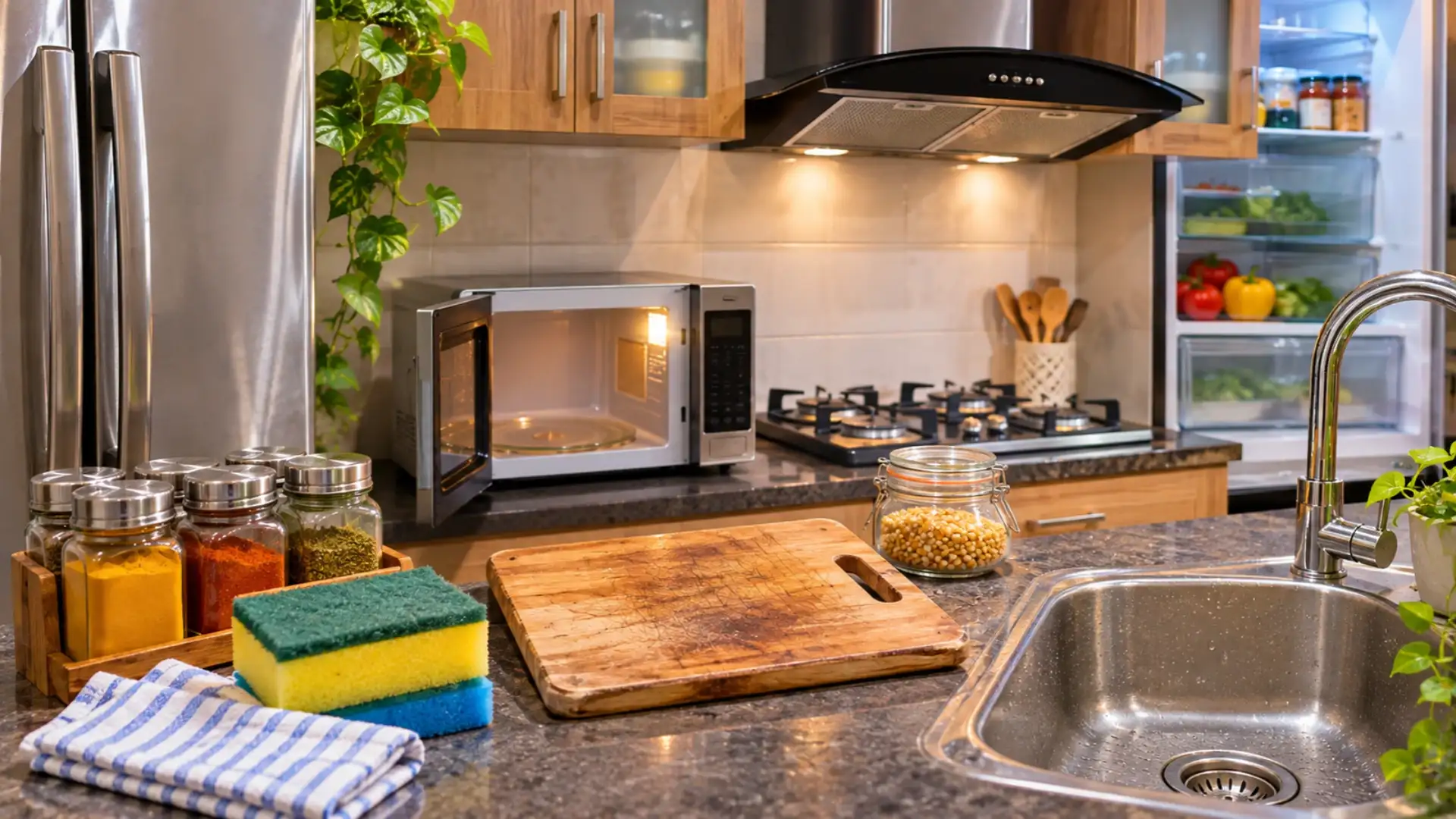
Keeping these areas clean is important for maintaining a hygienic cooking space and preventing unpleasant smells. Here are 10 commonly overlooked kitchen items and spots you should clean more often.
Wipe the handles and door edges regularly using a soft cloth and a suitable cleaning solution. Pay attention to the rubber gasket and gently clean it to remove trapped dirt.
Wipe the outside of spice jars and their lids with a clean, slightly damp cloth. Make sure they are completely dry before putting them back in the rack. Also, check for old spices that have lost their freshness.
Wash chopping boards thoroughly with hot, soapy water after every use and allow them to dry completely. Use separate boards for raw meat and vegetables to reduce the risk of cross-contamination. Replace boards that develop deep cracks or are difficult to clean.
Wipe the interior, turntable and inside of the door regularly with a soft cloth and mild cleaning solution. For dried food stains, use a microwave-safe bowl of water to create steam for a few minutes, then carefully wipe the loosened residue once the appliance has cooled sufficiently. Avoid using abrasive scrubbers that can damage the surface.
Rinse sponges thoroughly after use, squeeze out excess water and let them dry in a well-ventilated area. Replace them regularly, especially when they develop a persistent smell or start breaking down. Wash dishcloths frequently and allow them to dry completely between uses.
Clean accessible filters according to the manufacturer's instructions and wipe the surrounding surfaces regularly. Some filters may require professional cleaning, depending on their design and the amount of grease accumulated.
Wipe them regularly with a suitable surface cleaner and a soft cloth. Pay extra attention to handles near the stove and sink, as these areas tend to collect more grease and moisture.
Clean the sink basin, drain cover and faucet regularly using an appropriate cleaning product. Remove visible food debris after washing dishes and avoid allowing leftover food to collect near the drain.
Remove expired food and wipe up spills as soon as possible. Periodically take out removable shelves and drawers, wash them according to the manufacturer's instructions and dry them completely before putting them back.
Wipe the backsplash regularly with a suitable cleaner and clean accessible areas behind small appliances. Move heavier appliances only when it is safe to do so, and follow their cleaning instructions before handling electrical components.
Keeping these areas clean is important for maintaining a hygienic cooking space and preventing unpleasant smells. Here are 10 commonly overlooked kitchen items and spots you should clean more often.
1. Refrigerator Handles and Door Edges
Refrigerator handles are touched several times throughout the day, often while cooking or handling food. This makes them prone to collecting fingerprints, grease and dirt. The rubber seals around refrigerator doors can also accumulate crumbs and moisture.Wipe the handles and door edges regularly using a soft cloth and a suitable cleaning solution. Pay attention to the rubber gasket and gently clean it to remove trapped dirt.
2. Spice Jars and Their Lids
Spice jars are frequently handled while cooking, but their lids and outer surfaces are rarely cleaned. Spilled turmeric, chilli powder and other seasonings can leave stains and residue that attract dust and make containers sticky.Wipe the outside of spice jars and their lids with a clean, slightly damp cloth. Make sure they are completely dry before putting them back in the rack. Also, check for old spices that have lost their freshness.
3. Chopping Boards
Chopping boards come into direct contact with vegetables, fruits, meat and other food ingredients. Small cuts and grooves on their surfaces can trap food particles and moisture if they are not cleaned properly.Wash chopping boards thoroughly with hot, soapy water after every use and allow them to dry completely. Use separate boards for raw meat and vegetables to reduce the risk of cross-contamination. Replace boards that develop deep cracks or are difficult to clean.
4. Microwave Interior and Door
Food splashes and spills inside a microwave can quickly turn into stubborn stains. If left unattended, these food particles may create unpleasant smells every time you heat something.Wipe the interior, turntable and inside of the door regularly with a soft cloth and mild cleaning solution. For dried food stains, use a microwave-safe bowl of water to create steam for a few minutes, then carefully wipe the loosened residue once the appliance has cooled sufficiently. Avoid using abrasive scrubbers that can damage the surface.
5. Kitchen Sponges and Dishcloths
Sponges and dishcloths are used repeatedly to clean utensils, countertops and food spills. However, they can remain damp for long periods, allowing bacteria and unpleasant odours to develop.Rinse sponges thoroughly after use, squeeze out excess water and let them dry in a well-ventilated area. Replace them regularly, especially when they develop a persistent smell or start breaking down. Wash dishcloths frequently and allow them to dry completely between uses.
6. Exhaust Fan and Kitchen Chimney Filters
Kitchen exhaust fans and chimney filters collect grease, smoke particles and dust over time. When these areas are neglected, grease can build up and affect the efficiency of ventilation.Clean accessible filters according to the manufacturer's instructions and wipe the surrounding surfaces regularly. Some filters may require professional cleaning, depending on their design and the amount of grease accumulated.
7. Kitchen Cabinet Handles and Drawer Knobs
Cabinet handles and drawer knobs are touched frequently, often with hands that have food residue, oil or spices on them. Over time, this can leave sticky patches and visible stains.Wipe them regularly with a suitable surface cleaner and a soft cloth. Pay extra attention to handles near the stove and sink, as these areas tend to collect more grease and moisture.
8. Sink Drain and Faucet
The kitchen sink is used throughout the day for washing vegetables, cleaning utensils and disposing of food residue. Small food particles can get trapped around the drain, while water stains and soap residue can build up around the faucet.Clean the sink basin, drain cover and faucet regularly using an appropriate cleaning product. Remove visible food debris after washing dishes and avoid allowing leftover food to collect near the drain.
9. Refrigerator Shelves and Vegetable Drawers
Spilled milk, leftover food, vegetable residue and moisture can make refrigerator shelves and drawers dirty over time. Since these areas store food directly, regular cleaning is especially important.Remove expired food and wipe up spills as soon as possible. Periodically take out removable shelves and drawers, wash them according to the manufacturer's instructions and dry them completely before putting them back.
10. Kitchen Backsplash and Areas Behind Appliances
Oil splashes, steam and cooking residue can settle on the backsplash and nearby walls, particularly around the stove. Small gaps behind appliances such as microwaves and toasters can also collect crumbs and dust.Wipe the backsplash regularly with a suitable cleaner and clean accessible areas behind small appliances. Move heavier appliances only when it is safe to do so, and follow their cleaning instructions before handling electrical components.
Final Thoughts
A clean kitchen is not just about spotless countertops and neatly arranged cabinets. Frequently touched surfaces, food preparation tools and appliance filters also need regular attention to maintain a hygienic cooking environment. Instead of waiting for dirt and grease to build up, include these often-forgotten areas in your weekly cleaning routine. A few extra minutes of cleaning can make your kitchen fresher, safer and easier to maintain.Next Story