
10 Things You Should Never Store Under Your Kitchen Sink

The cabinet beneath the kitchen sink often becomes a convenient storage space for household essentials. From cleaning supplies and spare utensils to shopping bags and everyday products, many people use this area to keep items out of sight. However, the space is not always suitable for everything.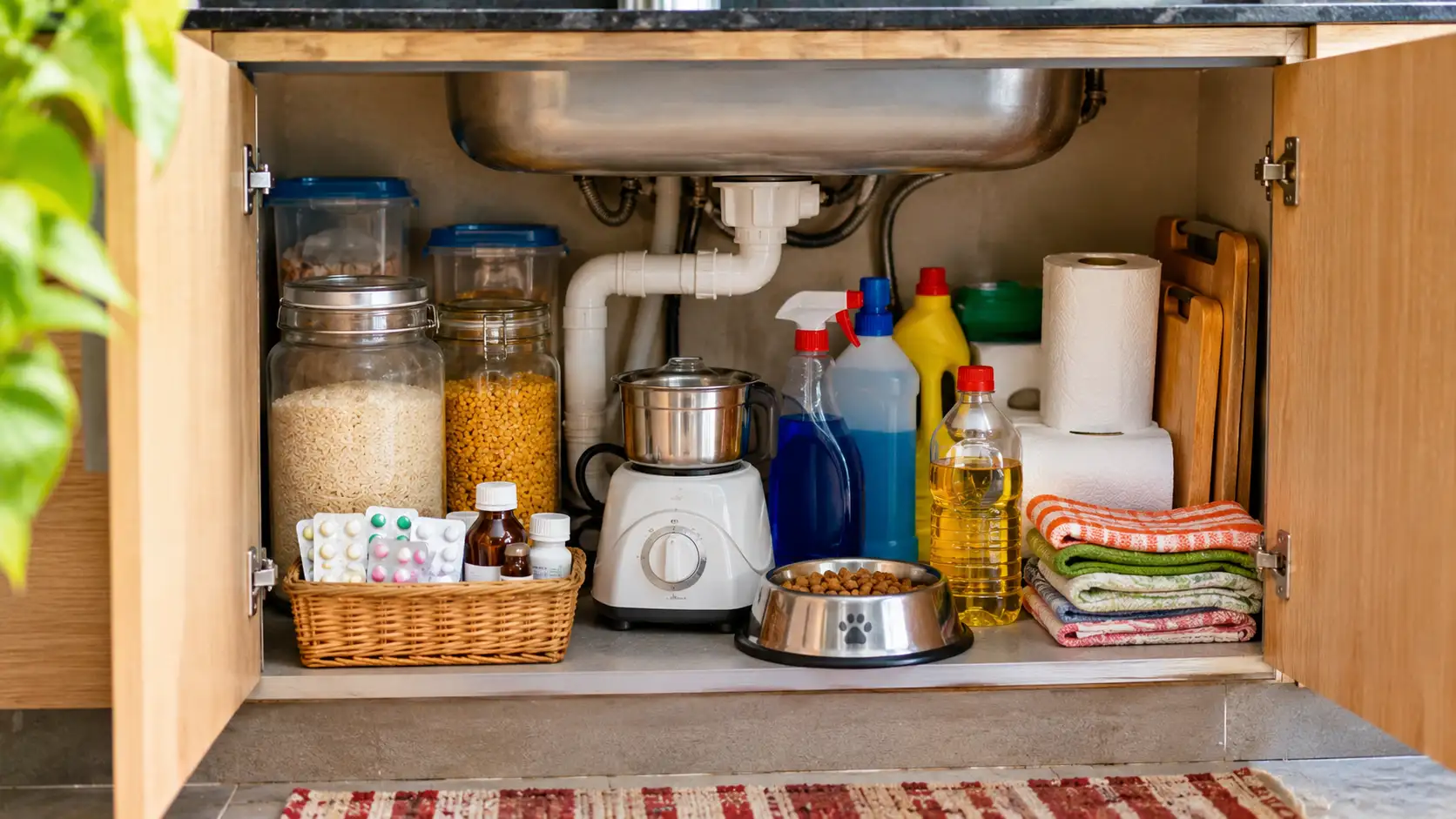
Pipes, occasional leaks, moisture and limited ventilation can create conditions that damage certain products or make storage less hygienic. Some items may also pose safety risks when kept within easy reach of children or pets. Understanding what belongs elsewhere can help you organise your kitchen more effectively and protect household essentials.
Never mix household cleaning chemicals, particularly bleach with ammonia or acidic cleaners.
A few thoughtful changes can make your kitchen cleaner, safer and easier to maintain
Pipes, occasional leaks, moisture and limited ventilation can create conditions that damage certain products or make storage less hygienic. Some items may also pose safety risks when kept within easy reach of children or pets. Understanding what belongs elsewhere can help you organise your kitchen more effectively and protect household essentials.
1. Food and Grocery Items
Flour, rice, pulses and packaged snacks should not be stored beneath the sink. Moisture and possible leaks can damage packaging and encourage mould growth. Choose a clean, dry pantry cabinet instead.2. Medicines and Supplements
Medicines require storage according to their packaging instructions. Heat, humidity and moisture may affect certain products. A secure, dry cabinet away from children is generally more suitable.3. Electrical Appliances
Hand mixers, electric kettles and other appliances should be kept away from possible water leaks. Moisture can damage electrical components and create safety concerns.4. Paper Towels and Napkins
Paper products absorb moisture easily. Even a small leak can leave them damp, unusable or mouldy.5. Wooden Kitchen Utensils
Wooden spoons, chopping boards and rolling pins may absorb moisture, leading to swelling, odours or mould. Store them in a well-ventilated, dry location.6. Important Documents
Receipts, warranties and household paperwork can become damaged by water. Keep important documents in a dry, protected drawer or folder.7. Pet Food
Pet food should be stored in suitable sealed containers away from moisture and household chemicals. Under-sink cabinets are generally poor choices because of potential leaks and contamination.8. Loose Cleaning Chemicals
Cleaning products should remain in their original, labelled containers. Avoid storing leaking bottles, unidentified chemicals or products that could spill onto one another. Keep hazardous products secured away from children and pets.9. Extra Cooking Oils
Cooking oils are better stored in a cool, dry cupboard away from heat and moisture. Under-sink storage increases the risk of contamination if a bottle leaks or a pipe fails.10. Spare Cloth Bags and Fabrics
Reusable shopping bags, dishcloths and spare fabric items can absorb dampness and develop unpleasant smells. Store clean, completely dry fabrics in a ventilated cupboard.What Should You Keep Under the Sink?
A dry, well-maintained cabinet may be suitable for a small number of cleaning tools and securely stored products. Use leak-resistant organisers, inspect pipes regularly and avoid overcrowding.Never mix household cleaning chemicals, particularly bleach with ammonia or acidic cleaners.
Make Kitchen Storage Safer and Smarter
Good kitchen organisation is not simply about finding more storage space. It is about keeping items in conditions that preserve their quality and reduce unnecessary risks.A few thoughtful changes can make your kitchen cleaner, safer and easier to maintain
Next Story