
10 Traditional Dishes Where the Cooking Pot Makes All the Difference

A cooking pot may seem like one of the simplest tools in a kitchen, but it can have a surprisingly important effect on food. The material, shape, thickness and even the way heat moves through a vessel can influence how a dish cooks. In traditional kitchens, these details often developed over generations rather than being chosen simply for convenience.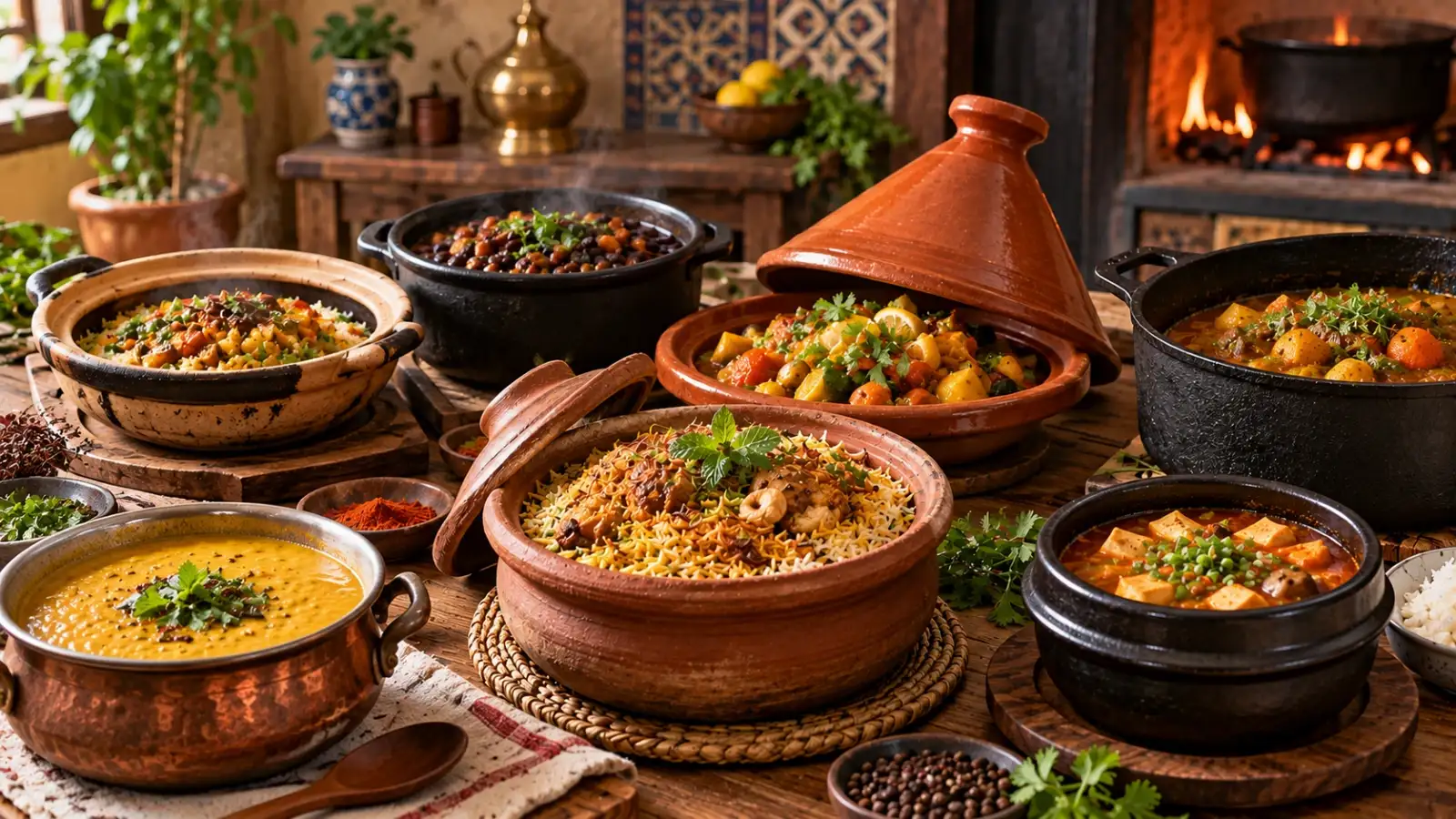
Across the world, certain dishes are closely connected with the pots and vessels used to prepare them. Clay pots can hold gentle heat, heavy metal vessels can cook food slowly and evenly, while specialised pots can help create the texture that makes a recipe distinctive. The cooking vessel may even become part of the identity of the dish itself.
Here are ten traditional dishes where the cooking pot plays an important role in the final result.
The rounded shape helps ingredients cook together, while the pot can also be covered tightly during the final stage. In some traditional methods, the rice and other ingredients are sealed inside so that steam remains trapped. This helps the flavours develop while keeping the rice fragrant and separate.
The unusual shape helps steam circulate inside the vessel and return towards the food as moisture. This makes it particularly useful for slow cooking meat, vegetables, fruit and spices. A traditional tagine can therefore produce tender food with a rich sauce without requiring large amounts of added liquid.
A thick vessel retains heat well and allows the ingredients to cook steadily. The long cooking process helps tougher pieces of chicken become tender while the wine and vegetables develop into a rich sauce. This is a good example of how traditional slow cooking benefits from cookware that maintains an even temperature.
The beans gradually absorb flavours from the other ingredients as they cook. Keeping the heat gentle helps prevent the mixture from sticking while allowing the texture to become thick and comforting. The large pot also makes sense for a dish traditionally associated with communal meals.
One of the most appealing parts of the dish is the crispy layer that can develop at the bottom of the pot. This texture is difficult to reproduce in exactly the same way using ordinary cookware. The clay vessel therefore contributes not just to cooking but also to the character of the finished dish.
When lentils simmer gradually, they can develop a soft texture and deeper flavour. The porous nature of unglazed clay can also influence the cooking environment. Modern pressure cookers are faster, but slow cooking in a traditional pot offers a different experience.
The cooking process is important because the onion base and spice mixture need patience. A sturdy pot that can maintain a steady temperature helps the ingredients cook down without burning. The finished stew is commonly served with injera, making the meal a distinctive part of Ethiopian food culture.
The gentle cooking allows the meat to become tender while the potatoes and vegetables soften and enrich the broth. Although modern cookware makes preparation easier, the principle remains the same. A thick pot that distributes heat evenly is ideal for turning simple ingredients into a comforting meal.
Jjigae cooked or served in this type of vessel stays hot for longer and develops an appealing texture. The pot also makes the meal feel more communal and traditional. Its ability to retain heat is a practical feature that has become part of the dining experience.
The pot needs to accommodate the vegetables, stock, meat or seafood and other components without becoming overcrowded. A heavy vessel also makes it easier to maintain a steady simmer. As the ingredients cook together, the flavours become deeper and the texture of the dish develops.
Traditional cooks often learned these differences through experience. The cooking pot was chosen according to the food, the available fuel and the desired texture. Over time, particular vessels became strongly associated with particular dishes.
Modern kitchens offer plenty of convenient alternatives, but traditional cookware still has value. It can provide a connection to older methods and help explain why certain dishes developed the way they did.
The next time you prepare a traditional recipe, consider the vessel as well as the ingredients. The pot sitting on the stove may be doing far more than simply holding the food. It could be one of the reasons the dish tastes and feels the way it does.
Across the world, certain dishes are closely connected with the pots and vessels used to prepare them. Clay pots can hold gentle heat, heavy metal vessels can cook food slowly and evenly, while specialised pots can help create the texture that makes a recipe distinctive. The cooking vessel may even become part of the identity of the dish itself.
Here are ten traditional dishes where the cooking pot plays an important role in the final result.
1. Biryani Cooked in a Handi
Biryani is prepared in many different ways across South Asia, but the handi remains closely associated with traditional versions of the dish. A handi is a deep cooking vessel that can be made from clay, brass, copper or other materials.The rounded shape helps ingredients cook together, while the pot can also be covered tightly during the final stage. In some traditional methods, the rice and other ingredients are sealed inside so that steam remains trapped. This helps the flavours develop while keeping the rice fragrant and separate.
2. Moroccan Tagine
The tagine is both a dish and the distinctive vessel used to prepare it. The traditional pot has a broad, shallow base with a tall, cone shaped lid.The unusual shape helps steam circulate inside the vessel and return towards the food as moisture. This makes it particularly useful for slow cooking meat, vegetables, fruit and spices. A traditional tagine can therefore produce tender food with a rich sauce without requiring large amounts of added liquid.
3. Coq au Vin in a Heavy Pot
Coq au vin is a classic French dish in which chicken is slowly cooked with wine, vegetables and herbs. While the recipe can be prepared in different cookware today, a heavy pot is particularly suited to the slow cooking involved.A thick vessel retains heat well and allows the ingredients to cook steadily. The long cooking process helps tougher pieces of chicken become tender while the wine and vegetables develop into a rich sauce. This is a good example of how traditional slow cooking benefits from cookware that maintains an even temperature.
4. Feijoada in a Deep Cooking Pot
Brazilian feijoada is a hearty bean and meat dish that is traditionally cooked slowly. A deep, heavy pot is useful because the ingredients need time to simmer and combine.The beans gradually absorb flavours from the other ingredients as they cook. Keeping the heat gentle helps prevent the mixture from sticking while allowing the texture to become thick and comforting. The large pot also makes sense for a dish traditionally associated with communal meals.
5. Clay Pot Rice in China
Clay pot rice is a traditional style of cooking in which rice and other ingredients are prepared directly in a clay vessel. The pot is heated gradually, allowing the rice to cook while ingredients such as meat, vegetables or preserved foods add flavour.One of the most appealing parts of the dish is the crispy layer that can develop at the bottom of the pot. This texture is difficult to reproduce in exactly the same way using ordinary cookware. The clay vessel therefore contributes not just to cooking but also to the character of the finished dish.
6. Indian Dal in a Clay Pot
Dal can be cooked in many types of cookware, but traditional clay pots are still used in some Indian kitchens and food traditions. Clay provides relatively gentle, steady heat, which suits dishes that benefit from slow cooking.When lentils simmer gradually, they can develop a soft texture and deeper flavour. The porous nature of unglazed clay can also influence the cooking environment. Modern pressure cookers are faster, but slow cooking in a traditional pot offers a different experience.
7. Ethiopian Doro Wat in a Traditional Pot
Doro wat is a richly spiced Ethiopian chicken stew that is traditionally prepared slowly. It is often cooked in a large pot while onions, spices and other ingredients are allowed to develop their flavours over time.The cooking process is important because the onion base and spice mixture need patience. A sturdy pot that can maintain a steady temperature helps the ingredients cook down without burning. The finished stew is commonly served with injera, making the meal a distinctive part of Ethiopian food culture.
8. Irish Stew in a Heavy Pot
Irish stew is a simple dish built around ingredients such as meat, potatoes and vegetables. Traditionally, it benefits from slow cooking in a sturdy pot that can hold heat for an extended period.The gentle cooking allows the meat to become tender while the potatoes and vegetables soften and enrich the broth. Although modern cookware makes preparation easier, the principle remains the same. A thick pot that distributes heat evenly is ideal for turning simple ingredients into a comforting meal.
You may also like
- Essex gardener grows 1,200lb pumpkin named Gladys that gained more than 40lb in a single night: 'Feels like a father' to giant vegetable
- Skin Care Tips: Do you suddenly get pimples and pits on your skin? Eating these foods can permanently take away your glow
- Things to Check Before Buying or Renting a Home/Flat in Delhi
- MP TET Now in Both Online and Offline Modes: Government's Major Announcement
- Luxury watches go wild for big cats
9. Korean Jjigae in an Earthenware Pot
Many Korean stews and soups are traditionally served in small earthenware vessels known as ttukbaegi. These pots are particularly good at retaining heat, which means the food can continue bubbling even after it reaches the table.Jjigae cooked or served in this type of vessel stays hot for longer and develops an appealing texture. The pot also makes the meal feel more communal and traditional. Its ability to retain heat is a practical feature that has become part of the dining experience.
10. Gumbo in a Large Heavy Pot
Gumbo is a famous dish from Louisiana that combines influences from several culinary traditions . It is commonly prepared in a large pot because the dish involves a long simmering process and often contains several ingredients.The pot needs to accommodate the vegetables, stock, meat or seafood and other components without becoming overcrowded. A heavy vessel also makes it easier to maintain a steady simmer. As the ingredients cook together, the flavours become deeper and the texture of the dish develops.
Why the Cooking Vessel Matters
The same ingredients can sometimes produce noticeably different results when cooked in different vessels. A clay pot may heat gradually, while cast iron can retain heat for a long time. A wide pot can encourage evaporation, whereas a tall vessel may keep more moisture inside.Traditional cooks often learned these differences through experience. The cooking pot was chosen according to the food, the available fuel and the desired texture. Over time, particular vessels became strongly associated with particular dishes.
Modern kitchens offer plenty of convenient alternatives, but traditional cookware still has value. It can provide a connection to older methods and help explain why certain dishes developed the way they did.
The next time you prepare a traditional recipe, consider the vessel as well as the ingredients. The pot sitting on the stove may be doing far more than simply holding the food. It could be one of the reasons the dish tastes and feels the way it does.






Loving Newspoint? Download the app now
