
10 Useful Things to Keep by Your Front Door for Everyday Convenience

The entrance of a home is often treated as a space that simply connects the outside world with the rooms inside. Yet it can quietly influence how organised the entire household feels. When everyday essentials have a designated place near the door, leaving home can become quicker and returning home can feel less chaotic. Keys, shoes and bags are obvious examples, but there are several other useful items worth keeping nearby. The trick is to avoid turning the entrance into a dumping ground. With a few carefully chosen essentials and some sensible storage, even a narrow hallway can become one of the most practical areas in the house.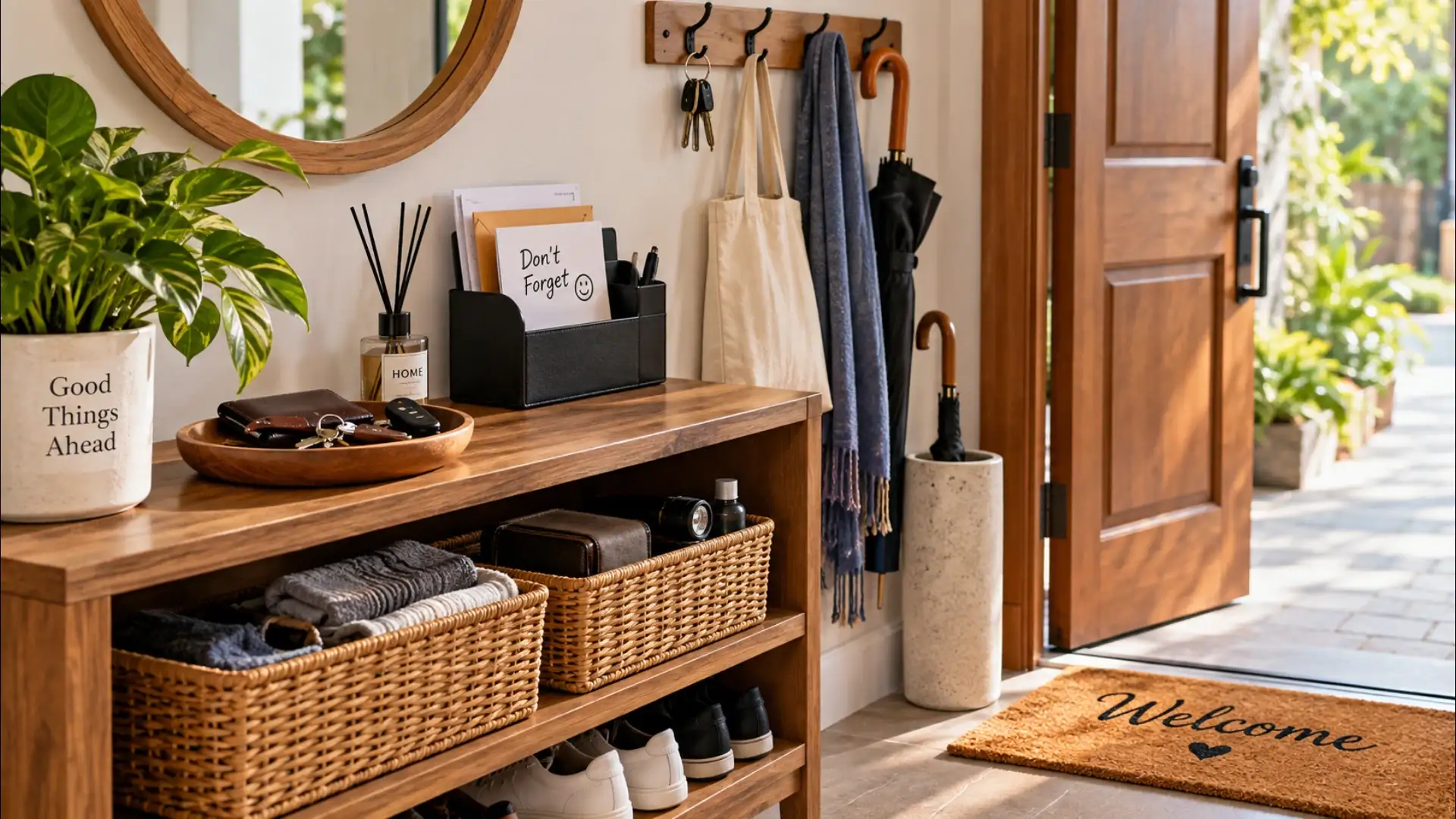
The important part is consistency. If keys always go in the same place when you return, finding them before leaving becomes almost automatic.
Unlike an open pile on a console table, a tray creates a defined boundary. It also makes it easier to notice when something has been left behind.
Keeping reusable shopping bags by the entrance is particularly practical because they are less likely to be forgotten when you head to the shops.
In places where rain can arrive unexpectedly, keeping an umbrella close to the entrance is a small preparation that can make a noticeable difference.
It is also useful to keep the shoes you wear most often within easy reach rather than storing every pair directly beside the door.
Choose a design with hidden storage if you need somewhere to keep slippers, shoe-care products or other small items.
This is an old interior-design trick that remains useful today, particularly in entrances without much natural light.
The important word is temporary. Check the tray regularly so it does not become another place where paperwork disappears.
If you have recycling facilities, a clearly designated container can also help keep recyclable packaging from being mixed with general waste.
The best entrance storage is therefore not about keeping everything by the front door. It is about keeping the right things there. When frequently needed items have an obvious place, small daily decisions become easier, clutter is reduced and leaving home becomes a smoother part of the routine. Sometimes better organisation does not require more space at all. It simply requires putting useful things where you naturally reach for them.
A Dedicated Place for Keys
Keys are among the easiest things to misplace, particularly during a rushed morning. A small bowl, hook rail or wall-mounted key organiser gives them a permanent home.The important part is consistency. If keys always go in the same place when you return, finding them before leaving becomes almost automatic.
A Small Tray for Everyday Essentials
A shallow tray near the entrance can hold items that you regularly carry in and out, such as sunglasses, a wallet or access cards.Unlike an open pile on a console table, a tray creates a defined boundary. It also makes it easier to notice when something has been left behind.
A Place for Frequently Used Bags
A sturdy hook or a few wall-mounted pegs can keep handbags, backpacks, reusable shopping bags and other frequently used carriers within easy reach.Keeping reusable shopping bags by the entrance is particularly practical because they are less likely to be forgotten when you head to the shops.
An Umbrella
An umbrella stand or narrow container near the door can save an unnecessary dash through the house when the weather suddenly changes.In places where rain can arrive unexpectedly, keeping an umbrella close to the entrance is a small preparation that can make a noticeable difference.
A Shoe Storage Solution
Shoes scattered across the entrance can quickly make a hallway look untidy. A compact shoe rack, bench with storage or closed cabinet can help keep footwear under control.It is also useful to keep the shoes you wear most often within easy reach rather than storing every pair directly beside the door.
A Small Seat
If space allows, a small bench or stool can make putting on and removing shoes considerably easier. It can be especially useful in homes where people prefer not to stand while changing footwear.Choose a design with hidden storage if you need somewhere to keep slippers, shoe-care products or other small items.
A Mirror
A mirror near the entrance has both practical and visual benefits. It gives you a quick opportunity to check your appearance before leaving and can also reflect light around a narrow hallway.You may also like
- Jennifer Garner's garden isn't just for show: The vegetables, herbs, and hands-on hobby that have become part of the actor's life
- Kendall Jenner turned heads in the simplest golden dress at Venice Film Festival
- Clicking or Popping Hips During Pregnancy: Causes & Tips
- Create a Resume Using AI and Succeed in Job Interviews
- ATM Rules Changed: Public sector bank reduces free transaction limit; check new charges before withdrawing cash..
This is an old interior-design trick that remains useful today, particularly in entrances without much natural light.
A Place for Incoming Post
Mail can quickly become clutter when it has no designated destination. A small wall organiser, basket or letter tray can provide a temporary home for incoming post.The important word is temporary. Check the tray regularly so it does not become another place where paperwork disappears.
A Small Bin
A discreet waste bin can be surprisingly useful near the entrance. It gives you somewhere to discard unwanted receipts, packaging and other small bits of rubbish before they travel further into the home.If you have recycling facilities, a clearly designated container can also help keep recyclable packaging from being mixed with general waste.
Seasonal Essentials
The final category should change according to the season. In colder months, gloves, scarves and hats may deserve a dedicated basket. During warmer weather, sunscreen, caps or lightweight shopping bags may be more useful.The best entrance storage is therefore not about keeping everything by the front door. It is about keeping the right things there. When frequently needed items have an obvious place, small daily decisions become easier, clutter is reduced and leaving home becomes a smoother part of the routine. Sometimes better organisation does not require more space at all. It simply requires putting useful things where you naturally reach for them.






Loving Newspoint? Download the app now
