
10 Ways to Make a Small Dining Area Feel More Spacious

A small dining area does not have to feel cramped, crowded or difficult to use. In many homes, the dining table sits between the kitchen, living room and other everyday spaces, so even a little visual clutter can make the entire area seem smaller. The good news is that making a small dining area feel more spacious is often less about knocking down walls and more about choosing the right furniture, lighting and layout. Interior designers frequently rely on simple visual tricks, from reflective surfaces to open-backed chairs, to change how a compact room is perceived.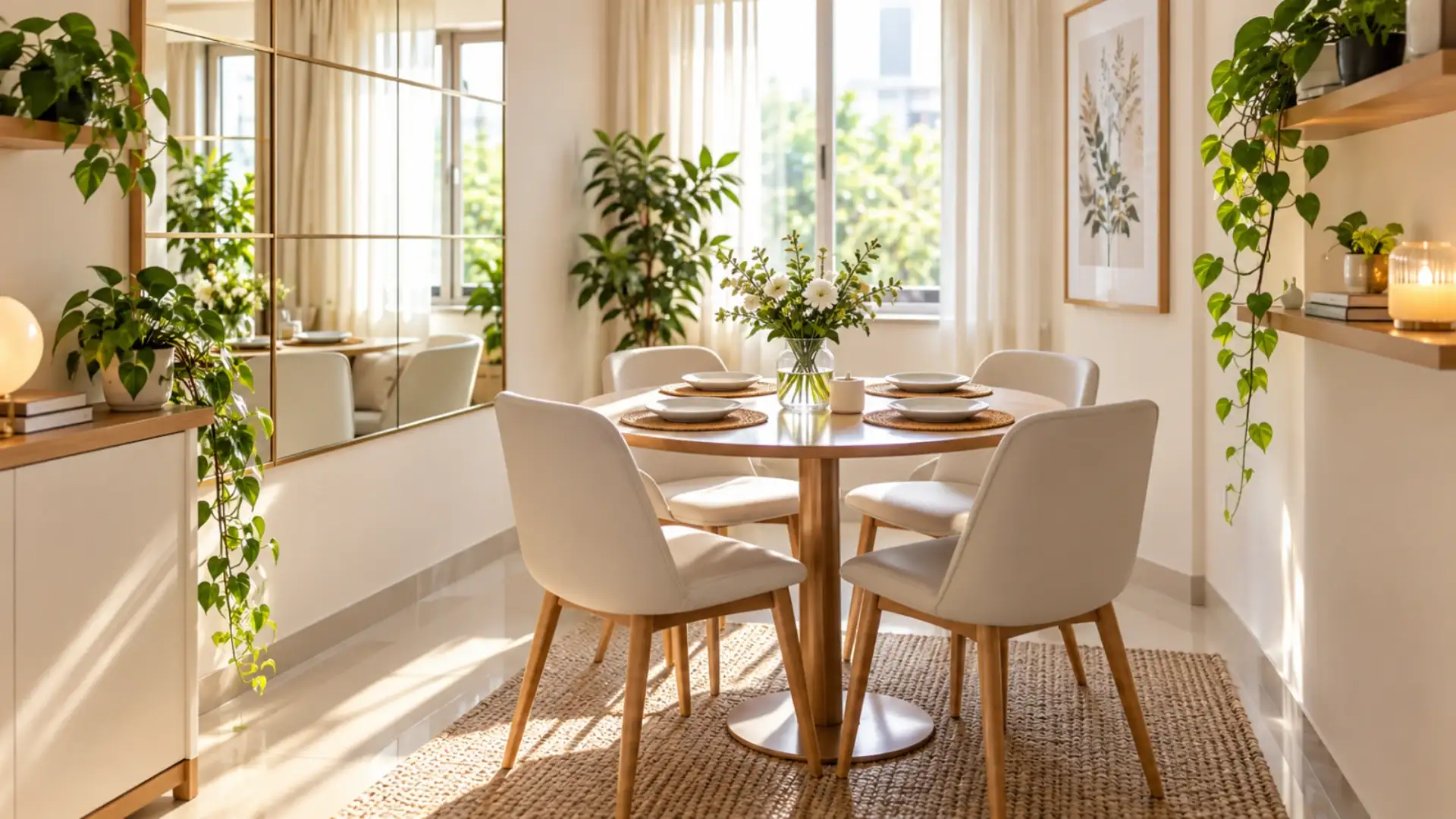
A pedestal-style table can be even more useful because there are fewer table legs competing with chairs and feet underneath. This small detail can make the floor appear less cluttered while giving diners more flexibility when sitting down.
A slim dining table paired with comfortable, streamlined chairs can provide everything needed without overwhelming the room. Think about how far chairs extend when pulled out, rather than measuring only the table itself.
For evening meals, consider a pendant light positioned above the table rather than using a floor lamp. It provides focused illumination while keeping valuable floor space free. Designers also use different levels of lighting to draw the eye around a room, helping it feel more interesting and visually open.
The trick is to reflect something attractive, such as a window, artwork or light fixture, rather than a cluttered corner.
This does not mean sacrificing comfort. The aim is simply to avoid furniture that visually blocks the room from one side to the other.
A larger artwork can sometimes work better than several small decorations because it creates one clear focal point rather than multiple competing ones.
Ultimately, spaciousness is not measured only in square metres. A dining area feels bigger when movement is easy, sight lines remain open and the room does not constantly demand your attention. With a few thoughtful changes, even a compact corner can become a comfortable place for everyday meals, morning coffee and long conversations.
Choose a Round or Oval Dining Table
One of the easiest changes is replacing a bulky rectangular table with a round or oval design. Without sharp corners, a round table can make it easier to move around the room and create a smoother flow, particularly in a narrow dining area.A pedestal-style table can be even more useful because there are fewer table legs competing with chairs and feet underneath. This small detail can make the floor appear less cluttered while giving diners more flexibility when sitting down.
Keep Furniture Proportions in Check
Small spaces do not necessarily need miniature furniture. In fact, filling a room with lots of tiny pieces can sometimes make it look more cluttered. The better approach is to choose a few well-proportioned pieces that serve a clear purpose.A slim dining table paired with comfortable, streamlined chairs can provide everything needed without overwhelming the room. Think about how far chairs extend when pulled out, rather than measuring only the table itself.
Let More Light Into the Room
Natural light can dramatically change how a compact dining area feels. Keep windows as clear as possible and avoid heavy curtains that block daylight.For evening meals, consider a pendant light positioned above the table rather than using a floor lamp. It provides focused illumination while keeping valuable floor space free. Designers also use different levels of lighting to draw the eye around a room, helping it feel more interesting and visually open.
Use a Mirror to Add Visual Depth
A strategically placed mirror can make a small dining area appear deeper by reflecting light and parts of the room. Rather than covering every wall with decorative objects, one well-positioned mirror can have a stronger effect.The trick is to reflect something attractive, such as a window, artwork or light fixture, rather than a cluttered corner.
You may also like
- Create a Resume Using AI and Succeed in Job Interviews
- ATM Rules Changed: Public sector bank reduces free transaction limit; check new charges before withdrawing cash..
- One mistake in train ticket booking can lead to trouble; IRCTC issues important advice to passengers
- We are unserious but we get the job done: Pranjali Papnai
- Jupiter Transit 2026: 5 Zodiac Signs Set For Big Money, Career Growth And Better Luck Ahead
Try Bench or Banquette Seating
Traditional chairs need space to be pulled backwards, while a bench can slide neatly beneath the table when it is not being used. If the dining area sits against a wall or in a corner, built-in or compact banquette seating can make particularly good use of otherwise awkward space.Choose Visually Light Chairs
Open-backed chairs can help maintain clear sight lines through the dining area. Chairs with slim frames and no bulky arms also tend to look less imposing.This does not mean sacrificing comfort. The aim is simply to avoid furniture that visually blocks the room from one side to the other.
Keep the Floor as Visible as Possible
Furniture raised slightly above the floor can create an unexpected sense of openness. When you can see more flooring beneath chairs and tables, the eye can travel further across the room, making the area feel less interrupted.Avoid Overcrowding the Walls
Decorating every available wall may seem like a good way to add personality, but too many frames, shelves and ornaments can make a small dining area feel busy. Select a few meaningful pieces instead.A larger artwork can sometimes work better than several small decorations because it creates one clear focal point rather than multiple competing ones.
Use One Consistent Colour Direction
A limited colour palette can help different elements of a dining area visually blend together. Light, warm neutrals are a popular choice, but darker colours can also work when used thoughtfully. What matters most is avoiding too many abrupt visual breaks.Make Every Piece Earn Its Place
Perhaps the most useful rule for a small dining area is simple: every item should have a reason to be there. A slim console can double as serving storage, while a bench can provide seating and hidden storage underneath.Ultimately, spaciousness is not measured only in square metres. A dining area feels bigger when movement is easy, sight lines remain open and the room does not constantly demand your attention. With a few thoughtful changes, even a compact corner can become a comfortable place for everyday meals, morning coffee and long conversations.






Loving Newspoint? Download the app now
