
10 Winter Vegetables That Can Add Colour, Flavour and Variety to Your Everyday Meals

Winter brings a fresh selection of vegetables to Indian markets, giving home cooks plenty of options to make everyday meals more interesting. From leafy greens and root vegetables to colourful seasonal produce , this is a good time to experiment with different flavours and cooking styles. Many winter vegetables can be used in traditional Indian dishes, soups, parathas, curries and simple stir-fries.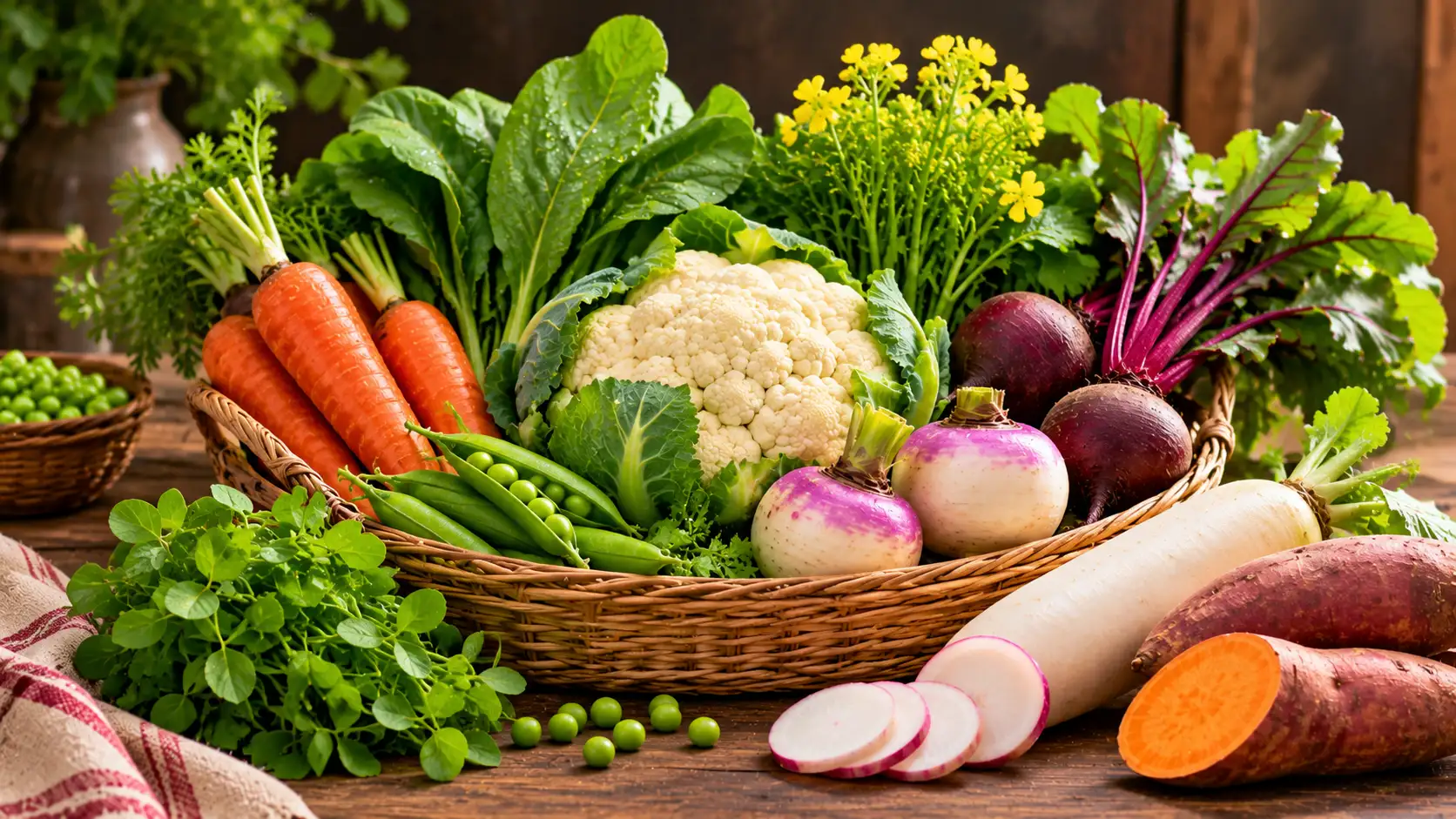
Including seasonal produce in your meals also adds variety to your diet. Here are 10 popular winter vegetables and some easy ways to enjoy them during the colder months.
Adding seasonal vegetables to your meals is a simple way to enjoy more variety throughout winter while making the most of the produce available at local markets.
Including seasonal produce in your meals also adds variety to your diet. Here are 10 popular winter vegetables and some easy ways to enjoy them during the colder months.
1. Carrots
Carrots are among the most versatile vegetables available during winter. Their natural sweetness makes them suitable for both savoury and sweet dishes. You can add them to vegetable pulao, soups, salads and mixed vegetable curries. Red winter carrots are also commonly used to prepare traditional gajar ka halwa.2. Mustard Greens (Sarson)
Mustard greens are closely associated with North Indian winter cooking. Their slightly pungent flavour makes them ideal for preparing sarson ka saag, especially when combined with spinach or bathua. Serve the dish with makki ki roti for a traditional seasonal meal.3. Green Peas
Fresh green peas add colour, texture and a mild sweetness to winter recipes. They work well in matar paneer, aloo matar, pulao, parathas and vegetable cutlets. You can also add them to soups or simple stir-fries for an easy meal.4. Cauliflower
Cauliflower is a popular winter vegetable that can be prepared in several ways. It is commonly used in gobhi paratha, aloo gobhi and vegetable curries. You can also roast cauliflower with spices or add it to soups for a comforting winter meal.5. Radish (Mooli)
Radish has a distinctive flavour and a crisp texture. It is widely used in Indian kitchens during winter, particularly in mooli parathas and fresh salads. Chopped radish can also be added to vegetable preparations or cooked with simple spices.6. Spinach (Palak)
Spinach is an easy way to include leafy greens in everyday meals. It can be used to prepare palak paneer, dal palak, soups and stuffed parathas. Finely chopped spinach can also be mixed into dough or added to vegetable pulao.7. Beetroot
With its deep red colour and earthy flavour, beetroot can make everyday meals more appealing. Use it in salads, cutlets, vegetable sandwiches and soups. Grated beetroot can also be added to paratha fillings or mixed vegetable preparations.8. Fenugreek Leaves (Methi)
Fresh methi leaves are another winter favourite in Indian households. Their slightly bitter taste works particularly well in methi parathas, aloo methi and theplas. You can also add chopped leaves to dal or vegetable dishes for extra flavour.9. Turnip (Shalgam)
Turnips are often used in winter curries and traditional vegetable preparations. Their mild, slightly sweet flavour makes them suitable for slow-cooked dishes. You can prepare shalgam sabzi, add diced pieces to soups or cook them with peas and other seasonal vegetables.10. Sweet Potatoes
Sweet potatoes are naturally sweet and can be enjoyed in both savoury and simple snack preparations. Roast or boil them, add them to chaat, or use them in soups. They can also be cut into wedges and baked with spices for an easy evening snack.Make the Most of Seasonal Vegetables
Winter vegetables offer plenty of opportunities to experiment with everyday cooking. Instead of preparing the same dishes repeatedly, try combining different seasonal ingredients in soups, parathas, curries and one-pot meals. Choose fresh produce, wash it properly and store leafy greens and other vegetables appropriately to maintain their quality.Adding seasonal vegetables to your meals is a simple way to enjoy more variety throughout winter while making the most of the produce available at local markets.
Next Story