
240-million-year-old 'huge pig with a turtle's beak' discovered: All you need to know about Dinodontosaurus isiyavamanda


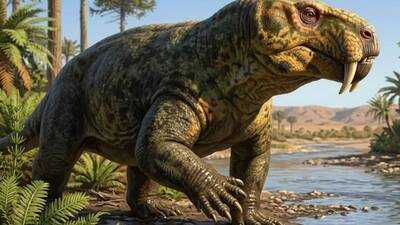
Picture this: a lumbering animal built like a giant pig, toothless except for a curved beak like a turtle’s, and sprouting two impressive tusks. Now imagine it plodding through what’s now Tanzania, 240 million years ago — so far back that dinosaurs were still just getting started. If it sounds like something from a sci-fi movie, you’re not far off. But this animal, Dinodontosaurus isiyavamanda , is very much real, thanks to a set of fossils that’s been waiting in a museum for decades.
And now, here’s the story: per The Sun, a team at the University of Bristol took a fresh look at some old bones stashed at London’s Natural History Museum since the 1960s. They realized they had a brand-new prehistoric species on their hands; not just another oddball, but a creature that can actually help scientists fine-tune the age of rocks in Tanzania. That, in turn, tells us a lot more about when the very first dinosaurs started to evolve.
So, what exactly did they dig up?Meet the Dinodontosaurus isiyavamanda, a member of the “dicynodonts,” which are not quite dinosaurs, definitely not mammals, but part of the branch of animals that would eventually lead to mammals like us. These plant-eaters thrived in the Permian and Triassic before dinosaurs took over. This particular species lived during the Triassic, right as life was rebounding from Earth’s deadliest mass extinction.
Why does it look like a pig crossed with a turtle?That comes down to the body plan. Imagine a big-bodied animal, with a bulky frame and a beak where you’d expect teeth. Add tusks jutting from the jaws, and you get a mix of farm animal, turtle, and something much weirder. The beaked jaws are what really sell the turtle resemblance, while the squat body is all pig.
The tusks have scientists especially curious. Scratches and patterns in the fossilized tusks suggest Dinodontosaurus may have used them to dig up roots or strip bark, but maybe also to defend itself. Life was rough in the Triassic, after all.
And yes, like most of its kin, this was a plant-muncher. Researchers are still piecing together what its daily life was actually like and how it fit into the ancient ecosystem.
What about those fossils?They’ve been lying around for 60 years.
And here’s the twist: nobody was out in the field recently, risking sunburn and bug bites for this find. The story goes back to 1963, when a British team collected a bunch of bones in Tanzania’s Ruhuhu Basin. For decades, most of that material sat in museum drawers, only partly studied.
It took a new generation of palaeontologists taking another look, comparing the bones and skull fragments to specimens from South America, to realize they’d found something unexpected. Until now, Dinodontosaurus was only known from South America. Its presence in Tanzania is a big hint about how animals spread around the supercontinent Pangaea before the continents moved apart.
Why does this strange creature matter for dinosaur history?Here’s why palaeontologists care: the rocks in Tanzania that contain these fossils are the same age as some of the earliest dinosaur fossils people have argued about for years. By identifying Dinodontosaurus here, just like in South America, researchers can better match up the timelines of rocks on different continents. That helps clarify when and where dinosaurs really started taking over.
In fact, this new find suggests that the earliest Tanzanian “dinosaur” fossils might not be quite as old as some people thought. The story isn’t about finding the “first dinosaur,” but about tightening up the clock on when dinosaurs appear, using a weird, beaked, tusked plant-eater as the reference.
What’s next?There’s a lot left to unpack. Huge portions of the Tanzanian Dinodontosaurus fossils haven’t even been fully studied yet: lots of bones, plenty of questions. Scientists are eager to see if more discoveries in those old boxes might reveal how these animals moved, lived, or interacted with their neighbors in the ancient world.
So, Dinodontosaurus isiyavamanda might look like a jumbled prehistoric mash-up, but it’s a key player in the story of life on Earth. Sometimes, the right fossils don’t announce themselves in a blaze of glory; they just wait, silent and dusty, for decades, until someone finally looks twice and realizes they’re holding a piece of the dinosaur puzzle.
And now, here’s the story: per The Sun, a team at the University of Bristol took a fresh look at some old bones stashed at London’s Natural History Museum since the 1960s. They realized they had a brand-new prehistoric species on their hands; not just another oddball, but a creature that can actually help scientists fine-tune the age of rocks in Tanzania. That, in turn, tells us a lot more about when the very first dinosaurs started to evolve.
So, what exactly did they dig up?Meet the Dinodontosaurus isiyavamanda, a member of the “dicynodonts,” which are not quite dinosaurs, definitely not mammals, but part of the branch of animals that would eventually lead to mammals like us. These plant-eaters thrived in the Permian and Triassic before dinosaurs took over. This particular species lived during the Triassic, right as life was rebounding from Earth’s deadliest mass extinction.
Why does it look like a pig crossed with a turtle?That comes down to the body plan. Imagine a big-bodied animal, with a bulky frame and a beak where you’d expect teeth. Add tusks jutting from the jaws, and you get a mix of farm animal, turtle, and something much weirder. The beaked jaws are what really sell the turtle resemblance, while the squat body is all pig.
The tusks have scientists especially curious. Scratches and patterns in the fossilized tusks suggest Dinodontosaurus may have used them to dig up roots or strip bark, but maybe also to defend itself. Life was rough in the Triassic, after all.
And yes, like most of its kin, this was a plant-muncher. Researchers are still piecing together what its daily life was actually like and how it fit into the ancient ecosystem.
What about those fossils?They’ve been lying around for 60 years.
And here’s the twist: nobody was out in the field recently, risking sunburn and bug bites for this find. The story goes back to 1963, when a British team collected a bunch of bones in Tanzania’s Ruhuhu Basin. For decades, most of that material sat in museum drawers, only partly studied.
It took a new generation of palaeontologists taking another look, comparing the bones and skull fragments to specimens from South America, to realize they’d found something unexpected. Until now, Dinodontosaurus was only known from South America. Its presence in Tanzania is a big hint about how animals spread around the supercontinent Pangaea before the continents moved apart.
Why does this strange creature matter for dinosaur history?Here’s why palaeontologists care: the rocks in Tanzania that contain these fossils are the same age as some of the earliest dinosaur fossils people have argued about for years. By identifying Dinodontosaurus here, just like in South America, researchers can better match up the timelines of rocks on different continents. That helps clarify when and where dinosaurs really started taking over.
In fact, this new find suggests that the earliest Tanzanian “dinosaur” fossils might not be quite as old as some people thought. The story isn’t about finding the “first dinosaur,” but about tightening up the clock on when dinosaurs appear, using a weird, beaked, tusked plant-eater as the reference.
What’s next?There’s a lot left to unpack. Huge portions of the Tanzanian Dinodontosaurus fossils haven’t even been fully studied yet: lots of bones, plenty of questions. Scientists are eager to see if more discoveries in those old boxes might reveal how these animals moved, lived, or interacted with their neighbors in the ancient world.
So, Dinodontosaurus isiyavamanda might look like a jumbled prehistoric mash-up, but it’s a key player in the story of life on Earth. Sometimes, the right fossils don’t announce themselves in a blaze of glory; they just wait, silent and dusty, for decades, until someone finally looks twice and realizes they’re holding a piece of the dinosaur puzzle.
Next Story