
25 Years of 9/11: From personal grief to global consequences, the stories cinema told


It seems strange but half the population of the world today won’t be able to answer the question, unlike a lot of us: Where were you when the planes hit the Twin Towers? The ones who won’t be able to answer the question were either just born or weren’t born the day terror came from the skies in America; and changed the world forever.
Twenty-five years after September 11, 2001, the images are still unbearably familiar. The planes, the towers, the smoke, the people running through the streets of Manhattan, the desperate phone calls, the photographs of the missing and the stunned faces of those watching television screens as an ordinary Tuesday morning turned into history.
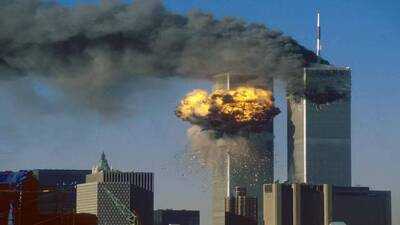
Yet for a generation born after 9/11, these are not memories but historical images. As the attacks recede further into history, cinema has become one of the ways through which the emotional and political meaning of that day is passed from one generation to another.
Hollywood was initially hesitant to confront 9/11 directly. The wounds were too fresh, the politics too raw and the danger of turning catastrophe into entertainment too obvious. When films finally began to address it, they approached the event from radically different directions.
United 93 tried to reconstruct the terrifying immediacy of the day without conventional Hollywood heroics. World Trade Center concentrated on survival and the extraordinary resilience of ordinary people. Reign Over Me moved away from the spectacle of the attacks altogether, asking what happens to an individual years after unimaginable loss. Extremely Loud & Incredibly Close explored the event through the eyes of a child trying to make sense of a father's death.
But the cinematic story of 9/11 did not remain confined to the towers. The attacks transformed American foreign policy, produced the “war on terror”, altered the experience of Muslim and South Asian communities in the West and created a vast machinery of surveillance, interrogation and military intervention. Films such as The Reluctant Fundamentalist, Zero Dark Thirty and The Report examine not only what happened on September 11 but what the United States became after 9/11. One is concerned with alienation and identity, another with vengeance and the hunt for Osama bin Laden, and the third with the moral and institutional consequences of torture.
Then came Worth, perhaps the most revealing film in this group because it asks a deceptively simple question: how do you put a financial value on a human life? Its answer exposes the impossible collision between soulless bureaucracy and human grief.
Television offered an even broader canvas. The Looming Tower looked backwards rather than forwards, reconstructing the years before 9/11 and the intelligence failures that allowed warning signs to be missed. Together, these films created a conventional cinematic record.
Here’s why these fictional stories are a must-watch – especially for a generation that learnt about the world-changing event in classrooms.
United 93, Director: Paul Greengrass, 2006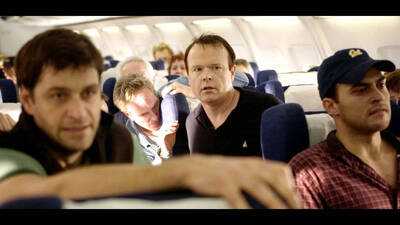
Greengrass’ United 93 remains one of the most uncompromising films ever made about 9/11. This film does not reconstruct the attacks through the eyes of presidents, generals or intelligence officials. The director confines much of the film to the claustrophobic interior of United Airlines Flight 93 and the fragmented communications centres on the ground. The effect is deliberately documentary-like. There is little conventional character development, little melodrama and almost no attempt to manufacture a Hollywood hero.
That restraint is the film's greatest strength. The passengers are initially strangers occupying a confined space, ordinary people who suddenly realise that the rules governing their lives have disappeared. They have incomplete information, conflicting reports and almost no certainty about what is happening. Their gradual understanding of the situation becomes the film's central dramatic device.
The extraordinary thing about United 93 is when facing certain death, courage becomes a collective decision. The passengers are frightened people who understand that doing nothing means surrendering control. Greengrass turns that realization into a study of human behaviour under extreme pressure.
The film also changed the grammar of the 9/11 movies to come. There are no reassuring explanations. There is no larger political context given for “better understanding”. The audience experience confusion because confusion was the reality of that morning. The result is uncomfortable because it refuses the emotional distance normally provided by cinema.
The film was praised for being rigorously constructed while also provoking discomfort because of the intensity of its recreation. That tension remains important 20 years later.
World Trade Center, Director: Oliver Stone, 2006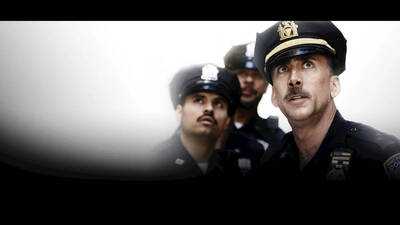
If United 93 is about collective action, Oliver Stone's World Trade Center is about survival. Based on the experiences of Port Authority police officers trapped beneath the rubble, the film deliberately narrows the enormous geopolitical significance of 9/11 into the physical experience of two men trying to stay alive. Nicolas Cage and Michael Peña play officers John McLoughlin and Will Jimeno, whose world becomes darkness, concrete, pain and uncertainty.
Stone, a filmmaker often associated with political controversy, does not make the film primarily about George W. Bush, terrorism or American foreign policy. Instead, he makes it about the human body confronting an almost unimaginable physical environment.
The film's emotional power comes from the contrast between what is happening above ground and below it. Above ground is chaos; beneath the rubble is intimate human dependence. Survival becomes a shared act.
Yet World Trade Center is also about the emotional culture of post-9/11 America. It emphasises sacrifice, courage, family and faith. It captures the desire of the period to find a reassuring narrative within an incomprehensible catastrophe.
United 93 is deliberately austere, and World Trade Center is more conventional and sentimental. Two films released in the same year demonstrate two competing ways of remembering 9/11: one through almost unbearable realism, the other through the consolations of heroism and human resilience.
Reign Over Me, Director: Mike Binder, 2007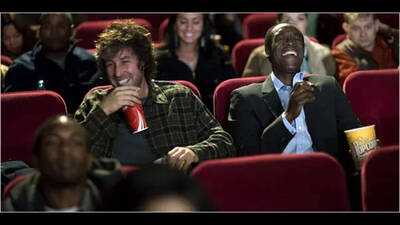
Reign Over Me is arguably more interesting today because it asks a question that the immediate post-9/11 culture could not easily ask: what happens after everyone else has moved on? Or, more importantly, it’s a film that goes into the heart of trauma. That is why the film is a must watch for people living in our times. No matter what the trauma, Reign Over Me does seem familiar to all of us.
Adam Sandler plays Charlie Fineman, a man who lost his wife and daughters in the World Trade Center attacks. Years later, he has withdrawn almost completely from his former life. His old college friend Alan Johnson, played by Don Cheadle, encounters him and gradually tries to reconnect him with the world.
The film does not attempt to recreate the attacks. Instead, 9/11 exists as an absence, an invisible force that has reorganised Charlie's entire personality. The trauma is not an event, rather its afterlife.
Charlie is not simply grieving. He has become psychologically suspended in time. His refusal to remember is paradoxically the way he remembers. His isolation is a form of self-protection. Something we can all identify with in our post-pandemic reality.
The friendship between Charlie and Alan gives the film its emotional architecture. Alan initially thinks he is helping Charlie, but gradually discovers that his own apparently successful life is also emotionally compromised. The film therefore avoids making trauma a condition that belongs only to the obvious victim. Everyone carries something. That is why this film is a must-watch.
Reign Over Me also represents an early attempt to understand 9/11 through the lens of mental health and private grief rather than national identity. It isn’t about ‘How did America respond?’ but ‘How does one person survive when the future has become impossible to imagine?’
Zero Dark Thirty, Director: Kathryn Bigelow, 2012
If the earlier films ask what happened to people on September 11, Zero Dark Thirty asks what happened to America afterwards. Bigelow's film follows the decade-long hunt for Osama bin Laden, using the fictional composite CIA operative Maya as its central character. The film turns the pursuit into a procedural thriller, emphasising intelligence gathering, surveillance, interrogation and finally the Abbottabad raid.
Its strength is its sense of institutional obsession. Maya's (Jessica Chastain) life becomes almost entirely organised around one objective. The passage of years is registered less through conventional personal development than through changing intelligence, political administrations and technological methods.
But Zero Dark Thirty also remains controversial because of its treatment of torture. The film raises a disturbing question: does a society fighting a monstrous enemy begin to adopt methods that change its own moral identity?
Bigelow does not make the question easy. The film is neither straightforward propaganda nor a conventional condemnation of the security state. Its clinical style is unsettling because it presents extraordinary violence through the “cool” language of procedure.
The Report, Director: Scott Z. Burns, 2019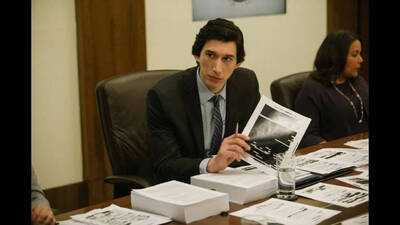
The Report examines the machinery that made torture possible. Burns's film follows Senate investigator Daniel Jones, played by Adam Driver, as he investigates the CIA’s post-9/11 detention and interrogation programme. The resulting Senate investigation eventually produced a massive report documenting the programme and its consequences.
What makes the film remarkable is that almost nothing about it looks traditionally cinematic. There are offices, documents, interviews, computer screens, corridors and endless arguments over language. Yet Burns turns bureaucracy into suspense.
The film displays that the most consequential events in history, at times, do not happen in spectacular rooms or on battlefields. They happen in institutions, through memos, omissions, classified files and carefully chosen words.
The film is also a corrective to the idea that the post-9/11 response can be understood only through military action. The “war on terror” was also a war fought inside legal and bureaucratic systems, where definitions of torture, national security and accountability were repeatedly contested.
Daniel Jones’s persistence gives the film its moral centre. He is not an action hero. His weapon is documentation.
That makes The Report particularly relevant 25 years later. Democracies depend on institutions capable of investigating themselves. The film asks what happens when those institutions protect themselves instead of democracy.
The Reluctant Fundamentalist, Director: Mira Nair, 2012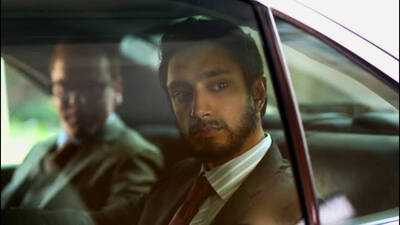
Nair’s The Reluctant Fundamentalist is an important film in this group for understanding how 9/11 looked from outside America. Riz Ahmed plays Changez Khan, a Pakistani graduate of Princeton, who builds a successful career on Wall Street. Before 9/11, he is deeply invested in the American dream. After the attacks, however, the identity he thought was his strength becomes the reason people look at him with suspicion.
The film is fundamentally about belonging. Changez does not simply lose a job or a relationship. He loses the assumption that he can move comfortably between identities. His beard, Pakistani background and Muslim identity acquire political meaning that they did not previously possess.
That’s how Nair's film expands the 9/11 conversation. The attacks created fear and new categories of suspicion. Muslims and South Asians in Western societies were often forced to negotiate an identity suddenly viewed through the prism of security — and judgement.
The title is deliberately provocative. Who is the fundamentalist? The man who becomes disillusioned with America, or the society that begins to see an entire community through a narrow ideological lens?
Extremely Loud & Incredibly Close, Director: Stephen Daldry, 2011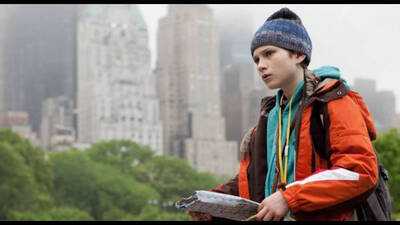
Daldry's Extremely Loud & Incredibly Close takes one of the boldest perspectives possible: that of a child. Oskar, played by Thomas Horn, loses his father in the World Trade Center attacks. He discovers a mysterious key among his father's possessions and begins searching New York for the lock it might open.
The quest is literal, but its real purpose is emotional. Oskar is trying to turn an incomprehensible tragedy into a puzzle that can be solved. That is what makes the film interesting. Children often process grief through objects, rituals and stories because abstract explanations are too difficult to comprehend.
Oskar's search therefore becomes a metaphor for the human desire to impose order on catastrophe. The film also understands that grief is not linear. Oskar is angry, frightened, obsessive and sometimes emotionally difficult. His intelligence does not protect him from trauma.
The presence of older generations, particularly the mysterious elderly man played by Max von Sydow, broadens the film’s idea of historical trauma. Oskar's grief is specifically 9/11, but the film suggests that human beings have always carried the consequences of violence.
This film’s brilliance is that it is less a film about explaining 9/11 than about the impossibility of explaining it to someone who needs an answer.
Remember Me, Director: Allen Coulter, 2010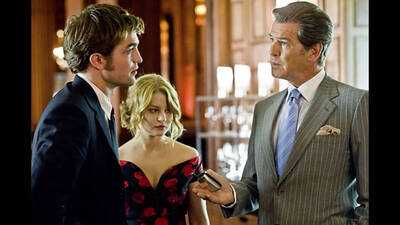
For most of its running time, the Robert Pattinson-led romantic drama is a story about damaged young people, family conflict, love and unresolved grief. It unfolds as an intimate portrait of people struggling to come to terms with loss and find meaning in their relationships. Yet the film has a larger historical context that gives its seemingly personal story a very different resonance, which is why Remember Me belongs on a list of films connected to 9/11.
Worth, Director: Sara Colangelo, 2020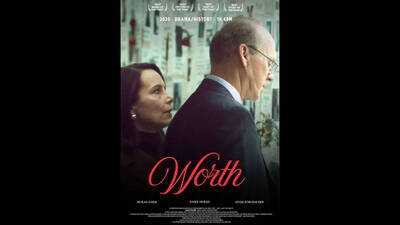
Worth may be the quietest and, in some ways, the most mature film in this collection. Michael Keaton plays a lawyer, Kenneth Feinberg, appointed to administer the September 11th Victim Compensation Fund. His task sounds administrative: determine how much money should be given to the families of those killed or injured.
But the film understands the moral absurdity of the assignment. Because, really, how much is a life worth? The moment the question is converted into a number, the emotional contradiction becomes unavoidable. The government needs a formula. Families need recognition. Lawyers need consistency. Grieving people need justice. These demands cannot easily coexist.
Sara Colangelo avoids turning the attacks themselves into spectacle. The towers are largely absent. The film is about conference rooms, arguments, spreadsheets, families and uncomfortable conversations. The horror exists in the spaces between people.
The character of Charles Wolf, played by Stanley Tucci, is particularly important because he refuses to allow the victims to become statistics. His resistance forces Feinberg to understand that mathematical equality and emotional fairness are not the same thing.
In that sense, Worth represents a major evolution in 9/11 cinema. The event has moved so far into the past that the question is no longer simply how people survived it. It is how institutions tried—and often failed—to deal with what remained.
TV series The Looming Tower, 2018Created by Dan Futterman, Alex Gibney and Lawrence Wright; directed across the series by Craig Zisk, John Dahl, Ali Selim, Michael Slovis and Alex Gibney
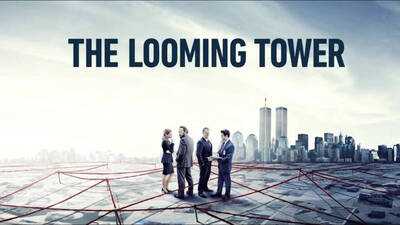
Most 9/11 films begin on September 11, The Looming Tower begins years earlier. Based on Lawrence Wright's Pulitzer Prize-winning book, the 10-part miniseries reconstructs the rise of Osama bin Laden and al-Qaeda during the 1990s while focusing on the increasingly bitter rivalry between the FBI and CIA. Jeff Daniels plays FBI counterterrorism chief John O’Neill, while Tahar Rahim plays FBI agent Ali Soufan.
Its central insight is devastatingly simple: Most times, institutions fail because of ego. Because the people who possess different pieces of the truth fail to share them. The series turns bureaucratic rivalry into tragedy. The FBI and CIA are ostensibly pursuing the same enemy, yet competition over information, jurisdiction and institutional authority repeatedly gets in the way.
That makes The Looming Tower fundamentally different from the other works here. The dramatic irony is relentless because the audience knows what the characters do not. Every warning sign becomes painful because we know where it leads.
The final episodes are particularly powerful because the audience watches the machinery of disaster move into position while the characters remain trapped inside their institutional battles. The series’ final episode reaches September 11, but the real tragedy has already been constructed over the preceding decade.
Twenty-five years after September 11, 2001, the images are still unbearably familiar. The planes, the towers, the smoke, the people running through the streets of Manhattan, the desperate phone calls, the photographs of the missing and the stunned faces of those watching television screens as an ordinary Tuesday morning turned into history.
Yet for a generation born after 9/11, these are not memories but historical images. As the attacks recede further into history, cinema has become one of the ways through which the emotional and political meaning of that day is passed from one generation to another.
Hollywood was initially hesitant to confront 9/11 directly. The wounds were too fresh, the politics too raw and the danger of turning catastrophe into entertainment too obvious. When films finally began to address it, they approached the event from radically different directions.
United 93 tried to reconstruct the terrifying immediacy of the day without conventional Hollywood heroics. World Trade Center concentrated on survival and the extraordinary resilience of ordinary people. Reign Over Me moved away from the spectacle of the attacks altogether, asking what happens to an individual years after unimaginable loss. Extremely Loud & Incredibly Close explored the event through the eyes of a child trying to make sense of a father's death.
But the cinematic story of 9/11 did not remain confined to the towers. The attacks transformed American foreign policy, produced the “war on terror”, altered the experience of Muslim and South Asian communities in the West and created a vast machinery of surveillance, interrogation and military intervention. Films such as The Reluctant Fundamentalist, Zero Dark Thirty and The Report examine not only what happened on September 11 but what the United States became after 9/11. One is concerned with alienation and identity, another with vengeance and the hunt for Osama bin Laden, and the third with the moral and institutional consequences of torture.
Then came Worth, perhaps the most revealing film in this group because it asks a deceptively simple question: how do you put a financial value on a human life? Its answer exposes the impossible collision between soulless bureaucracy and human grief.
Television offered an even broader canvas. The Looming Tower looked backwards rather than forwards, reconstructing the years before 9/11 and the intelligence failures that allowed warning signs to be missed. Together, these films created a conventional cinematic record.
Here’s why these fictional stories are a must-watch – especially for a generation that learnt about the world-changing event in classrooms.
United 93, Director: Paul Greengrass, 2006
Greengrass’ United 93 remains one of the most uncompromising films ever made about 9/11. This film does not reconstruct the attacks through the eyes of presidents, generals or intelligence officials. The director confines much of the film to the claustrophobic interior of United Airlines Flight 93 and the fragmented communications centres on the ground. The effect is deliberately documentary-like. There is little conventional character development, little melodrama and almost no attempt to manufacture a Hollywood hero.
That restraint is the film's greatest strength. The passengers are initially strangers occupying a confined space, ordinary people who suddenly realise that the rules governing their lives have disappeared. They have incomplete information, conflicting reports and almost no certainty about what is happening. Their gradual understanding of the situation becomes the film's central dramatic device.
The extraordinary thing about United 93 is when facing certain death, courage becomes a collective decision. The passengers are frightened people who understand that doing nothing means surrendering control. Greengrass turns that realization into a study of human behaviour under extreme pressure.
The film also changed the grammar of the 9/11 movies to come. There are no reassuring explanations. There is no larger political context given for “better understanding”. The audience experience confusion because confusion was the reality of that morning. The result is uncomfortable because it refuses the emotional distance normally provided by cinema.
The film was praised for being rigorously constructed while also provoking discomfort because of the intensity of its recreation. That tension remains important 20 years later.
World Trade Center, Director: Oliver Stone, 2006
If United 93 is about collective action, Oliver Stone's World Trade Center is about survival. Based on the experiences of Port Authority police officers trapped beneath the rubble, the film deliberately narrows the enormous geopolitical significance of 9/11 into the physical experience of two men trying to stay alive. Nicolas Cage and Michael Peña play officers John McLoughlin and Will Jimeno, whose world becomes darkness, concrete, pain and uncertainty.
Stone, a filmmaker often associated with political controversy, does not make the film primarily about George W. Bush, terrorism or American foreign policy. Instead, he makes it about the human body confronting an almost unimaginable physical environment.
The film's emotional power comes from the contrast between what is happening above ground and below it. Above ground is chaos; beneath the rubble is intimate human dependence. Survival becomes a shared act.
Yet World Trade Center is also about the emotional culture of post-9/11 America. It emphasises sacrifice, courage, family and faith. It captures the desire of the period to find a reassuring narrative within an incomprehensible catastrophe.
United 93 is deliberately austere, and World Trade Center is more conventional and sentimental. Two films released in the same year demonstrate two competing ways of remembering 9/11: one through almost unbearable realism, the other through the consolations of heroism and human resilience.
Reign Over Me, Director: Mike Binder, 2007
Reign Over Me is arguably more interesting today because it asks a question that the immediate post-9/11 culture could not easily ask: what happens after everyone else has moved on? Or, more importantly, it’s a film that goes into the heart of trauma. That is why the film is a must watch for people living in our times. No matter what the trauma, Reign Over Me does seem familiar to all of us.
Adam Sandler plays Charlie Fineman, a man who lost his wife and daughters in the World Trade Center attacks. Years later, he has withdrawn almost completely from his former life. His old college friend Alan Johnson, played by Don Cheadle, encounters him and gradually tries to reconnect him with the world.
The film does not attempt to recreate the attacks. Instead, 9/11 exists as an absence, an invisible force that has reorganised Charlie's entire personality. The trauma is not an event, rather its afterlife.
Charlie is not simply grieving. He has become psychologically suspended in time. His refusal to remember is paradoxically the way he remembers. His isolation is a form of self-protection. Something we can all identify with in our post-pandemic reality.
The friendship between Charlie and Alan gives the film its emotional architecture. Alan initially thinks he is helping Charlie, but gradually discovers that his own apparently successful life is also emotionally compromised. The film therefore avoids making trauma a condition that belongs only to the obvious victim. Everyone carries something. That is why this film is a must-watch.
Reign Over Me also represents an early attempt to understand 9/11 through the lens of mental health and private grief rather than national identity. It isn’t about ‘How did America respond?’ but ‘How does one person survive when the future has become impossible to imagine?’
Zero Dark Thirty, Director: Kathryn Bigelow, 2012
If the earlier films ask what happened to people on September 11, Zero Dark Thirty asks what happened to America afterwards. Bigelow's film follows the decade-long hunt for Osama bin Laden, using the fictional composite CIA operative Maya as its central character. The film turns the pursuit into a procedural thriller, emphasising intelligence gathering, surveillance, interrogation and finally the Abbottabad raid.
Its strength is its sense of institutional obsession. Maya's (Jessica Chastain) life becomes almost entirely organised around one objective. The passage of years is registered less through conventional personal development than through changing intelligence, political administrations and technological methods.
But Zero Dark Thirty also remains controversial because of its treatment of torture. The film raises a disturbing question: does a society fighting a monstrous enemy begin to adopt methods that change its own moral identity?
Bigelow does not make the question easy. The film is neither straightforward propaganda nor a conventional condemnation of the security state. Its clinical style is unsettling because it presents extraordinary violence through the “cool” language of procedure.
The Report, Director: Scott Z. Burns, 2019
The Report examines the machinery that made torture possible. Burns's film follows Senate investigator Daniel Jones, played by Adam Driver, as he investigates the CIA’s post-9/11 detention and interrogation programme. The resulting Senate investigation eventually produced a massive report documenting the programme and its consequences.
What makes the film remarkable is that almost nothing about it looks traditionally cinematic. There are offices, documents, interviews, computer screens, corridors and endless arguments over language. Yet Burns turns bureaucracy into suspense.
The film displays that the most consequential events in history, at times, do not happen in spectacular rooms or on battlefields. They happen in institutions, through memos, omissions, classified files and carefully chosen words.
The film is also a corrective to the idea that the post-9/11 response can be understood only through military action. The “war on terror” was also a war fought inside legal and bureaucratic systems, where definitions of torture, national security and accountability were repeatedly contested.
Daniel Jones’s persistence gives the film its moral centre. He is not an action hero. His weapon is documentation.
That makes The Report particularly relevant 25 years later. Democracies depend on institutions capable of investigating themselves. The film asks what happens when those institutions protect themselves instead of democracy.
The Reluctant Fundamentalist, Director: Mira Nair, 2012
Nair’s The Reluctant Fundamentalist is an important film in this group for understanding how 9/11 looked from outside America. Riz Ahmed plays Changez Khan, a Pakistani graduate of Princeton, who builds a successful career on Wall Street. Before 9/11, he is deeply invested in the American dream. After the attacks, however, the identity he thought was his strength becomes the reason people look at him with suspicion.
The film is fundamentally about belonging. Changez does not simply lose a job or a relationship. He loses the assumption that he can move comfortably between identities. His beard, Pakistani background and Muslim identity acquire political meaning that they did not previously possess.
That’s how Nair's film expands the 9/11 conversation. The attacks created fear and new categories of suspicion. Muslims and South Asians in Western societies were often forced to negotiate an identity suddenly viewed through the prism of security — and judgement.
The title is deliberately provocative. Who is the fundamentalist? The man who becomes disillusioned with America, or the society that begins to see an entire community through a narrow ideological lens?
Extremely Loud & Incredibly Close, Director: Stephen Daldry, 2011
Daldry's Extremely Loud & Incredibly Close takes one of the boldest perspectives possible: that of a child. Oskar, played by Thomas Horn, loses his father in the World Trade Center attacks. He discovers a mysterious key among his father's possessions and begins searching New York for the lock it might open.
The quest is literal, but its real purpose is emotional. Oskar is trying to turn an incomprehensible tragedy into a puzzle that can be solved. That is what makes the film interesting. Children often process grief through objects, rituals and stories because abstract explanations are too difficult to comprehend.
Oskar's search therefore becomes a metaphor for the human desire to impose order on catastrophe. The film also understands that grief is not linear. Oskar is angry, frightened, obsessive and sometimes emotionally difficult. His intelligence does not protect him from trauma.
The presence of older generations, particularly the mysterious elderly man played by Max von Sydow, broadens the film’s idea of historical trauma. Oskar's grief is specifically 9/11, but the film suggests that human beings have always carried the consequences of violence.
This film’s brilliance is that it is less a film about explaining 9/11 than about the impossibility of explaining it to someone who needs an answer.
Remember Me, Director: Allen Coulter, 2010
For most of its running time, the Robert Pattinson-led romantic drama is a story about damaged young people, family conflict, love and unresolved grief. It unfolds as an intimate portrait of people struggling to come to terms with loss and find meaning in their relationships. Yet the film has a larger historical context that gives its seemingly personal story a very different resonance, which is why Remember Me belongs on a list of films connected to 9/11.
Worth, Director: Sara Colangelo, 2020
Worth may be the quietest and, in some ways, the most mature film in this collection. Michael Keaton plays a lawyer, Kenneth Feinberg, appointed to administer the September 11th Victim Compensation Fund. His task sounds administrative: determine how much money should be given to the families of those killed or injured.
But the film understands the moral absurdity of the assignment. Because, really, how much is a life worth? The moment the question is converted into a number, the emotional contradiction becomes unavoidable. The government needs a formula. Families need recognition. Lawyers need consistency. Grieving people need justice. These demands cannot easily coexist.
Sara Colangelo avoids turning the attacks themselves into spectacle. The towers are largely absent. The film is about conference rooms, arguments, spreadsheets, families and uncomfortable conversations. The horror exists in the spaces between people.
The character of Charles Wolf, played by Stanley Tucci, is particularly important because he refuses to allow the victims to become statistics. His resistance forces Feinberg to understand that mathematical equality and emotional fairness are not the same thing.
In that sense, Worth represents a major evolution in 9/11 cinema. The event has moved so far into the past that the question is no longer simply how people survived it. It is how institutions tried—and often failed—to deal with what remained.
TV series The Looming Tower, 2018Created by Dan Futterman, Alex Gibney and Lawrence Wright; directed across the series by Craig Zisk, John Dahl, Ali Selim, Michael Slovis and Alex Gibney
Most 9/11 films begin on September 11, The Looming Tower begins years earlier. Based on Lawrence Wright's Pulitzer Prize-winning book, the 10-part miniseries reconstructs the rise of Osama bin Laden and al-Qaeda during the 1990s while focusing on the increasingly bitter rivalry between the FBI and CIA. Jeff Daniels plays FBI counterterrorism chief John O’Neill, while Tahar Rahim plays FBI agent Ali Soufan.
Its central insight is devastatingly simple: Most times, institutions fail because of ego. Because the people who possess different pieces of the truth fail to share them. The series turns bureaucratic rivalry into tragedy. The FBI and CIA are ostensibly pursuing the same enemy, yet competition over information, jurisdiction and institutional authority repeatedly gets in the way.
That makes The Looming Tower fundamentally different from the other works here. The dramatic irony is relentless because the audience knows what the characters do not. Every warning sign becomes painful because we know where it leads.
The final episodes are particularly powerful because the audience watches the machinery of disaster move into position while the characters remain trapped inside their institutional battles. The series’ final episode reaches September 11, but the real tragedy has already been constructed over the preceding decade.
Next Story