
4 simple yoga poses Gen Z can try to beat screen fatigue and everyday stress


Gen Z lives in a world of constant notifications, late-night scrolling a
Gen Z lives in a world of constant notifications, late-night scrolls and back-to-back online classes or work calls. Shoulders hunch, minds race, and stress builds quietly.
The good news is that a short, simple yoga routine can help reset both body and mood without needing fancy equipment or hours of free time. These poses are beginner-friendly, take only a few minutes each, and fit easily between study sessions or after a long day on screens.
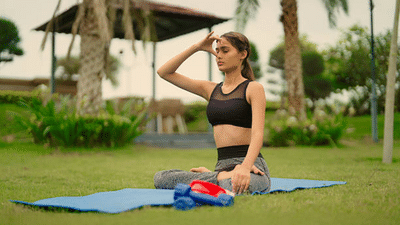
Child’s Pose for quiet groundingStart on your hands and knees, then sit your hips back toward your heels and fold your upper body forward. Rest your forehead on the mat or a pillow and let your arms stretch out or rest beside you. Breathe slowly for one to two minutes.
This pose gently stretches the back and hips while signalling the nervous system to shift into a calmer state. Many young people find it especially helpful after hours of sitting or when anxious thoughts feel loud.
It requires almost no effort and creates a feeling of safety and stillness that can feel rare in a busy digital life. Stay as long as it feels good and come out slowly when ready.
Cat-cow for spine and breathMove to all fours with wrists under shoulders and knees under hips. As you inhale, drop your belly and lift your chest and gaze for Cow pose. As you exhale, round your spine toward the ceiling and tuck your chin for Cat pose.
Flow between the two for eight to ten rounds, matching movement to breath. This simple sequence loosens a stiff mid-back and neck, common after phone and laptop uses, while bringing attention back to the present moment.
The rhythmic motion also helps quiet mental chatter. It is one of the most recommended moves for anyone who spends long stretches looking down at screens.
Standing forward fold to let go of tensionFrom standing, hinge at the hips and fold forward, keeping a soft bend in the knees. Let your head and arms hang heavy. Hold for five to eight slow breaths, gently swaying side to side if it feels nice. This pose releases the lower back, hamstrings and neck while encouraging blood flow to the brain. It is especially useful at the end of a study or work day when the body feels compressed.
Many Gen Z practitioners use it as a quick mental reset, a physical way of “dropping” the day’s pressure before moving on.
Legs-up-the-wall or tree pose for steady focusFor pure restoration, lie on your back and rest your legs up a wall or against a couch for three to five minutes. Arms can rest by your sides, palms up. This mild inversion calms the nervous system, eases tired legs and can reduce the restless feeling that often comes with anxiety.
If you prefer something more active, try Tree pose: stand tall, place one foot on the inner calf or thigh of the opposite leg, and bring hands to the heart or overhead. Focus on a still point ahead. Hold for a few breaths on each side. The balance work sharpens concentration and builds a quiet sense of steadiness.
These four poses can be done in any order or combined into a ten-to-fifteen-minute flow. The key is consistency rather than perfection. Even a few minutes most days can help counteract screen fatigue, ease everyday stress and create small pockets of calm that feel genuinely useful.
Gen Z lives in a world of constant notifications, late-night scrolls and back-to-back online classes or work calls. Shoulders hunch, minds race, and stress builds quietly.
The good news is that a short, simple yoga routine can help reset both body and mood without needing fancy equipment or hours of free time. These poses are beginner-friendly, take only a few minutes each, and fit easily between study sessions or after a long day on screens.
Child’s Pose for quiet groundingStart on your hands and knees, then sit your hips back toward your heels and fold your upper body forward. Rest your forehead on the mat or a pillow and let your arms stretch out or rest beside you. Breathe slowly for one to two minutes.
This pose gently stretches the back and hips while signalling the nervous system to shift into a calmer state. Many young people find it especially helpful after hours of sitting or when anxious thoughts feel loud.
It requires almost no effort and creates a feeling of safety and stillness that can feel rare in a busy digital life. Stay as long as it feels good and come out slowly when ready.
Cat-cow for spine and breathMove to all fours with wrists under shoulders and knees under hips. As you inhale, drop your belly and lift your chest and gaze for Cow pose. As you exhale, round your spine toward the ceiling and tuck your chin for Cat pose.
Flow between the two for eight to ten rounds, matching movement to breath. This simple sequence loosens a stiff mid-back and neck, common after phone and laptop uses, while bringing attention back to the present moment.
The rhythmic motion also helps quiet mental chatter. It is one of the most recommended moves for anyone who spends long stretches looking down at screens.
Standing forward fold to let go of tensionFrom standing, hinge at the hips and fold forward, keeping a soft bend in the knees. Let your head and arms hang heavy. Hold for five to eight slow breaths, gently swaying side to side if it feels nice. This pose releases the lower back, hamstrings and neck while encouraging blood flow to the brain. It is especially useful at the end of a study or work day when the body feels compressed.
Many Gen Z practitioners use it as a quick mental reset, a physical way of “dropping” the day’s pressure before moving on.
Legs-up-the-wall or tree pose for steady focusFor pure restoration, lie on your back and rest your legs up a wall or against a couch for three to five minutes. Arms can rest by your sides, palms up. This mild inversion calms the nervous system, eases tired legs and can reduce the restless feeling that often comes with anxiety.
If you prefer something more active, try Tree pose: stand tall, place one foot on the inner calf or thigh of the opposite leg, and bring hands to the heart or overhead. Focus on a still point ahead. Hold for a few breaths on each side. The balance work sharpens concentration and builds a quiet sense of steadiness.
These four poses can be done in any order or combined into a ten-to-fifteen-minute flow. The key is consistency rather than perfection. Even a few minutes most days can help counteract screen fatigue, ease everyday stress and create small pockets of calm that feel genuinely useful.
Next Story