
7 Common Gardening Mistakes Beginners Should Avoid

Starting a garden can be exciting, but plants do not always respond well to enthusiasm. New gardeners often water too much, choose unsuitable plants or assume that more fertiliser automatically means faster growth. These mistakes are understandable because gardening involves learning how individual plants respond to soil, sunlight, temperature and moisture. The good news is that most beginner gardening mistakes are easy to correct once you recognise them. A successful garden is rarely created by getting everything right immediately. It develops through observation, patience and a willingness to adjust your approach.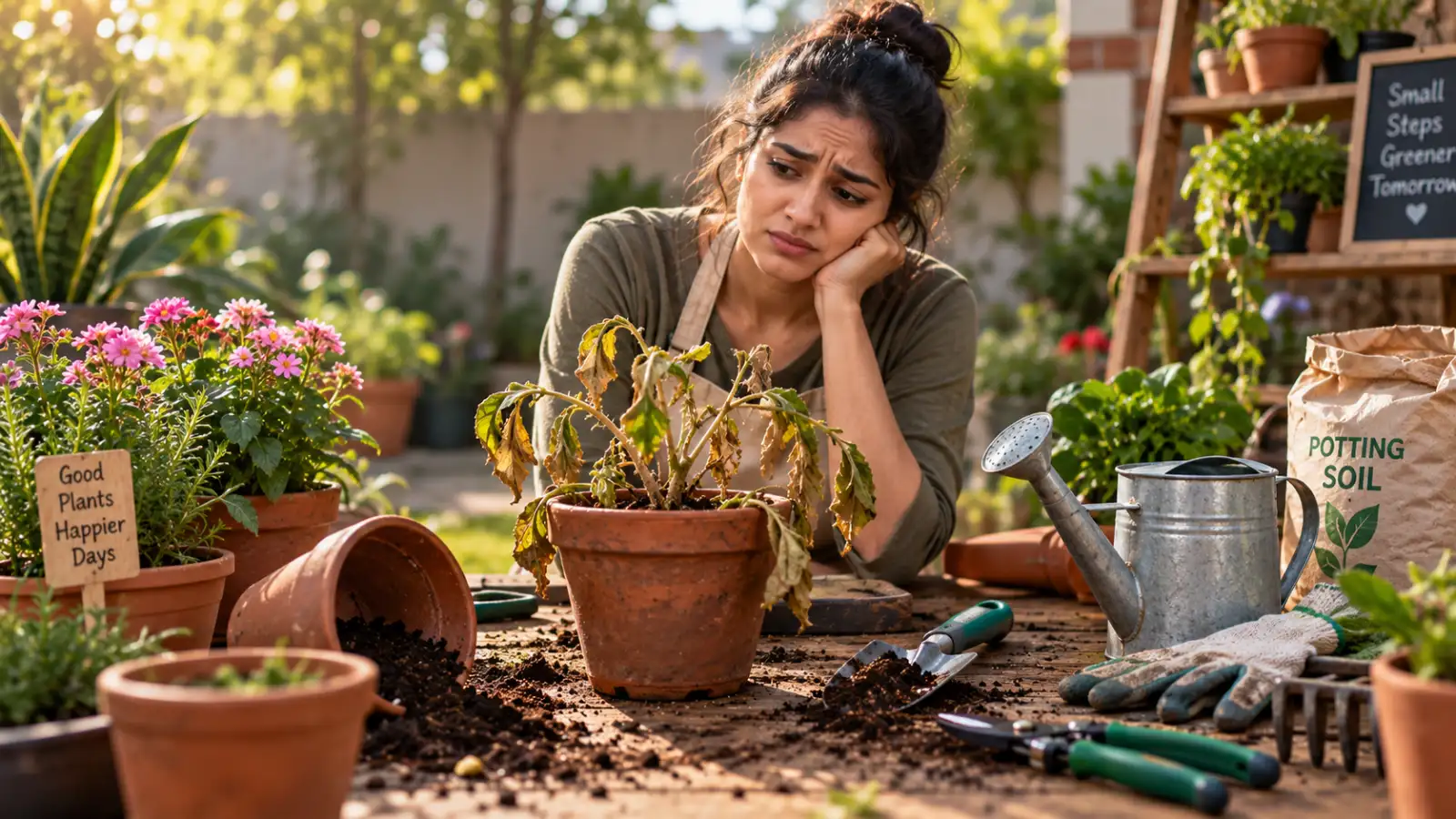
Instead of watering automatically every day, check the soil and consider the needs of the particular plant.
Check the plant's requirements before choosing its location.
Adding appropriate organic matter can improve soil structure, although the right amendment depends on the existing soil and plant.
Follow spacing recommendations rather than planting everything within arm's reach.
It is better to understand what a plant actually needs before applying anything.
Gardening works best when it follows the seasons.
The simplest gardening habit is therefore also one of the most useful: observe first, then act.
1. Overwatering Plants
More water does not necessarily mean healthier plants. Constantly wet soil can reduce air around the roots and encourage root problems.Instead of watering automatically every day, check the soil and consider the needs of the particular plant.
2. Ignoring Sunlight Requirements
Plants have different light requirements. A shade-loving plant placed in intense afternoon sun may struggle, while a sun-loving vegetable may grow poorly in a dark corner.Check the plant's requirements before choosing its location.
3. Using Poor Soil
Healthy roots need suitable soil structure as well as nutrients. Heavy, compacted soil can restrict drainage and root development.Adding appropriate organic matter can improve soil structure, although the right amendment depends on the existing soil and plant.
4. Planting Too Closely
Small seedlings can make a garden look spacious, but plants grow. Crowding reduces airflow and can increase competition for light, water and nutrients.Follow spacing recommendations rather than planting everything within arm's reach.
5. Adding Too Much Fertiliser
Fertilisers are useful, but excessive amounts can damage roots and create nutrient imbalances. Healthy growth does not come from endlessly adding feed.It is better to understand what a plant actually needs before applying anything.
6. Forgetting Seasonal Changes
A plant that thrives during one season may struggle when temperatures change. Beginners sometimes continue the same watering, feeding and planting routine throughout the year.Gardening works best when it follows the seasons.
7. Expecting Instant Results
Perhaps the most common mistake is impatience. Seeds need time to germinate, roots need time to establish and perennial plants can take seasons to mature.Why Observation Matters Most
Good gardeners spend plenty of time looking at their plants. Changes in leaf colour, soil moisture and growth can provide early clues that something needs attention.The simplest gardening habit is therefore also one of the most useful: observe first, then act.
Next Story