
7 Easy Ways to Reduce Household Waste and Adopt a More Sustainable Lifestyle

Reducing household waste does not always require major lifestyle changes or expensive eco-friendly products. Small, thoughtful habits practised every day can make a significant difference in how much waste a household produces. From reusing old containers and composting kitchen scraps to avoiding unnecessary packaging and repairing damaged belongings, there are several simple ways to make your home more sustainable. Here are seven practical habits that can help you reduce everyday waste and make better use of the resources you already have.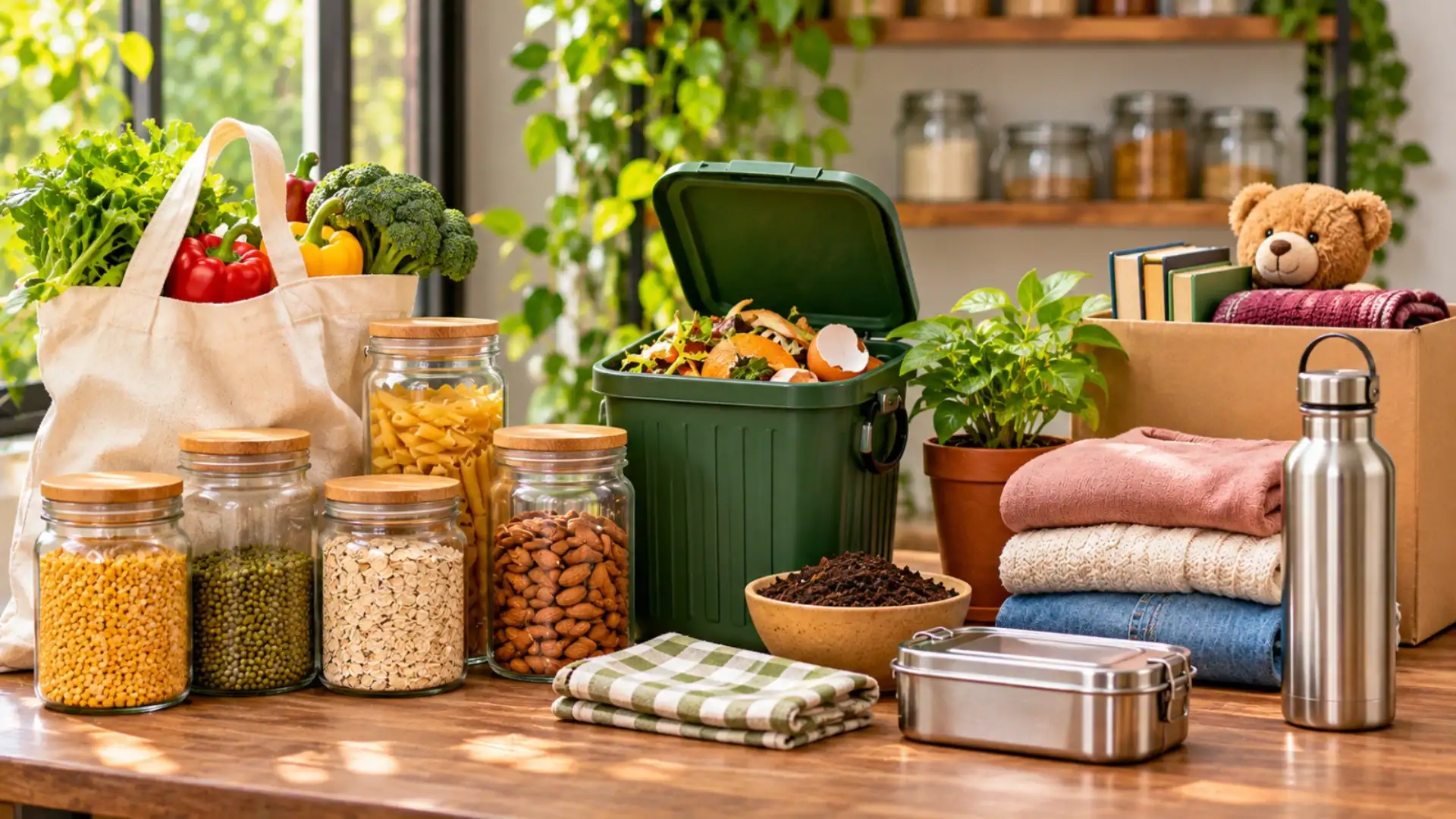
1. Reuse Glass Jars and Storage Containers
Instead of throwing away empty glass jars, plastic containers and storage boxes, find new ways to use them around the house. Glass jars can be used to store spices, pulses, dry fruits, homemade sauces and other kitchen essentials. Clean plastic containers can also help organise stationery, craft supplies and small household accessories. Reusing containers reduces the need to purchase additional storage products and helps prevent unnecessary waste.2. Start Composting Kitchen Scraps
Fruit peels, vegetable scraps, tea leaves and certain other kitchen leftovers can be turned into nutrient-rich compost instead of being thrown into the dustbin. Set up a small compost bin on your balcony, terrace or in a suitable outdoor corner. Add appropriate organic waste and dry materials such as fallen leaves to maintain a healthy compost mixture. Once ready, the compost can be used in home gardens and potted plants, reducing dependence on chemical fertilisers.3. Avoid Unnecessary Packaging While Shopping
One of the easiest ways to reduce household waste is to be mindful of packaging while purchasing everyday essentials. Carry reusable cloth bags when visiting grocery stores and local markets instead of accepting disposable plastic bags. Choose products with minimal packaging whenever possible and consider buying certain household essentials in larger quantities to reduce individual wrappers. These small shopping decisions can help minimise the amount of plastic and paper waste entering your home.4. Repair Household Items Instead of Replacing Them
A damaged household item does not always need to be replaced with something new. Loose furniture handles, broken chair legs, torn clothing and malfunctioning appliances may be repairable with basic tools or professional assistance. Learn a few simple repair techniques, such as sewing buttons, fixing loose screws and patching small fabric tears. Repairing belongings extends their lifespan, saves money and prevents usable products from ending up in landfills.5. Switch to Reusable Everyday Alternatives
Replace frequently used disposable products with reusable alternatives wherever practical. Stainless steel water bottles, cloth napkins, reusable shopping bags and washable cleaning cloths can reduce the need for single-use products. You can also keep reusable cutlery and a travel mug handy when going out. Although some alternatives may require an initial investment, they can be more economical over time and help reduce everyday household waste.6. Plan Meals to Reduce Food Waste
Unplanned grocery shopping often leads to forgotten ingredients and spoiled food. Create a weekly meal plan before visiting the market and prepare a shopping list based on what you actually need. Store fruits, vegetables and leftovers properly to maintain freshness for longer. You can also use leftover vegetables in soups, sandwiches, pulao and other homemade dishes. Checking your refrigerator regularly helps ensure that ingredients are used before they expire.7. Donate or Repurpose Items You No Longer Need
Before throwing away old clothes, books, toys and household belongings, consider whether someone else could use them. Donate items that are still in good condition to charitable organisations, community groups or people who may need them. You can also repurpose old T-shirts into cleaning cloths, use cardboard boxes for storage or turn unused containers into organisers. Giving everyday objects a second life helps reduce waste while making better use of available resources.Final Thoughts
Adopting a sustainable lifestyle begins with making conscious choices about what we purchase, use and throw away. Simple habits such as reusing containers, composting organic waste, repairing belongings and avoiding unnecessary packaging can gradually reduce household waste. You do not have to change everything overnight. Start with a few manageable practices and incorporate more as they become part of your daily routine. Over time, these small efforts can help create a cleaner, more organised and environmentally responsible home.Next Story