
7 Indian Landscapes That Could Easily Be Mistaken for Another Country

India is usually imagined through a familiar visual vocabulary: tropical greenery, crowded cities, golden fields, Himalayan peaks and sandy deserts. But travel far enough and that image begins to fall apart. India contains landscapes that resemble Icelandic salt flats, Central Asian highlands, Scottish valleys and even the surface of another planet. The reason is simple geography. A country stretching from the Himalayas to the Arabian Sea and from the northeast to the Thar Desert naturally contains enormous environmental variation. Some of its strangest landscapes are not hidden abroad. They are hiding within India's own borders.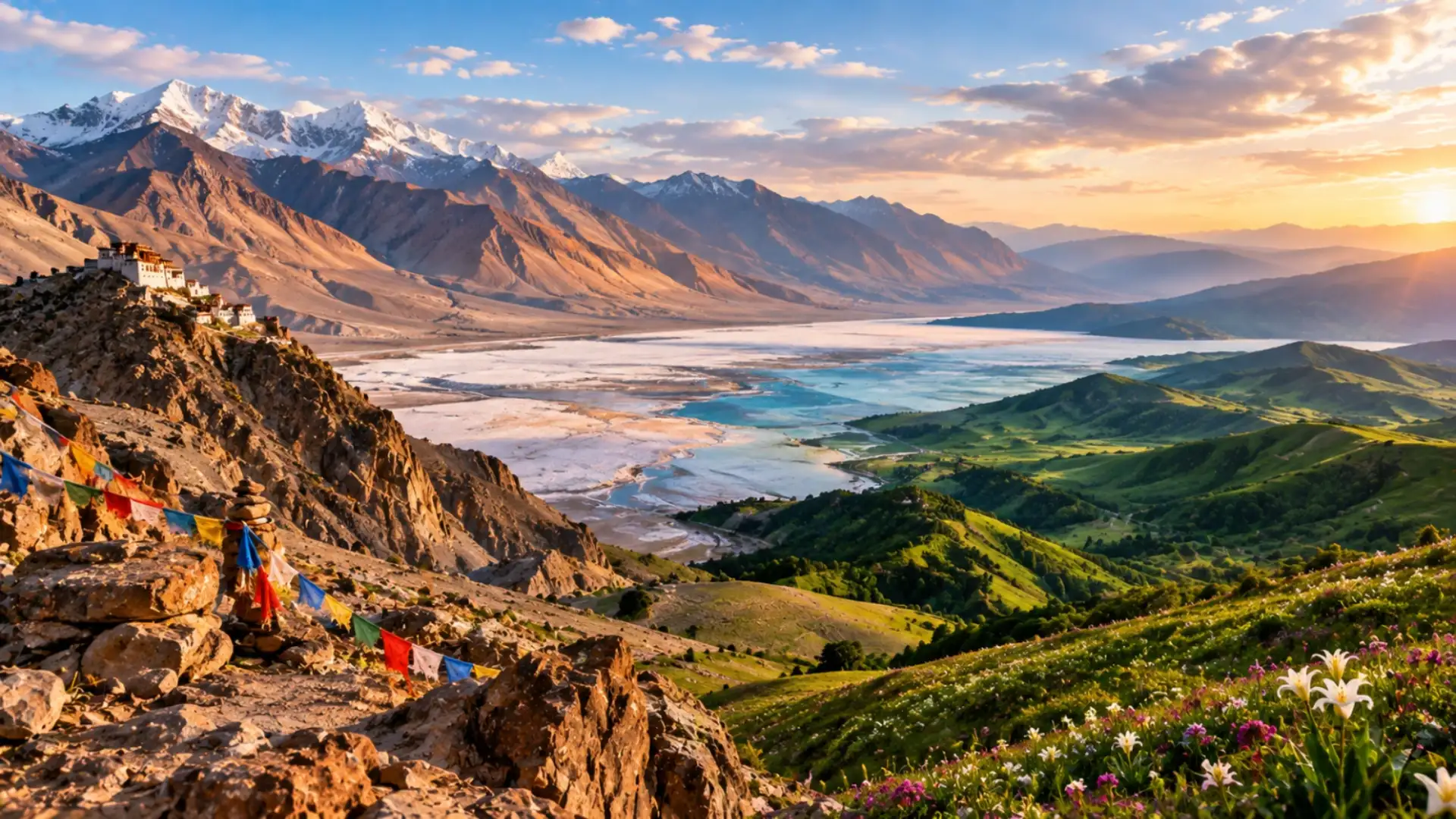
At around 12,500 feet, the valley contains barren mountains, dramatic rock formations and a cold desert environment. Incredible India describes the terrain as lunar-like, with Buddhist monasteries and isolated settlements scattered across the landscape.
The contrast is extraordinary. A short distance away, the Himalayas can appear snow-covered and alpine, while parts of Spiti resemble a vast geological desert.
Its enormous salt marshes create a white landscape that appears almost endless in dry months. Yet during the monsoon, parts of the region become a wetland. The transformation is so dramatic that the same location can look like two completely different environments during different seasons.
The Great Rann is also historically important. The wider Kutch region has links with the Indus Valley Civilisation, including the archaeological site of Dholavira.
At around 8,045 feet, the valley becomes particularly striking when its slopes bloom. The famous Dzukou lily adds another layer to the scenery, while the absence of large urban development makes the landscape feel remarkably remote.
Its appearance is a reminder that India's northeast follows its own visual and ecological logic.
The country contains salt marshes, cold deserts, alpine valleys, tropical forests, volcanic-looking plateaux and high-altitude grasslands. Geography has shaped everything from local architecture to agriculture and travel.
That is why an Indian traveller can sometimes feel as though they have crossed an international border without leaving the country.
The most surprising destination may not always be the one with the longest flight. Sometimes it is simply the one that reveals a completely different side of home.
Spiti Looks More Like Another Planet
Spiti Valley in Himachal Pradesh is perhaps India's most convincing example of an otherworldly landscape.At around 12,500 feet, the valley contains barren mountains, dramatic rock formations and a cold desert environment. Incredible India describes the terrain as lunar-like, with Buddhist monasteries and isolated settlements scattered across the landscape.
The contrast is extraordinary. A short distance away, the Himalayas can appear snow-covered and alpine, while parts of Spiti resemble a vast geological desert.
The Rann of Kutch Changes Its Identity
The Rann of Kutch is another landscape that can surprise even experienced Indian travellers.You may also like
- Love Piping-Hot Tea or Coffee? Research Links Very Hot Drinks to Higher Esophageal Cancer Risk
- Taking Painkillers Too Often? Your Kidneys Could Be at Risk, Nephrologists Warn
- EPFO Update: From PF-related tasks to UAN activation—get these things done in a jiffy without having to make rounds to your employer..
- Meet Jyoti Srivastava: She once designed rockets for the Indian Army; now she makes baby food inspired by her son's own diet
- Bank Holiday: Will banks in Delhi remain closed on September 11? Know the full facts regarding the BRICS Summit and the strike..
Its enormous salt marshes create a white landscape that appears almost endless in dry months. Yet during the monsoon, parts of the region become a wetland. The transformation is so dramatic that the same location can look like two completely different environments during different seasons.
The Great Rann is also historically important. The wider Kutch region has links with the Indus Valley Civilisation, including the archaeological site of Dholavira.
Dzukou Valley Could Be Somewhere Else Entirely
In the hills between Nagaland and Manipur lies Dzukou Valley, a landscape of rolling green ridges and seasonal wildflowers.At around 8,045 feet, the valley becomes particularly striking when its slopes bloom. The famous Dzukou lily adds another layer to the scenery, while the absence of large urban development makes the landscape feel remarkably remote.
Its appearance is a reminder that India's northeast follows its own visual and ecological logic.
India Is More Geographically Diverse Than Its Stereotype
These landscapes matter because they challenge the idea of a single Indian landscape.The country contains salt marshes, cold deserts, alpine valleys, tropical forests, volcanic-looking plateaux and high-altitude grasslands. Geography has shaped everything from local architecture to agriculture and travel.
That is why an Indian traveller can sometimes feel as though they have crossed an international border without leaving the country.
The most surprising destination may not always be the one with the longest flight. Sometimes it is simply the one that reveals a completely different side of home.






Loving Newspoint? Download the app now
