
8 Everyday Kitchen Habits That Can Help Reduce Food Waste

Food waste often begins with small decisions that barely seem important. A forgotten bunch of herbs, half an onion left in the fridge or leftovers pushed to the back of a shelf can eventually become part of a much larger problem. The United Nations estimates that a significant share of food produced globally is wasted, while households account for a substantial part of that waste. Reducing it does not necessarily require complicated meal plans or major lifestyle changes. A few simple kitchen habits can help food last longer, make shopping more thoughtful and even reduce household spending. Often, the most effective changes are surprisingly ordinary.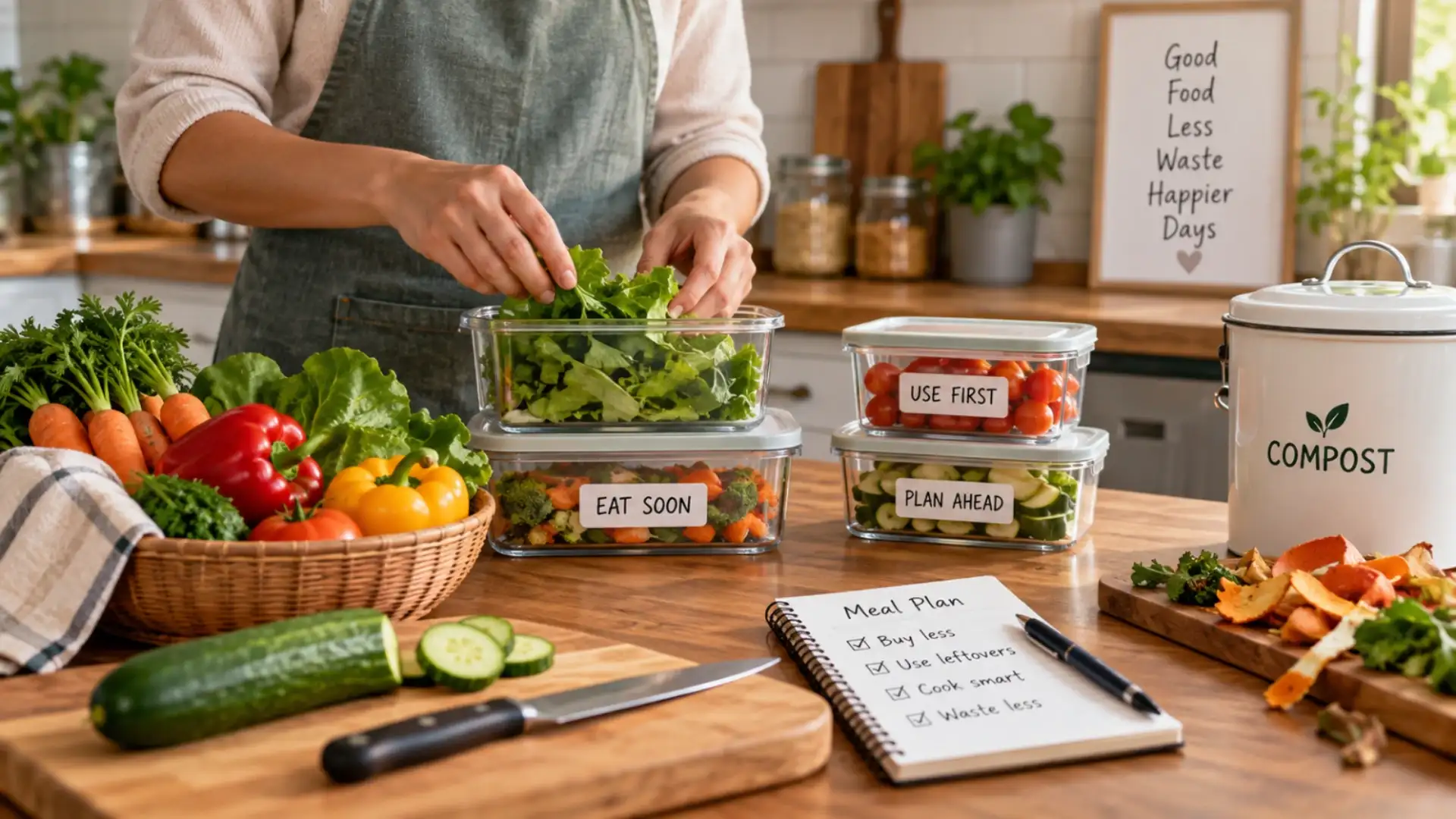
It is easy to buy another packet of spinach when there is already one hiding behind a container. A two-minute check can prevent duplicate purchases and encourage you to use ingredients that are approaching their best.
Keep frequently used or soon-to-expire ingredients towards the front of the fridge. Clear containers can also help you see leftovers at a glance. This simple habit turns the refrigerator into a visual reminder rather than a place where food quietly disappears from sight.
Understanding this distinction can prevent perfectly usable food from being thrown away unnecessarily. However, foods carrying a use-by date should not be eaten after that date simply because they look or smell fine.
This is also an excellent way to make weekday cooking easier. Instead of viewing leftovers as an unwanted extra, think of them as an ingredient that has already been prepared.
The important part is timing. Freezing something when it is already forgotten at the back of the fridge defeats the purpose. If you know you will not eat it soon, freeze it while it is still in good condition.
This approach has an interesting historical connection. Before modern supermarkets made food constantly available, households were often far more accustomed to stretching ingredients across several meals.
Rather than automatically filling a saucepan, consider how many people are eating and whether there will be other dishes on the table. If extra food is intentional, have a plan for storing it.
This matters today not only because food costs money, but also because wasted food represents wasted water, energy, labour and transport. The most useful kitchen habit may therefore be learning to see food differently. What looks like a small leftover today could be tomorrow's lunch, soup or supper, provided we remember to use it.
Check the Fridge Before Shopping
One of the simplest ways to reduce food waste is to know what you already have. Before writing a shopping list, take a quick look inside the fridge, freezer and cupboards.It is easy to buy another packet of spinach when there is already one hiding behind a container. A two-minute check can prevent duplicate purchases and encourage you to use ingredients that are approaching their best.
Store Food Where You Can See It
Visibility matters more than many people realise. Food that is tucked behind taller containers is easily forgotten.Keep frequently used or soon-to-expire ingredients towards the front of the fridge. Clear containers can also help you see leftovers at a glance. This simple habit turns the refrigerator into a visual reminder rather than a place where food quietly disappears from sight.
Understand Best Before and Use By Dates
Date labels are often misunderstood. A use by date is generally about food safety, while a best before date mainly concerns quality.Understanding this distinction can prevent perfectly usable food from being thrown away unnecessarily. However, foods carrying a use-by date should not be eaten after that date simply because they look or smell fine.
Give Leftovers a Planned Second Life
Leftovers are much less likely to be wasted when you decide what they will become. Roast vegetables can go into a sandwich or omelette, while cooked rice can form the base of a quick stir-fry.This is also an excellent way to make weekday cooking easier. Instead of viewing leftovers as an unwanted extra, think of them as an ingredient that has already been prepared.
You may also like
- Create a Resume Using AI and Succeed in Job Interviews
- ATM Rules Changed: Public sector bank reduces free transaction limit; check new charges before withdrawing cash..
- One mistake in train ticket booking can lead to trouble; IRCTC issues important advice to passengers
- We are unserious but we get the job done: Pranjali Papnai
- Jupiter Transit 2026: 5 Zodiac Signs Set For Big Money, Career Growth And Better Luck Ahead
Freeze Food Before It Goes Bad
The freezer can be one of the most useful tools for reducing food waste. Bread, chopped herbs, some fruits, cooked meals and many other foods can be frozen before they deteriorate.The important part is timing. Freezing something when it is already forgotten at the back of the fridge defeats the purpose. If you know you will not eat it soon, freeze it while it is still in good condition.
Learn to Use More of Each Ingredient
Many parts of food that are routinely discarded can have another use. Broccoli stems can be chopped into stir-fries, stale bread can become breadcrumbs and vegetable trimmings can contribute to homemade stock.This approach has an interesting historical connection. Before modern supermarkets made food constantly available, households were often far more accustomed to stretching ingredients across several meals.
Cook According to What You Need
Cooking too much is another common source of household food waste. Estimating portions can take practice, especially when preparing rice, pasta or potatoes.Rather than automatically filling a saucepan, consider how many people are eating and whether there will be other dishes on the table. If extra food is intentional, have a plan for storing it.
Keep a Small Food Waste Routine
Reducing food waste becomes easier when it becomes part of normal kitchen life. Once or twice a week, check for ingredients that need using and build a meal around them.This matters today not only because food costs money, but also because wasted food represents wasted water, energy, labour and transport. The most useful kitchen habit may therefore be learning to see food differently. What looks like a small leftover today could be tomorrow's lunch, soup or supper, provided we remember to use it.






Loving Newspoint? Download the app now
