
8 Places Around the World Where Waterfalls Freeze in Winter

Waterfalls are usually associated with rushing water, mist and the sound of streams crashing over rocks. But when temperatures fall far enough, that familiar scene can change completely. Water slows, ice begins to form and entire sections of a waterfall can become covered in spectacular frozen formations.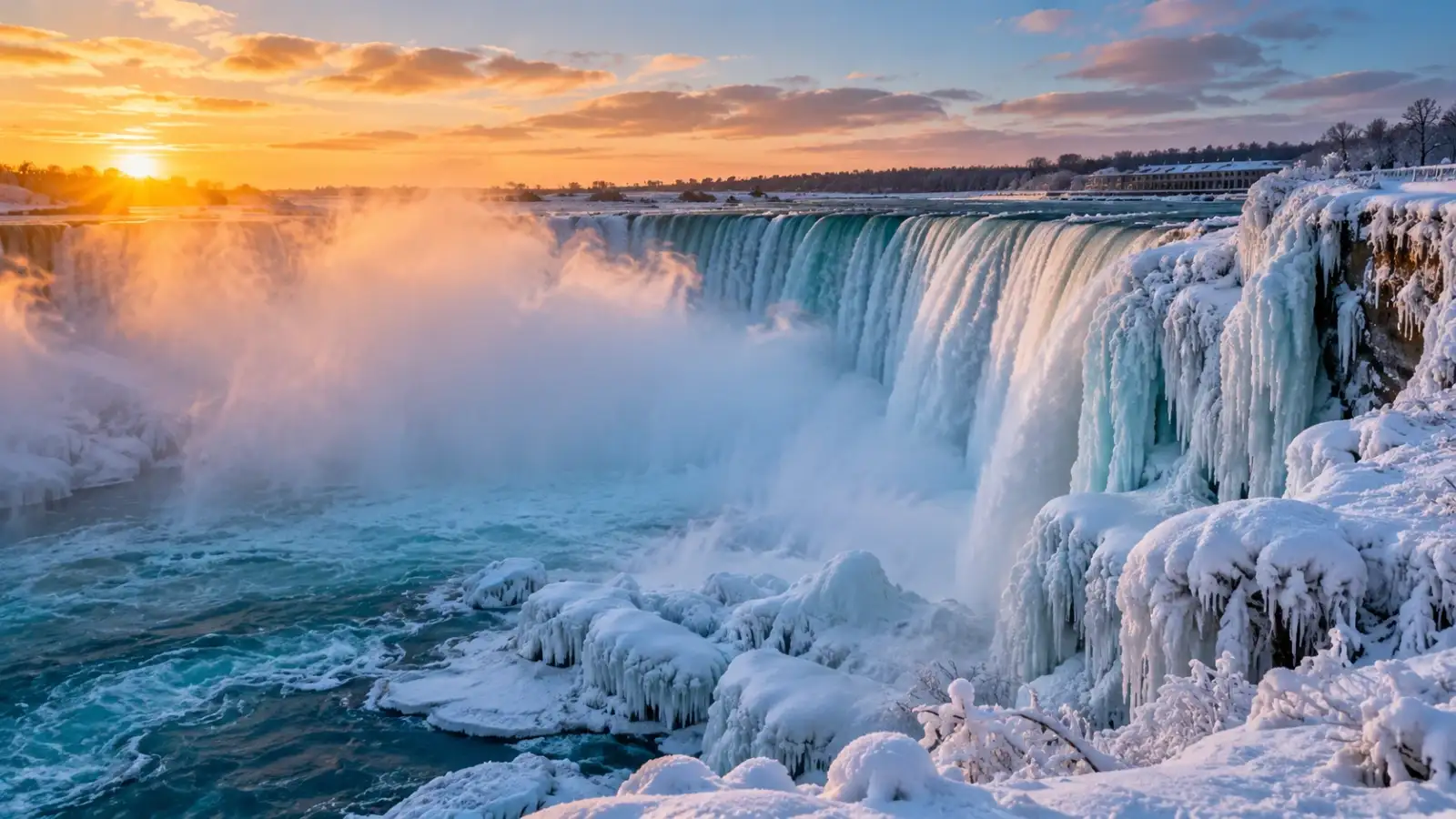
Some waterfalls never freeze completely. Instead, thick curtains of ice form around streams that continue flowing underneath. Others can become almost entirely frozen during particularly cold periods, creating landscapes that look more like giant natural sculptures than waterfalls.
For travellers who enjoy unusual winter landscapes, frozen waterfalls are worth seeking out. The exact appearance depends on temperature, snowfall and water flow, so conditions can change from one day to another. Here are eight places where winter can transform waterfalls into extraordinary ice-covered sights.
Ice formations can develop around the edges and at the base, while mist from the falling water freezes on nearby surfaces. The result is a striking contrast between powerful flowing water and brilliant winter ice.
The surrounding Niagara region also offers plenty of winter activities, making it possible to combine waterfall sightseeing with a broader cold-weather trip.
The tall waterfall surrounded by forest becomes especially dramatic when snow covers the nearby landscape. The frozen sections can create the impression of a giant ice column extending down the cliff.
Winter visitors should check trail conditions before travelling because snow and ice can make paths slippery or temporarily inaccessible.
The waterfall does not simply become a solid block of ice. Water continues to move through parts of the falls while ice builds up around the surrounding rocks.
The combination of snow, frozen surfaces and the powerful waterfall creates one of Iceland's most memorable winter landscapes. Warm clothing and suitable footwear are essential because conditions around the viewing areas can be cold and slippery.
On particularly cold days, large icicles may form around the edges. However, the main flow usually continues because of the amount of water passing through the falls.
The waterfall is easy to recognise because of its impressive height and broad shape. Visiting early or late in the day can also provide beautiful winter light.
The canyon has a series of waterfalls, and cold temperatures create thick ice formations along the cliffs. Winter walking trails provide access to the frozen scenery, while guided ice walks are also available in the region.
The blue tones that sometimes appear within the ice make the frozen waterfalls especially photogenic. Visitors should use proper winter footwear and follow local safety guidance because icy trails can be hazardous.
During sufficiently cold winters, the waterfall can freeze into a huge ice formation. Snow surrounding the falls adds to the effect, transforming a familiar urban park into a distinctly wintery landscape.
The appearance changes depending on the weather. Some winters produce thick ice while milder periods may leave water flowing through the centre.
Its location within the city makes it one of the more accessible frozen waterfalls on this list.
The amber or brown colour of the water provides an unusual contrast with the white snow and pale ice. This distinctive colour comes from tannins released by vegetation in the surrounding wetlands.
Winter visitors can experience a much quieter atmosphere than during the warmer months. The snowy forest surrounding the waterfall adds to the sense of being far from busy tourist areas.
During winter, ice and snow can gather along sections of the lava formations, creating intricate patterns around the flowing water.
The unusual geology makes the landscape interesting even without the winter conditions. When snow and ice arrive, however, the contrast between dark volcanic rock, white snow and moving water becomes particularly striking.
For the best chance of seeing substantial ice formations, visit during the coldest part of winter when temperatures have remained below freezing for an extended period. However, a partially frozen waterfall can often be more impressive than a completely frozen one because the contrast between flowing water and ice creates a more dynamic scene.
Weather forecasts and local park updates are worth checking before travelling. Conditions can change quickly, particularly in mountainous areas.
Always stay behind safety barriers where they are provided and avoid climbing onto frozen sections of the waterfall. Trails can also be affected by snow, ice and falling branches, so check official conditions before setting out.
Good winter boots, warm layers and traction aids can make a significant difference on icy paths.
From Iceland's volcanic landscapes to Canada's snowy mountain parks and the forests of the northern United States, these destinations offer a different kind of sightseeing. Instead of looking for sunshine and warm beaches, travellers can head into the cold and discover landscapes shaped by ice.
For anyone searching for unusual winter destinations, a frozen waterfall can be an unforgettable sight. Just remember that the most spectacular conditions are also the ones that require the greatest care.
Some waterfalls never freeze completely. Instead, thick curtains of ice form around streams that continue flowing underneath. Others can become almost entirely frozen during particularly cold periods, creating landscapes that look more like giant natural sculptures than waterfalls.
For travellers who enjoy unusual winter landscapes, frozen waterfalls are worth seeking out. The exact appearance depends on temperature, snowfall and water flow, so conditions can change from one day to another. Here are eight places where winter can transform waterfalls into extraordinary ice-covered sights.
1. Niagara Falls, Canada and the United States
Niagara Falls is one of the world's most famous waterfalls, and its enormous volume of water means that a complete freeze is extremely rare. However, prolonged periods of severe winter weather can cover parts of the falls and surrounding areas in ice.Ice formations can develop around the edges and at the base, while mist from the falling water freezes on nearby surfaces. The result is a striking contrast between powerful flowing water and brilliant winter ice.
The surrounding Niagara region also offers plenty of winter activities, making it possible to combine waterfall sightseeing with a broader cold-weather trip.
2. Multnomah Falls, Oregon, United States
Multnomah Falls is one of the most recognisable waterfalls in Oregon's Columbia River Gorge. During cold winter spells, sections of the waterfall can develop substantial ice formations.The tall waterfall surrounded by forest becomes especially dramatic when snow covers the nearby landscape. The frozen sections can create the impression of a giant ice column extending down the cliff.
Winter visitors should check trail conditions before travelling because snow and ice can make paths slippery or temporarily inaccessible.
3. Gullfoss, Iceland
Iceland is famous for dramatic waterfalls, glaciers and volcanic landscapes, making it an ideal destination for winter scenery. Gullfoss, located along the famous Golden Circle route, can develop impressive ice formations during the colder months.The waterfall does not simply become a solid block of ice. Water continues to move through parts of the falls while ice builds up around the surrounding rocks.
The combination of snow, frozen surfaces and the powerful waterfall creates one of Iceland's most memorable winter landscapes. Warm clothing and suitable footwear are essential because conditions around the viewing areas can be cold and slippery.
4. Skógafoss, Iceland
Skógafoss is another spectacular Icelandic waterfall that can look dramatically different during winter. The wide curtain of falling water is surrounded by snow and ice, while spray can freeze onto rocks near the waterfall.On particularly cold days, large icicles may form around the edges. However, the main flow usually continues because of the amount of water passing through the falls.
The waterfall is easy to recognise because of its impressive height and broad shape. Visiting early or late in the day can also provide beautiful winter light.
5. Johnston Canyon, Alberta, Canada
Johnston Canyon in Banff National Park is particularly popular in winter because its waterfalls can turn into striking walls of blue and white ice.The canyon has a series of waterfalls, and cold temperatures create thick ice formations along the cliffs. Winter walking trails provide access to the frozen scenery, while guided ice walks are also available in the region.
The blue tones that sometimes appear within the ice make the frozen waterfalls especially photogenic. Visitors should use proper winter footwear and follow local safety guidance because icy trails can be hazardous.
6. Minnehaha Falls, Minnesota, United States
Minnehaha Falls in Minneapolis offers an unusual opportunity to see a frozen waterfall without travelling to a remote mountain region.During sufficiently cold winters, the waterfall can freeze into a huge ice formation. Snow surrounding the falls adds to the effect, transforming a familiar urban park into a distinctly wintery landscape.
The appearance changes depending on the weather. Some winters produce thick ice while milder periods may leave water flowing through the centre.
Its location within the city makes it one of the more accessible frozen waterfalls on this list.
7. Tahquamenon Falls, Michigan, United States
Tahquamenon Falls is located in Michigan's Upper Peninsula, an area known for snowy winters and extensive forests. The waterfall can develop substantial ice along its edges and surrounding rocks when temperatures remain low.The amber or brown colour of the water provides an unusual contrast with the white snow and pale ice. This distinctive colour comes from tannins released by vegetation in the surrounding wetlands.
Winter visitors can experience a much quieter atmosphere than during the warmer months. The snowy forest surrounding the waterfall adds to the sense of being far from busy tourist areas.
8. Hraunfossar, Iceland
Hraunfossar offers a different kind of winter waterfall experience. Rather than one enormous drop, the falls consist of numerous streams flowing through lava rock before reaching the Hvítá River.During winter, ice and snow can gather along sections of the lava formations, creating intricate patterns around the flowing water.
The unusual geology makes the landscape interesting even without the winter conditions. When snow and ice arrive, however, the contrast between dark volcanic rock, white snow and moving water becomes particularly striking.
The Best Time to See Frozen Waterfalls
There is no guaranteed date when a waterfall will be completely frozen. Temperature, water flow and recent weather all influence the final appearance.You may also like
- Angelina Jolie's unusual parenting choice: In 2016, she revealed her six children were learning Khmer, Vietnamese, German, Arabic and sign language
- Modern Parenting Tips: 5 Ways to Raise Confident Kids Without Making Marks and Rank Everything
- Living Room Makeover: 5 Vastu-Inspired Decor Ideas for a Fresh, Calm and Welcoming Home
- Ganesh Chaturthi Rangoli Ideas: 7 Beautiful Designs to Give Your Home a Festive Makeover
- Jennifer Garner's garden isn't just for show: The vegetables, herbs, and hands-on hobby that have become part of the actor's life
For the best chance of seeing substantial ice formations, visit during the coldest part of winter when temperatures have remained below freezing for an extended period. However, a partially frozen waterfall can often be more impressive than a completely frozen one because the contrast between flowing water and ice creates a more dynamic scene.
Weather forecasts and local park updates are worth checking before travelling. Conditions can change quickly, particularly in mountainous areas.
Staying Safe Around Frozen Waterfalls
Frozen waterfalls can be beautiful but also dangerous. Ice around waterfalls may be unstable, and the ground near viewing areas can become extremely slippery.Always stay behind safety barriers where they are provided and avoid climbing onto frozen sections of the waterfall. Trails can also be affected by snow, ice and falling branches, so check official conditions before setting out.
Good winter boots, warm layers and traction aids can make a significant difference on icy paths.
A Different Side of Winter Travel
A frozen waterfall shows just how dramatically nature can change with the seasons. The same place that roars with rushing water in summer can become almost silent and covered in ice during winter.From Iceland's volcanic landscapes to Canada's snowy mountain parks and the forests of the northern United States, these destinations offer a different kind of sightseeing. Instead of looking for sunshine and warm beaches, travellers can head into the cold and discover landscapes shaped by ice.
For anyone searching for unusual winter destinations, a frozen waterfall can be an unforgettable sight. Just remember that the most spectacular conditions are also the ones that require the greatest care.






Loving Newspoint? Download the app now
