
8 Ways to Reduce Food Delivery Spending Without Giving Up Convenience

Food delivery apps have made ordering dinner, lunch and late-night snacks easier than ever. After a long working day, the convenience of choosing a meal on your phone can be difficult to resist. However, repeated orders, delivery charges, platform fees and tempting add-ons can make the final bill considerably higher than expected. Giving up food delivery altogether is not always practical, particularly for people with busy schedules. A better approach is to understand what you are spending and make a few adjustments. With some planning, you can continue enjoying delivered meals while reducing unnecessary costs and keeping your monthly food budget under control.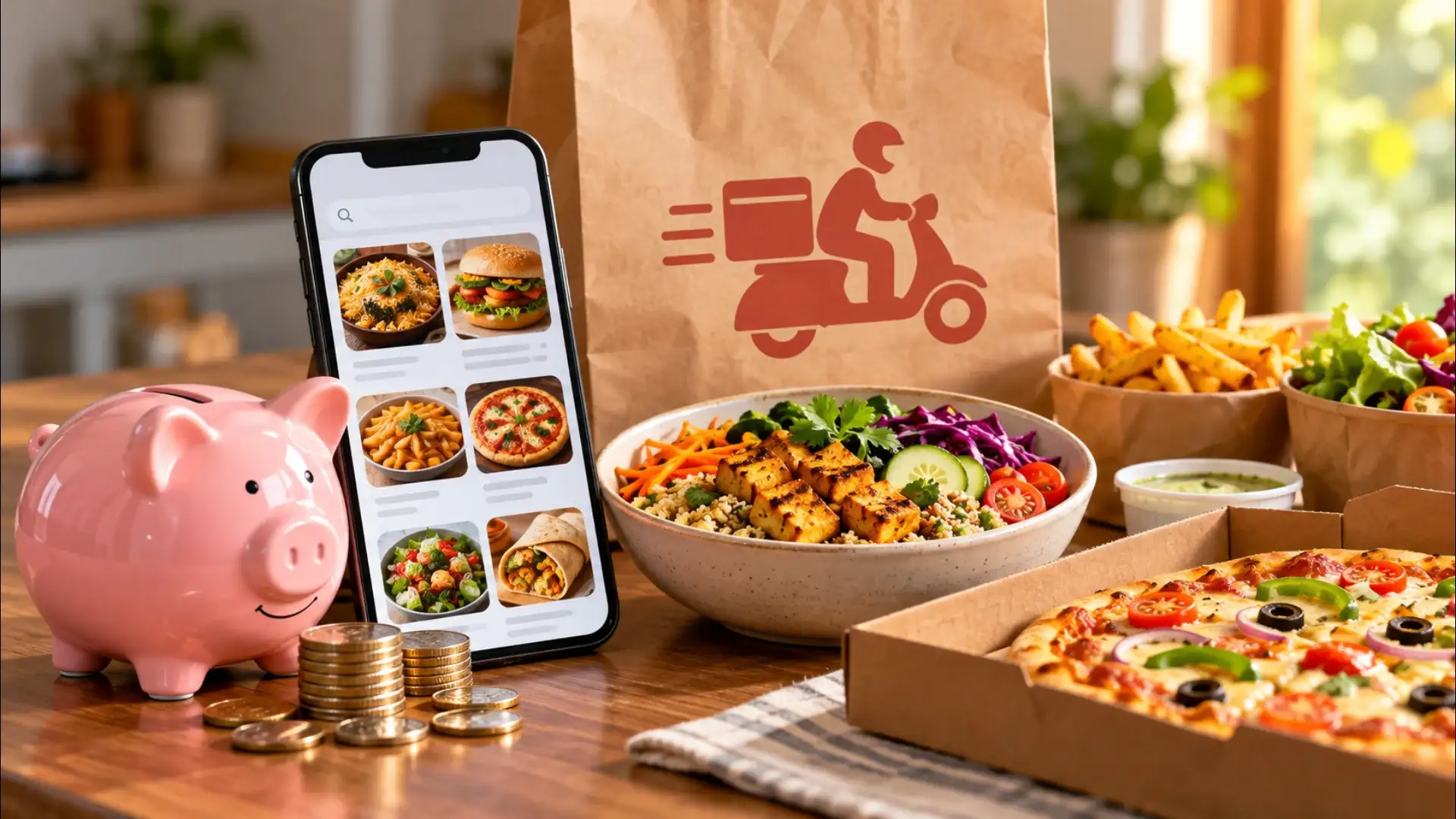
For example, setting aside ₹2,000 for food delivery gives you a clear limit. You can then decide whether to use it for several smaller orders or a few meals shared with family.
The right amount depends on your income and circumstances. The important point is to choose a limit before ordering rather than discovering the total at the end of the month.
Compare the final payable amount rather than assuming the biggest advertised discount represents the best deal. Include taxes and any minimum-order requirements in your calculation.
This small habit can reduce spending without changing the main meal.
Check whether a membership fee or subscription is worthwhile by comparing its cost with the savings you realistically expect to receive.
However, do not order extra food purely to reach a minimum spend. Shared orders work best when everyone genuinely wants the additional items.
You may find that frequent small orders cost more than occasional planned meals. Use that information to adjust your routine without treating every takeaway as a mistake.
Reducing food delivery spending does not require abandoning convenience. It requires making orders more deliberate, comparing final prices and keeping easy alternatives available. Even small changes can make a noticeable difference over several months. By treating food delivery as a planned part of your budget rather than an automatic response to hunger or tiredness, you can continue enjoying it without allowing the cost to grow unnoticed.
1. Set a Monthly Delivery Limit
Decide how much you can comfortably spend on delivered food each month after accounting for groceries and other essential expenses.For example, setting aside ₹2,000 for food delivery gives you a clear limit. You can then decide whether to use it for several smaller orders or a few meals shared with family.
The right amount depends on your income and circumstances. The important point is to choose a limit before ordering rather than discovering the total at the end of the month.
2. Compare the Final Bill
The same restaurant meal may have different prices across platforms. Delivery charges, platform fees, restaurant prices and discounts can all affect the total.Compare the final payable amount rather than assuming the biggest advertised discount represents the best deal. Include taxes and any minimum-order requirements in your calculation.
3. Avoid Unplanned Add-Ons
Extra drinks, desserts, appetisers and upgraded portions can increase an order's cost. Before checking out, review the basket and remove anything you added simply because it appeared tempting.This small habit can reduce spending without changing the main meal.
4. Use Offers Only When They Make Sense
Discounts are useful when they apply to something you already intended to buy. Ordering additional food to qualify for a promotion may cost more than paying the delivery charge.You may also like
- Groundbreaking ICMR-NIN Study Reveals Which Form Best Protects Your Heart and Muscles
- A proposal is more about power than love. Rashmika Mandanna proposing to Vijay Deverakonda 100 times doesn't make her a doormat.
- Skipping BP Pills? Massive Study Warns Daily Doses Slash Heart Attack Risk by 11%
- Why Eating Too Much Mooli Can Secretly Trigger Severe Health Issues
- 'I died for six minutes in 2003. Heaven isn't what we think it is': Man shares near death experience and why he could never thank God thereafter
Check whether a membership fee or subscription is worthwhile by comparing its cost with the savings you realistically expect to receive.
5. Order Together When Practical
If family members or colleagues are already planning to order from the same restaurant, combining orders may help distribute delivery costs.However, do not order extra food purely to reach a minimum spend. Shared orders work best when everyone genuinely wants the additional items.
6. Keep Easy Meals at Home
Stock convenient options such as bread, eggs, fruit, yoghurt, frozen vegetables or ingredients for a quick vegetarian meal. These can provide an alternative when you are tired but do not want to pay delivery fees.7. Plan for Busy Evenings
Identify the days when you are most likely to order food, such as late working days or weekends. Preparing ingredients or cooking an extra portion in advance can reduce last-minute decisions.8. Review Your Spending Weekly
Check your delivery history once a week. Look at the number of orders, average bill and repeated purchases.You may find that frequent small orders cost more than occasional planned meals. Use that information to adjust your routine without treating every takeaway as a mistake.
Reducing food delivery spending does not require abandoning convenience. It requires making orders more deliberate, comparing final prices and keeping easy alternatives available. Even small changes can make a noticeable difference over several months. By treating food delivery as a planned part of your budget rather than an automatic response to hunger or tiredness, you can continue enjoying it without allowing the cost to grow unnoticed.






Loving Newspoint? Download the app now
