
A Punjabi language film set to premiere at Busan Film Festival


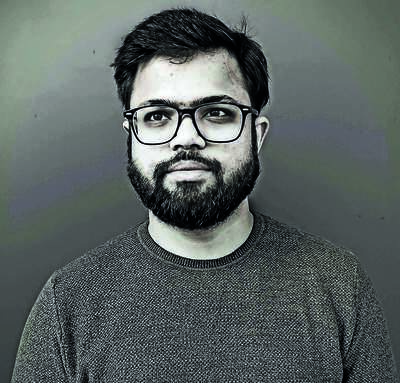
Birds in the Dark (Hanere De Panchi) a Punjabi-language feature film has been selected for its World Premiere in the Vision section at 31st Busan International Film Festival (BIFF), in October. An “intersectional film, where caste, class, sexuality and gender come together through the lives of its people,” in the words of director Shashank Walia , it is backed by Hindi filmmaker Hansal Mehta . Excerpts from an interaction with Shashank .
What is the film themed on?
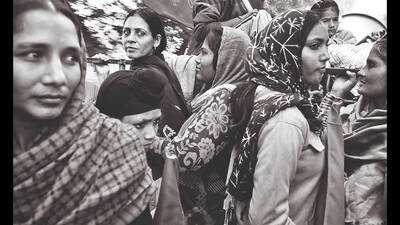
A few years ago, Reema Kaur , who produced the film, and I set out on a road trip to Punjab, hoping to discover something of our history through a documentary project. Both our families had migrated from what is now West Punjab, Pakistan, during Partition. In a village in Sangrur, we met daily-wage farm labourers protesting the occupation of village common land meant for collective farming. Their lives, courage and generosity stayed with us, and their stories, along with many others, slowly grew into a film far larger than the small documentary we had imagined.
The film is a mixed bag it seems, struggle for land, with shades of queerness. Why blend these two very diverse subjects?
Birds in the Dark is an intersectional film, where caste, class, sexuality and gender come together through the lives of its people. By intersectional, I mean looking at how these different aspects of a person’s life overlap and shape their experiences. For me, the film approaches this through its people. The struggle for land and the queer lives at the heart of the film are different aspects of the same world, connected through a shared desire for dignity, agency and the freedom to imagine a different way of living.
How did the film win a Busan berth? And what are your expectations of the film after the festival?
The film was submitted to the Busan International Film Festival through the regular submission process, and it found a place with them in the Vision – Asia section, where it will compete alongside other Asian films. For us, as independent filmmakers making our first feature, this is a very meaningful moment. We are looking forward to sharing the film with an international audience and seeing how it is received.
As a director, balancing the need for commercial success with creative expression must be a real struggle. What do you think it takes to make such films that satisfy your creativity and fetch box office successes?
I don’t think creative expression and reaching an audience necessarily must be opposing ideas. For me, the starting point is making the film honestly and staying true to what the story demands. I believe if a film is honest and resonates with people, it will find its audience.
Film’s protagonist Mauli Singh hails from Punjab and is living her dream
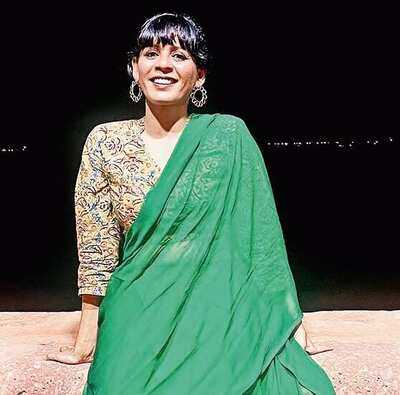
“I met Shashank and Reema through filmmaker Gurvinder Singh,” says Mauli who also co-produced the film. She adds, “Shashank saw my film Crescent Night (Adh Chanani Raat) and offered me the role of Dilraj, which is also my real name. I had loved his short film, so I quit my job for this. The shoot was cancelled and resumed only in March 2024, but I'm glad I waited for the right film.”
Commenting on why she felt compelled to agree for this film, she says, “The film is about marginalised people in Punjab and the power of a collective, with strong, complex women at its centre. I had never seen Punjab shot like this, across open fields, changing seasons and the banks of the Beas. Reema and Shashank self-funded the shoot, and there was nothing left for post-production. I reached out to Hansal Mehta, for whom I had once worked as a publicist. After watching three unedited scenes, he came on board as producer and funded the entire post-production. Co-producing was about making sure a film I believed in was completed.”
Mauli, who “grew up watching Smita Patil , Shabana Azmi and Rekha,” attributes her understanding of being an actor, to these ladies.
What is the film themed on?
A few years ago, Reema Kaur , who produced the film, and I set out on a road trip to Punjab, hoping to discover something of our history through a documentary project. Both our families had migrated from what is now West Punjab, Pakistan, during Partition. In a village in Sangrur, we met daily-wage farm labourers protesting the occupation of village common land meant for collective farming. Their lives, courage and generosity stayed with us, and their stories, along with many others, slowly grew into a film far larger than the small documentary we had imagined.
The film is a mixed bag it seems, struggle for land, with shades of queerness. Why blend these two very diverse subjects?
Birds in the Dark is an intersectional film, where caste, class, sexuality and gender come together through the lives of its people. By intersectional, I mean looking at how these different aspects of a person’s life overlap and shape their experiences. For me, the film approaches this through its people. The struggle for land and the queer lives at the heart of the film are different aspects of the same world, connected through a shared desire for dignity, agency and the freedom to imagine a different way of living.
How did the film win a Busan berth? And what are your expectations of the film after the festival?
The film was submitted to the Busan International Film Festival through the regular submission process, and it found a place with them in the Vision – Asia section, where it will compete alongside other Asian films. For us, as independent filmmakers making our first feature, this is a very meaningful moment. We are looking forward to sharing the film with an international audience and seeing how it is received.
As a director, balancing the need for commercial success with creative expression must be a real struggle. What do you think it takes to make such films that satisfy your creativity and fetch box office successes?
I don’t think creative expression and reaching an audience necessarily must be opposing ideas. For me, the starting point is making the film honestly and staying true to what the story demands. I believe if a film is honest and resonates with people, it will find its audience.
Film’s protagonist Mauli Singh hails from Punjab and is living her dream
“I met Shashank and Reema through filmmaker Gurvinder Singh,” says Mauli who also co-produced the film. She adds, “Shashank saw my film Crescent Night (Adh Chanani Raat) and offered me the role of Dilraj, which is also my real name. I had loved his short film, so I quit my job for this. The shoot was cancelled and resumed only in March 2024, but I'm glad I waited for the right film.”
Commenting on why she felt compelled to agree for this film, she says, “The film is about marginalised people in Punjab and the power of a collective, with strong, complex women at its centre. I had never seen Punjab shot like this, across open fields, changing seasons and the banks of the Beas. Reema and Shashank self-funded the shoot, and there was nothing left for post-production. I reached out to Hansal Mehta, for whom I had once worked as a publicist. After watching three unedited scenes, he came on board as producer and funded the entire post-production. Co-producing was about making sure a film I believed in was completed.”
Mauli, who “grew up watching Smita Patil , Shabana Azmi and Rekha,” attributes her understanding of being an actor, to these ladies.
Next Story