
Afterlife, Soul, Rebirth: What Lies Beyond Death


When the physical body perishes, what happens to a life-time’s impressions?
Where do our desires, instinctive tendencies, talents and unresolved emotional patterns, known as samskars , go? If the karmic cycle is real, how do these impressions re-emerge and influence us when we are reborn?
Hindu mythology offers an intriguing metaphor in Chitragupt , the celestial accountant who records human actions and their karmic consequences. Several traditions speak of Akashic Records , a universal repository of information about existence. Both raise a fundamental question: could our experiences leave impressions that survive beyond the physical body, and where might they be preserved during jiva’s transmigration?
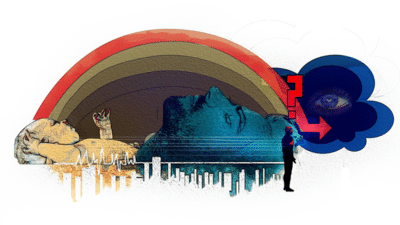
Vedanta offers an explanation through the physical, subtle and causal bodies. The physical body, or sthul sharir, including the brain that processes and retrieves memories, perishes at death. According to traditional teachings, the sukshm sharir, or subtle body, comprising the mind, intellect, ego and sensory faculty, carries karmic impressions and latent tendencies through successive births. The karan sharir, causal body, represents the unmanifest condition associated with avidya, the ignorance of our true nature. Together, these concepts help explain
how the jiva, embodied individual, remains subject to karm and rebirth . In Gita (15.8), Krishn compares the departing embodied being to the wind carrying fragrance from its source. The analogy suggests continuity beyond the physical body, although it does not explain the process in physical terms. According to Advaita Vedanta , the
conditioned jiva, associated with the subtle body and avidya, undergoes transmigration. At death, the physical body perishes, while the subtle body continues towards another birth in accordance with karm. Atman neither leaves the body nor travels elsewhere, as it is understood to be ever present and unchanging. Our bodies are composed of atoms and subatomic particles that interact with the physical world through fields and forces.
These interactions involve information that physical systems can encode and transform. This raises an intriguing question: when the body dies and its physical structure breaks down, could some information associated with our existence persist beyond the individual body? Might there be a universal information repository, like a digital cloud, that retains information beyond a particular device? Kashmir Shaivism offers another perspective. It understands the universe as a manifestation of Paramashiv,
the unity of Shiv and Shakti. The concept of Spand expresses the dynamic pulsation inherent in universal consciousness, through which manifestation, sustenance and dissolution are understood. Could this dynamic consciousness be related to a universal information field? The possibility offers an interesting philosophical comparison. However, Spand is understood as a principle of consciousness rather than a physical vibration measurable by scientific instruments, and its connection with quantum fields has not been established.
Advaita Vedanta and Kashmir Shaivism approach consciousness differently. Advaita distinguishes changing experiences from the unchanging awareness in which they are known. Samskars and karmic conditioning belong to the empirical Jiva, while Atman, our true nature, remains untouched. Kashmir Shaivism emphasises Pratyabhijña, recognising one’s true identity as Shiv, the universal consciousness underlying individual existence. Though their philosophical explanations differ, both traditions direct us beyond our limited identification with the body and mind.
Whether we contemplate Chitragupt’s ledger, Akashic Records or the Vedantic account of samskars, the deeper question concerns the relationship between action, consequence and consciousness. We may not know how karmic impressions could persist beyond physical death, but we can see how our thoughts, intentions, and
actions shape our character, influence our relationships, and condition our future choices. This understanding brings responsibility into the present, even as the mystery of rebirth remains unresolved scientifically.
Gita points to selfless action, discernment, devotion, and detachment as ways of loosening the grip of habitual patterns and mental conditioning. Advaita Vedanta posits liberation depends on recognising our true nature as Atman. The ultimate journey is, therefore, about recognising that our true Self was never bound by birth or death.
Where do our desires, instinctive tendencies, talents and unresolved emotional patterns, known as samskars , go? If the karmic cycle is real, how do these impressions re-emerge and influence us when we are reborn?
Hindu mythology offers an intriguing metaphor in Chitragupt , the celestial accountant who records human actions and their karmic consequences. Several traditions speak of Akashic Records , a universal repository of information about existence. Both raise a fundamental question: could our experiences leave impressions that survive beyond the physical body, and where might they be preserved during jiva’s transmigration?
Vedanta offers an explanation through the physical, subtle and causal bodies. The physical body, or sthul sharir, including the brain that processes and retrieves memories, perishes at death. According to traditional teachings, the sukshm sharir, or subtle body, comprising the mind, intellect, ego and sensory faculty, carries karmic impressions and latent tendencies through successive births. The karan sharir, causal body, represents the unmanifest condition associated with avidya, the ignorance of our true nature. Together, these concepts help explain
how the jiva, embodied individual, remains subject to karm and rebirth . In Gita (15.8), Krishn compares the departing embodied being to the wind carrying fragrance from its source. The analogy suggests continuity beyond the physical body, although it does not explain the process in physical terms. According to Advaita Vedanta , the
conditioned jiva, associated with the subtle body and avidya, undergoes transmigration. At death, the physical body perishes, while the subtle body continues towards another birth in accordance with karm. Atman neither leaves the body nor travels elsewhere, as it is understood to be ever present and unchanging. Our bodies are composed of atoms and subatomic particles that interact with the physical world through fields and forces.
These interactions involve information that physical systems can encode and transform. This raises an intriguing question: when the body dies and its physical structure breaks down, could some information associated with our existence persist beyond the individual body? Might there be a universal information repository, like a digital cloud, that retains information beyond a particular device? Kashmir Shaivism offers another perspective. It understands the universe as a manifestation of Paramashiv,
the unity of Shiv and Shakti. The concept of Spand expresses the dynamic pulsation inherent in universal consciousness, through which manifestation, sustenance and dissolution are understood. Could this dynamic consciousness be related to a universal information field? The possibility offers an interesting philosophical comparison. However, Spand is understood as a principle of consciousness rather than a physical vibration measurable by scientific instruments, and its connection with quantum fields has not been established.
Advaita Vedanta and Kashmir Shaivism approach consciousness differently. Advaita distinguishes changing experiences from the unchanging awareness in which they are known. Samskars and karmic conditioning belong to the empirical Jiva, while Atman, our true nature, remains untouched. Kashmir Shaivism emphasises Pratyabhijña, recognising one’s true identity as Shiv, the universal consciousness underlying individual existence. Though their philosophical explanations differ, both traditions direct us beyond our limited identification with the body and mind.
Whether we contemplate Chitragupt’s ledger, Akashic Records or the Vedantic account of samskars, the deeper question concerns the relationship between action, consequence and consciousness. We may not know how karmic impressions could persist beyond physical death, but we can see how our thoughts, intentions, and
actions shape our character, influence our relationships, and condition our future choices. This understanding brings responsibility into the present, even as the mystery of rebirth remains unresolved scientifically.
Gita points to selfless action, discernment, devotion, and detachment as ways of loosening the grip of habitual patterns and mental conditioning. Advaita Vedanta posits liberation depends on recognising our true nature as Atman. The ultimate journey is, therefore, about recognising that our true Self was never bound by birth or death.
Next Story