
Amazing Facts About How Your Cells Continuously Regenerate

While you may feel like the same person day after day, science tells a fascinatingly different story. Your body is in a constant state of renewal, shedding old cells and generating new ones across different tissues at different rates. Some parts regenerate within days, while others take years, meaning that much of your body is, quite literally, not the same as it was just a few years ago. From skin and blood to bones and even parts of the brain, here’s how the human body keeps itself fresh and functioning through a remarkable system of cellular replacement.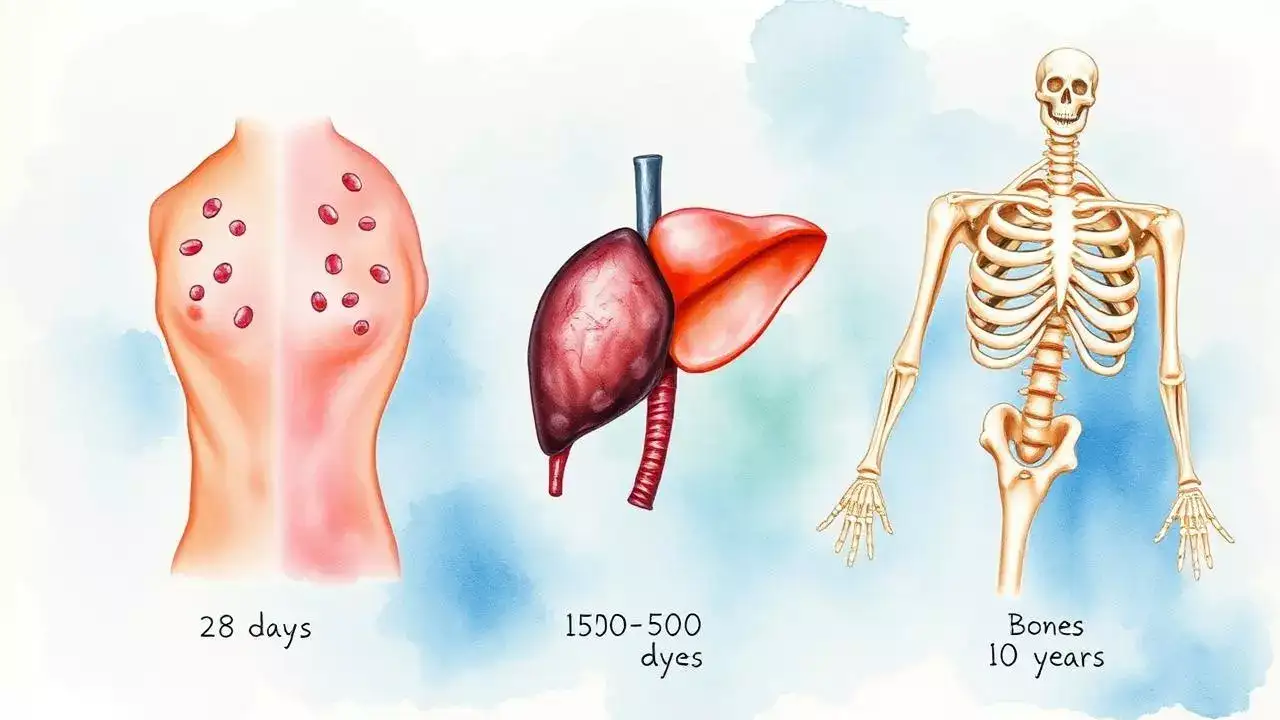
Your Skin Renews Itself Every Few Weeks
Your skin, the body’s largest organ, is in a constant state of renewal. The outermost layer — the epidermis — completely replaces itself roughly every 27 days. Dead skin cells are sloughed off daily, while new cells form beneath and rise to the surface. This cycle not only keeps your skin looking fresh but also protects against environmental damage. Factors like hydration, sleep, and diet can greatly influence the health and speed of this regeneration.Stomach Lining Is Replaced Every Few Days
The stomach's inner lining is one of the fastest-replacing tissues in the body. Constantly exposed to powerful digestive acids, its cells must regenerate quickly to prevent self-destruction. Most of the stomach lining is replaced every 4 to 5 days. This rapid turnover plays a vital role in maintaining gastrointestinal health and preventing ulcers or other digestive issues.The Liver: A Regenerative Powerhouse
Your liver is known for its incredible regenerative capacity. It can regrow to full size even after a substantial portion is removed. The liver's cells regenerate every 300 to 500 days, allowing it to recover from damage and continue its essential tasks — including detoxifying blood, metabolising nutrients, and producing bile. Supporting liver health through a balanced diet and limited alcohol intake helps sustain this renewal.Blood Cells Have Their Own Timetable
Blood cells are constantly produced and recycled by the bone marrow. Red blood cells have a lifespan of about 120 days, after which they are broken down and replaced. White blood cells vary greatly, with some lasting a few hours and others for years, depending on their type and function. Platelets, which help with clotting, live for around 8 to 10 days. This continuous cycle is vital for immunity, oxygen transport, and healing.You may also like
- Quote of the day by Helen Keller: “Life is either a daring adventure or nothing”; the travel lesson from a woman who travelled across 35 countries without sight or sound
- At 92, Hyderabad gynaecologist Dr Suri Srimathi still performs surgeries after six decades in medicine: 'We cannot refuse to treat people when they need help', she says
- How Will the Mumbai-Ahmedabad Bullet Train Stop Safely at 320 km/h During an Earthquake?
- Kitchen Cleaning Tips: How to clean the gap between the gas stove and the stove? Note this 1 trick.
- Rubella Virus in Jharkhand: Rubella virus found in Jharkhand; learn about its symptoms and prevention methods
Bones Regenerate Over A Decade
Bones may seem solid and unchanging, but they are living tissues that undergo slow but steady renewal. Every bone cell is replaced over a 10-year cycle. Specialised cells called osteoblasts and osteoclasts are responsible for rebuilding and breaking down bone, respectively. Adequate calcium, vitamin D, and weight-bearing exercises help maintain healthy bone regeneration, especially as we age.Taste Buds And Gut Cells Regrow Frequently
Taste buds regenerate approximately every 10 to 14 days, which is why your sense of taste can recover quickly after a burn or illness. Similarly, the gut lining regenerates rapidly — with intestinal cells typically renewing every 3 to 5 days. These fast cycles allow for efficient nutrient absorption and defence against pathogens in the digestive tract.Hair And Nails Reflect Constant Cell Production
Hair and nails are visible proof of your body’s continuous growth. Hair grows at an average of half an inch per month, while fingernails grow about 3 millimetres monthly. Though these aren't composed of living tissue, their growth reflects the health of their respective follicles and nail beds, which are constantly producing new cells.Brain Cells: Limited But Real Regeneration
Contrary to long-held beliefs, the brain is not entirely fixed. While most neurons don’t regenerate, research shows that neurogenesis — the formation of new brain cells — does occur, particularly in the hippocampus, the centre of memory and learning. This regeneration is influenced by physical exercise, mental stimulation, and adequate sleep.Fat Cells Recycle But Rarely Disappear
Fat cells can shrink or expand depending on diet and energy expenditure, but they don’t disappear easily. They are replaced over an average cycle of 8 to 10 years. Interestingly, while the number of fat cells tends to remain stable in adults, their size fluctuates significantly, influencing weight and metabolism.Total Cellular Turnover Is Complex
It’s often said that the human body 'replaces itself' every seven years — a popular simplification. The truth is more nuanced. Some cells, like those in your stomach or intestines, regenerate in days. Others, such as bone and fat cells, take years. Some neurons and eye lens cells are never replaced. Still, over time, a significant portion of your body’s cells are recycled, making you — quite literally — a work in biological progress.A Body In Constant Motion
Your body is not a static shell but a constantly evolving structure made of dynamic living cells. Understanding how and when these cells regenerate offers insight into how health, lifestyle, and ageing intersect. Proper nutrition, regular physical activity, sleep, and mental engagement all support your body's natural ability to renew itself. It's one of biology's most miraculous features — your body is always working behind the scenes to stay fresh, balanced, and alive.





Loving Newspoint? Download the app now
