
Discover Ephesus: 10 Fascinating Things to See in Turkey's Ancient Roman City

Ephesus is one of the most fascinating archaeological destinations in Turkey, offering a glimpse into the life of an ancient city that once flourished as an important centre of trade, culture and religion. Located near the modern town of Selçuk in İzmir Province, its impressive ruins include grand theatres, marble streets, temples and remarkably preserved public buildings. Walking through this historic site feels like travelling back thousands of years. Whether you are interested in Roman architecture, ancient Greek history or archaeological discoveries, Ephesus offers plenty of reasons to explore its remarkable past.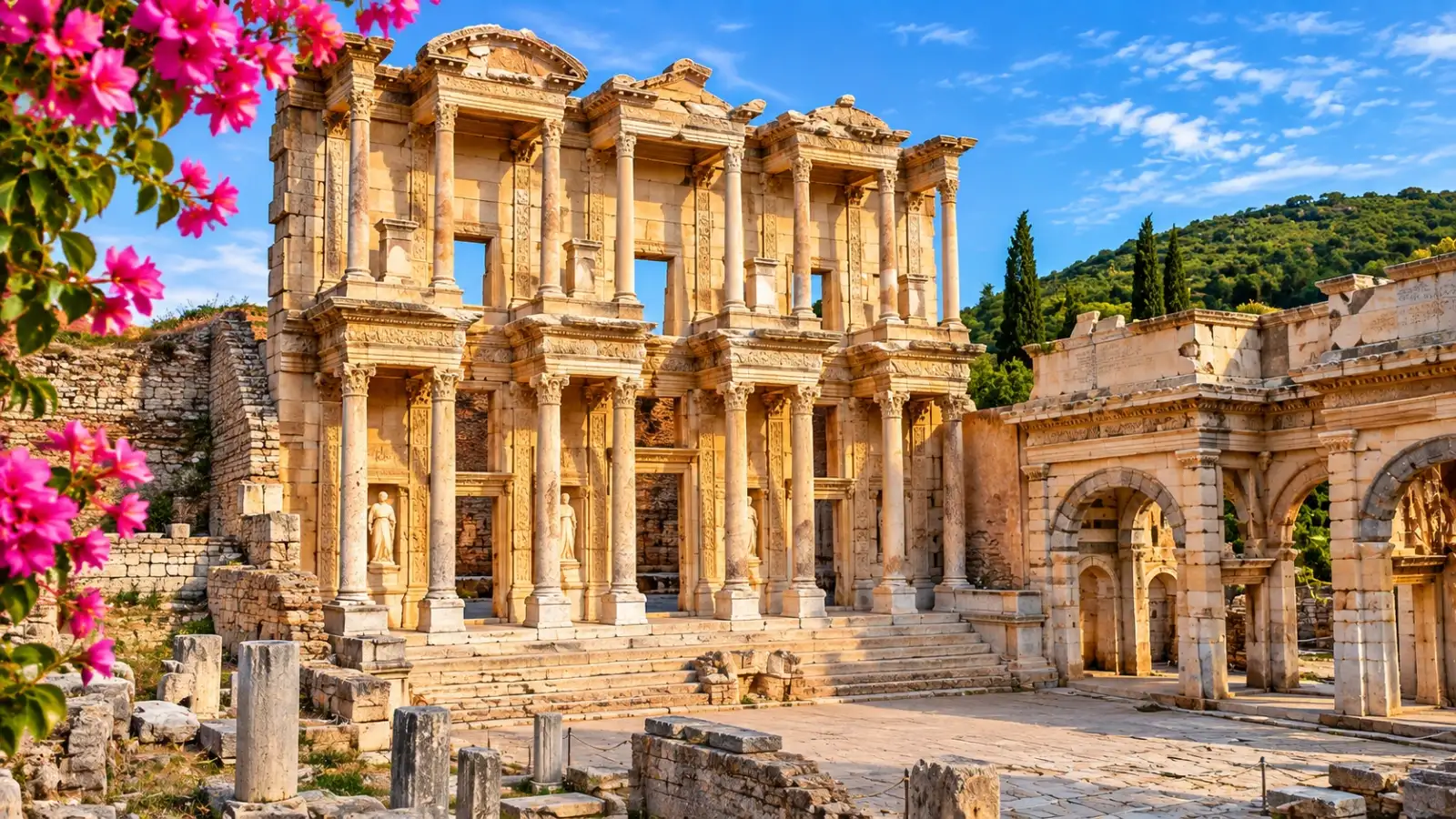
1. Explore the Famous Library of Celsus
One of the most recognisable structures in Ephesus is the Library of Celsus. Built in the second century AD, it was constructed in honour of the Roman senator Tiberius Julius Celsus Polemaeanus.
Its impressive two-storey façade features columns, decorative niches and statues. The library once held thousands of scrolls and served as an important centre of learning. Today, its beautifully restored exterior is among the most photographed sights at the archaeological site.
2. Walk Along the Ancient Marble Streets
The marble-paved streets of Ephesus reveal how carefully the city was planned. Curetes Street is one of the most prominent routes, connecting several important buildings and monuments.
As you walk along these ancient pathways, you can see remnants of columns, shops, fountains and public structures. The streets provide an idea of how residents, merchants and visitors moved through the city during its prosperous period.
3. Visit the Grand Theatre of Ephesus
The Great Theatre is among the largest structures in the ancient city. Built during the Hellenistic period and later expanded under Roman rule, it could accommodate tens of thousands of spectators.
The theatre hosted dramatic performances, public gatherings and other events. Its enormous seating arrangement and impressive scale demonstrate the importance of entertainment and public life in ancient Ephesus.
4. Discover the Temple of Hadrian
Located along Curetes Street, the Temple of Hadrian is known for its decorative stonework and elegant architectural design. It was dedicated to the Roman Emperor Hadrian, who visited Ephesus in the second century AD.
The structure features a beautifully carved arch and reliefs depicting mythological and historical figures. Although only part of the original building survives, its detailed decoration offers a glimpse into Roman artistic traditions.
5. Explore the Terrace Houses
The Terrace Houses provide an interesting look at how wealthy residents lived in ancient Ephesus. These residential buildings were constructed on a hillside and feature remains of courtyards, mosaics, wall paintings and decorative floors.
The preserved interiors reveal details about domestic architecture, heating systems and everyday activities. Access generally requires a separate ticket, but the visit offers valuable insight into the city's residential life.
6. See the Remains of the Temple of Artemis
The Temple of Artemis was once considered one of the Seven Wonders of the Ancient World. Located near Ephesus, it was a major religious centre dedicated to the Greek goddess Artemis.
Today, only a few remains of the enormous temple survive at the archaeological site. Even so, its historical importance makes it a worthwhile stop for visitors interested in the ancient world's architecture and religious traditions.
7. Visit the Basilica of St John
Located on Ayasuluk Hill in Selçuk, the Basilica of St John is traditionally associated with the burial place of Saint John the Apostle. It was built during the Byzantine period under Emperor Justinian in the sixth century.
Although much of the structure is now in ruins, its remaining columns, arches and foundations reveal its former scale. The hill also offers attractive views of the surrounding landscape.
8. Admire the Ancient Agora
The Agora was an important commercial and social centre of Ephesus. Merchants gathered here to trade goods, while residents used the public space for everyday activities.
The remains of shops, columns and surrounding structures help visitors understand how commerce shaped the city's development. Its location near other major monuments makes it an interesting part of an archaeological walk.
9. Learn About the City's Religious History
Ephesus played an important role in the religious history of the ancient Mediterranean world. It was associated with the worship of Artemis and later became an important centre of early Christianity.
The city is mentioned in the New Testament, and its history is closely connected with early Christian communities. The House of the Virgin Mary, located on Mount Koressos near Ephesus, is also visited by many pilgrims, although its historical associations are based on Christian tradition.
10. Explore the Ephesus Archaeological Museum
Located in Selçuk, the Ephesus Archaeological Museum is an excellent place to learn more about the ancient city. Its collection includes sculptures, everyday objects, coins and archaeological finds recovered from the surrounding area.
The exhibits help explain how Ephesus developed through different historical periods. Visiting the museum before or after the ruins can provide useful context for understanding the monuments.
Best Time to Visit Ephesus
Spring, particularly April and May, and autumn, especially September and October, are generally pleasant periods for exploring Ephesus. Temperatures are usually more comfortable than during the peak summer months.
Summers can be very hot, and much of the archaeological site has limited shade. Wear comfortable walking shoes, carry drinking water and plan your visit during the cooler parts of the day. Allow several hours to explore the main attractions without rushing.
The ancient ruins of Ephesus offer an extraordinary journey through the history of Greek, Roman and Byzantine civilisations. From the grand Library of Celsus and the impressive theatre to its residential buildings and religious monuments, every part of the site reveals something about the city's former importance. For history enthusiasts and curious travellers, Ephesus is one of Turkey's most rewarding archaeological destinations.
1. Explore the Famous Library of Celsus
One of the most recognisable structures in Ephesus is the Library of Celsus. Built in the second century AD, it was constructed in honour of the Roman senator Tiberius Julius Celsus Polemaeanus.
Its impressive two-storey façade features columns, decorative niches and statues. The library once held thousands of scrolls and served as an important centre of learning. Today, its beautifully restored exterior is among the most photographed sights at the archaeological site.
2. Walk Along the Ancient Marble Streets
The marble-paved streets of Ephesus reveal how carefully the city was planned. Curetes Street is one of the most prominent routes, connecting several important buildings and monuments.
As you walk along these ancient pathways, you can see remnants of columns, shops, fountains and public structures. The streets provide an idea of how residents, merchants and visitors moved through the city during its prosperous period.
3. Visit the Grand Theatre of Ephesus
The Great Theatre is among the largest structures in the ancient city. Built during the Hellenistic period and later expanded under Roman rule, it could accommodate tens of thousands of spectators.
The theatre hosted dramatic performances, public gatherings and other events. Its enormous seating arrangement and impressive scale demonstrate the importance of entertainment and public life in ancient Ephesus.
4. Discover the Temple of Hadrian
Located along Curetes Street, the Temple of Hadrian is known for its decorative stonework and elegant architectural design. It was dedicated to the Roman Emperor Hadrian, who visited Ephesus in the second century AD.
The structure features a beautifully carved arch and reliefs depicting mythological and historical figures. Although only part of the original building survives, its detailed decoration offers a glimpse into Roman artistic traditions.
5. Explore the Terrace Houses
The Terrace Houses provide an interesting look at how wealthy residents lived in ancient Ephesus. These residential buildings were constructed on a hillside and feature remains of courtyards, mosaics, wall paintings and decorative floors.
The preserved interiors reveal details about domestic architecture, heating systems and everyday activities. Access generally requires a separate ticket, but the visit offers valuable insight into the city's residential life.
6. See the Remains of the Temple of Artemis
The Temple of Artemis was once considered one of the Seven Wonders of the Ancient World. Located near Ephesus, it was a major religious centre dedicated to the Greek goddess Artemis.
Today, only a few remains of the enormous temple survive at the archaeological site. Even so, its historical importance makes it a worthwhile stop for visitors interested in the ancient world's architecture and religious traditions.
7. Visit the Basilica of St John
Located on Ayasuluk Hill in Selçuk, the Basilica of St John is traditionally associated with the burial place of Saint John the Apostle. It was built during the Byzantine period under Emperor Justinian in the sixth century.
Although much of the structure is now in ruins, its remaining columns, arches and foundations reveal its former scale. The hill also offers attractive views of the surrounding landscape.
8. Admire the Ancient Agora
The Agora was an important commercial and social centre of Ephesus. Merchants gathered here to trade goods, while residents used the public space for everyday activities.
The remains of shops, columns and surrounding structures help visitors understand how commerce shaped the city's development. Its location near other major monuments makes it an interesting part of an archaeological walk.
9. Learn About the City's Religious History
Ephesus played an important role in the religious history of the ancient Mediterranean world. It was associated with the worship of Artemis and later became an important centre of early Christianity.
The city is mentioned in the New Testament, and its history is closely connected with early Christian communities. The House of the Virgin Mary, located on Mount Koressos near Ephesus, is also visited by many pilgrims, although its historical associations are based on Christian tradition.
10. Explore the Ephesus Archaeological Museum
You may also like
- Do you wear a shared bike-taxi helmet? Learn about the infections it causes and how to prevent them
- In a world addicted to scrolling, Brain Rot and Wisdom by Farhat Nasreen and Yusuf Rana Kamal asks if we're losing the art of thinking
- Beyond theatre and music, Pune explores a new art vocabulary
- No more fear of money vanishing from your bank account? Learn about the RBI's 'Emergency Stop Switch'
- RRB NTPC Skill Test Admit Card Released; Check Exam Center Guidelines
Located in Selçuk, the Ephesus Archaeological Museum is an excellent place to learn more about the ancient city. Its collection includes sculptures, everyday objects, coins and archaeological finds recovered from the surrounding area.
The exhibits help explain how Ephesus developed through different historical periods. Visiting the museum before or after the ruins can provide useful context for understanding the monuments.
Best Time to Visit Ephesus
Spring, particularly April and May, and autumn, especially September and October, are generally pleasant periods for exploring Ephesus. Temperatures are usually more comfortable than during the peak summer months.
Summers can be very hot, and much of the archaeological site has limited shade. Wear comfortable walking shoes, carry drinking water and plan your visit during the cooler parts of the day. Allow several hours to explore the main attractions without rushing.
The ancient ruins of Ephesus offer an extraordinary journey through the history of Greek, Roman and Byzantine civilisations. From the grand Library of Celsus and the impressive theatre to its residential buildings and religious monuments, every part of the site reveals something about the city's former importance. For history enthusiasts and curious travellers, Ephesus is one of Turkey's most rewarding archaeological destinations.






Loving Newspoint? Download the app now
