
Underground Wonders: 10 Places Around the World Where You Can Walk Through Ancient Salt Mines

Salt has shaped human civilisation for thousands of years, influencing trade, food preservation and the growth of settlements. Long before modern mining equipment existed, communities carved tunnels and chambers into underground salt deposits using basic tools and remarkable determination. Some of these historic mines have survived and are now open to visitors, offering a fascinating look at underground engineering and mining traditions. From enormous chambers decorated with salt sculptures to tunnels stretching deep beneath the earth, these destinations allow travellers to explore places that once played an important role in regional economies.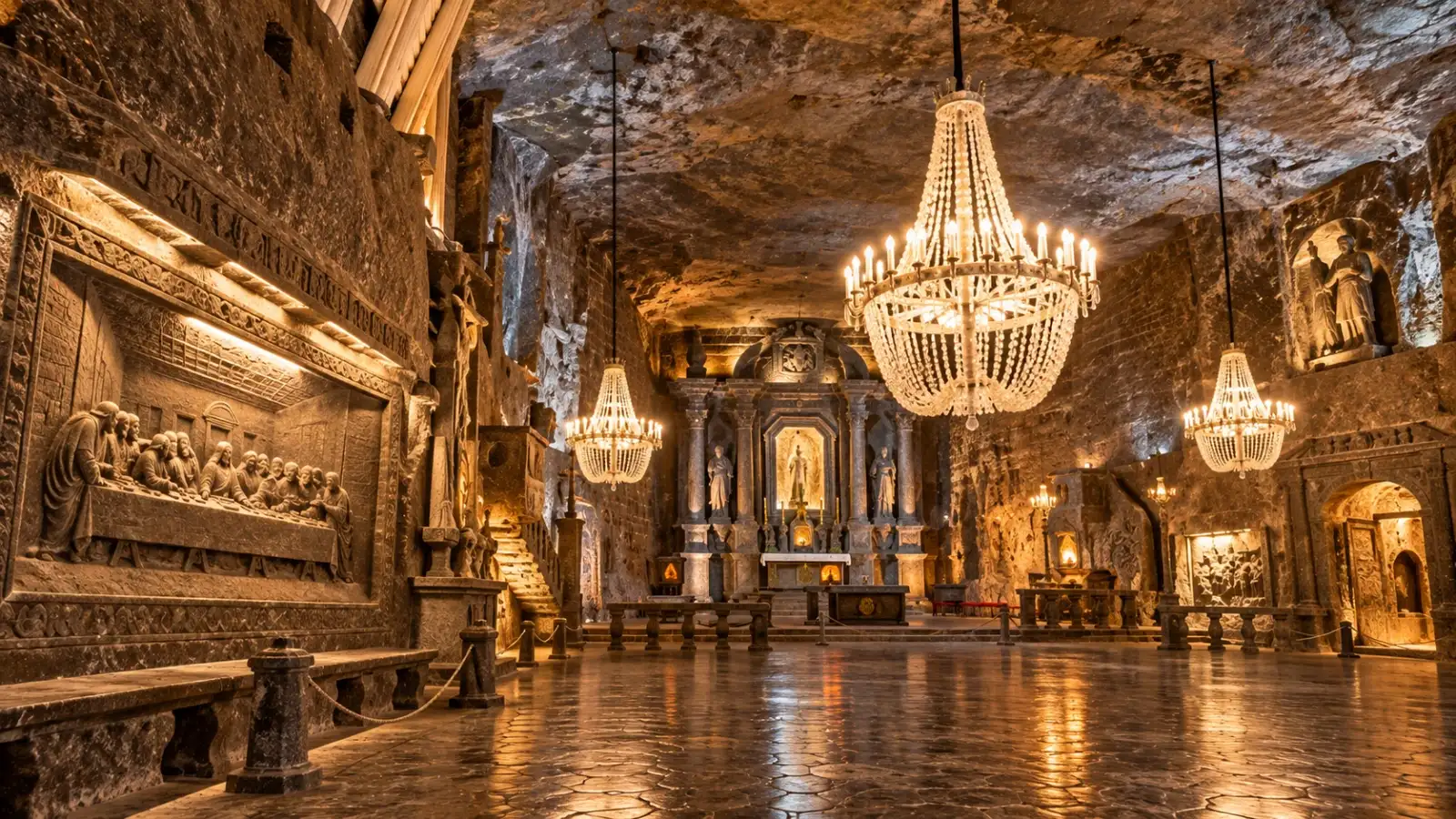
Today, visitors can explore underground corridors, chambers, sculptures and chapels carved from rock salt. One of its most remarkable attractions is the Chapel of St Kinga, featuring salt chandeliers and detailed religious sculptures.
The mine is a UNESCO World Heritage Site and offers guided underground tours that reveal its history and engineering achievements.
Its underground route takes visitors through historic tunnels, chambers and mining installations. Some sections also feature displays explaining traditional extraction methods and the working conditions of miners.
The mine is recognised as part of the UNESCO-listed Royal Salt Mines of Wieliczka and Bochnia.
Visitors can explore sections of its underground passages and see colourful salt formations. The mine also features salt structures representing famous landmarks, including a replica of the Minar-e-Pakistan and a small mosque made using salt bricks.
Its extensive underground network makes it one of South Asia's most interesting mining attractions.
Visitors can take guided tours through underground passages and learn how prehistoric communities extracted and traded salt. The experience includes historic mining displays and information about archaeological discoveries from the region.
The surrounding Hallstatt-Dachstein landscape is also recognised as a UNESCO World Heritage Site.
The mine features enormous underground chambers, dramatic salt walls and impressive lighting installations. Visitors can also find recreational facilities, including an underground lake with boat rides.
Its combination of industrial history and modern attractions makes it one of Europe's most distinctive underground destinations.
Visitors can explore sections of the mine through guided tours, learning about traditional salt extraction and modern mining techniques. The underground experience includes miners' slides and a salt lake, adding an adventurous element to the visit.
The mine also offers insight into the importance of salt production in the history of the Bavarian region.
Visitors can explore underground galleries and learn about the evolution of mining methods. A small mining train takes visitors through parts of the historic tunnel network, providing a glimpse into the challenging conditions faced by earlier miners.
The attraction also explains how salt was extracted and transported before modern industrial methods became common.
Visitors can explore sections of the former mining network and learn how miners worked beneath the surface. It is worth including for travellers interested in historic underground mining, although it is not a salt mine.
However, not all these sites operate as visitor attractions, and public access varies. Travellers interested in China's salt heritage should check local museum and heritage-site information before planning an underground visit.
Unlike the underground mines on this list, Maras is an open-air salt-production landscape. Visitors can walk along designated paths and observe how mineral-rich water flows into shallow pools, where the sun helps evaporate the water and leave salt behind.
The site provides a fascinating look at traditional salt harvesting in the Andes.
Many sites also preserve mining equipment, underground chapels, carved sculptures and chambers that demonstrate the skill of generations of workers. Their tunnels and galleries provide a rare opportunity to understand the scale of underground labour before modern machinery.
Ancient salt mines offer a distinctive way to explore history beneath the surface. From the elaborate chambers of Wieliczka and the prehistoric heritage of Hallstatt to the colourful underground passages of Khewra, each destination tells a different story about the importance of salt. Some mines preserve their original industrial character, while others have become modern visitor attractions. Before travelling, check opening dates, tour availability, age restrictions and safety requirements, as access to underground sections may vary.
1. Wieliczka Salt Mine , Poland
Located near Kraków, the Wieliczka Salt Mine is one of the world's most famous historic salt mines. Its mining history dates back to the 13th century, and it remained an important source of salt for hundreds of years.Today, visitors can explore underground corridors, chambers, sculptures and chapels carved from rock salt. One of its most remarkable attractions is the Chapel of St Kinga, featuring salt chandeliers and detailed religious sculptures.
The mine is a UNESCO World Heritage Site and offers guided underground tours that reveal its history and engineering achievements.
2. Bochnia Salt Mine, Poland
The Bochnia Salt Mine is another historic mining attraction in southern Poland. Established in the 13th century, it is among the country's oldest salt mines.Its underground route takes visitors through historic tunnels, chambers and mining installations. Some sections also feature displays explaining traditional extraction methods and the working conditions of miners.
The mine is recognised as part of the UNESCO-listed Royal Salt Mines of Wieliczka and Bochnia.
3. Khewra Salt Mine , Pakistan
Situated in Punjab, the Khewra Salt Mine is one of the world's oldest and largest salt mines. Its history is traditionally associated with the army of Alexander the Great, although organised mining developed much later.Visitors can explore sections of its underground passages and see colourful salt formations. The mine also features salt structures representing famous landmarks, including a replica of the Minar-e-Pakistan and a small mosque made using salt bricks.
Its extensive underground network makes it one of South Asia's most interesting mining attractions.
4. Hallstatt Salt Mine , Austria
The Hallstatt Salt Mine is located in the Austrian Alps and is associated with one of the world's oldest known salt-mining traditions. Salt extraction in the Hallstatt region dates back thousands of years.Visitors can take guided tours through underground passages and learn how prehistoric communities extracted and traded salt. The experience includes historic mining displays and information about archaeological discoveries from the region.
The surrounding Hallstatt-Dachstein landscape is also recognised as a UNESCO World Heritage Site.
5. Salina Turda , Romania
Salina Turda is a historic salt mine in Transylvania that has been transformed into an unusual underground attraction. Its mining history stretches back several centuries, and parts of the site have been developed into a visitor complex.The mine features enormous underground chambers, dramatic salt walls and impressive lighting installations. Visitors can also find recreational facilities, including an underground lake with boat rides.
Its combination of industrial history and modern attractions makes it one of Europe's most distinctive underground destinations.
6. Berchtesgaden Salt Mine, Germany
Located in Bavaria, the Berchtesgaden Salt Mine has been producing salt since the early 16th century. It is one of Germany's best-known underground tourist attractions .Visitors can explore sections of the mine through guided tours, learning about traditional salt extraction and modern mining techniques. The underground experience includes miners' slides and a salt lake, adding an adventurous element to the visit.
The mine also offers insight into the importance of salt production in the history of the Bavarian region.
7. Bex Salt Mines, Switzerland
The Bex Salt Mines are located in the canton of Vaud in western Switzerland. Salt extraction in the area began in the 15th century and helped supply an important resource to the surrounding regions.Visitors can explore underground galleries and learn about the evolution of mining methods. A small mining train takes visitors through parts of the historic tunnel network, providing a glimpse into the challenging conditions faced by earlier miners.
The attraction also explains how salt was extracted and transported before modern industrial methods became common.
8. Wieliczka's Lesser-Known Mining Heritage: Tarnowskie Góry, Poland
Although Tarnowskie Góry is better known for its historic silver, lead and zinc mining, it offers another fascinating underground experience. Its Historic Silver Mine features tunnels, chambers and an underground waterway.Visitors can explore sections of the former mining network and learn how miners worked beneath the surface. It is worth including for travellers interested in historic underground mining, although it is not a salt mine.
You may also like
- 'I'm REALLY worried about my...': Woman seeks financial advice after discovering parents have no retirement savings after spending Rs 17 lakh on her wedding
- Wavy Hair Care: Why It Needs Its Own Routine
- Why Does Your Hair Reject Moisture? Understanding Hair Porosity
- Fine or Thin Hair? One Difference Could Change Your Entire Haircare Routine
- Wearing Compression Clothing at the Gym? Here's What It Actually Does
9. Yungang Salt Mine Region, China
China has a long history of salt production, with traditional salt extraction practices developing in different regions over many centuries. Some historic mining areas preserve evidence of underground extraction and traditional techniques.However, not all these sites operate as visitor attractions, and public access varies. Travellers interested in China's salt heritage should check local museum and heritage-site information before planning an underground visit.
10. Maras Salt Ponds, Peru
The Maras salt ponds in Peru offer a different way to explore the history of salt production. Located in the Sacred Valley near Cusco, these thousands of small pools have been used for salt harvesting for centuries.Unlike the underground mines on this list, Maras is an open-air salt-production landscape. Visitors can walk along designated paths and observe how mineral-rich water flows into shallow pools, where the sun helps evaporate the water and leave salt behind.
The site provides a fascinating look at traditional salt harvesting in the Andes.
What Makes Ancient Salt Mines Worth Visiting?
Historic salt mines offer more than unusual underground scenery. They reveal how earlier communities used natural resources, developed mining techniques and built trade networks around an essential everyday ingredient.Many sites also preserve mining equipment, underground chapels, carved sculptures and chambers that demonstrate the skill of generations of workers. Their tunnels and galleries provide a rare opportunity to understand the scale of underground labour before modern machinery.
Ancient salt mines offer a distinctive way to explore history beneath the surface. From the elaborate chambers of Wieliczka and the prehistoric heritage of Hallstatt to the colourful underground passages of Khewra, each destination tells a different story about the importance of salt. Some mines preserve their original industrial character, while others have become modern visitor attractions. Before travelling, check opening dates, tour availability, age restrictions and safety requirements, as access to underground sections may vary.






Loving Newspoint? Download the app now
