
8 Fascinating Animals That Can Change Their Body Shape to Escape Predators

In the wild, survival often depends on how quickly an animal can respond to danger. While some creatures rely on speed, camouflage or sharp physical features, others use an unusual strategy: changing their body shape. These remarkable adaptations help animals appear larger, become harder to swallow, squeeze into narrow hiding places or blend into their surroundings. Some can inflate their bodies, while others flatten themselves or alter their appearance to confuse predators. These transformations are not always permanent, but they can provide valuable protection when an animal faces a threat.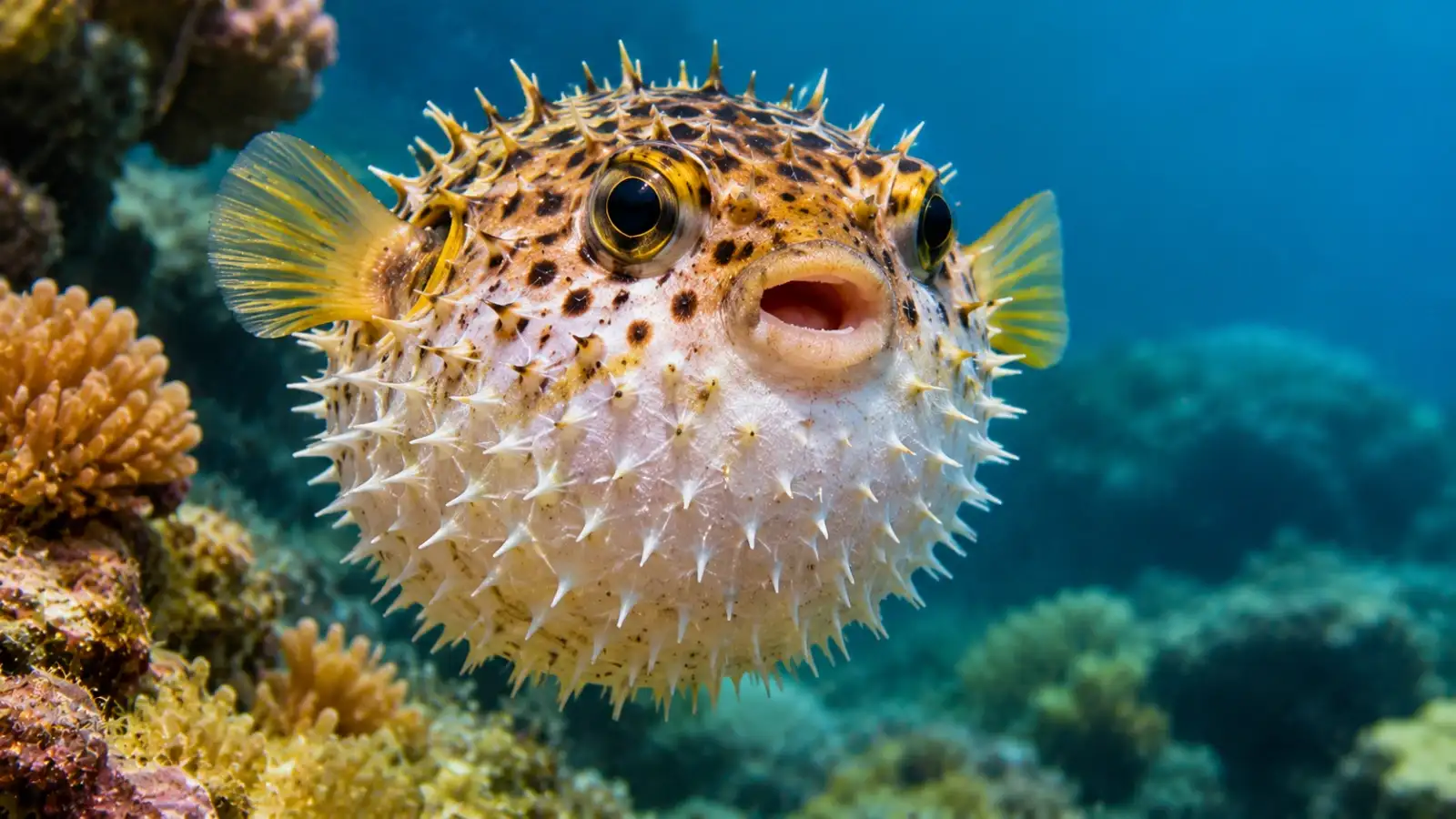
1. Pufferfish
Pufferfish are among the best-known examples of animals that change their body shape for protection. When threatened, they can rapidly inflate their bodies by taking in water, making themselves appear much larger and more difficult for predators to swallow.
Their skin stretches as their bodies expand, and some species also have small spines that become more prominent during inflation. Many pufferfish contain tetrodotoxin, a powerful toxin that makes them dangerous to eat. However, inflation is primarily a physical defence, while toxicity provides an additional layer of protection.
2. Octopuses
Octopuses are highly flexible animals with soft bodies and no rigid internal skeleton. This allows them to squeeze through surprisingly small openings and hide in narrow spaces when danger approaches.
They can also change their skin colour and texture using specialised skin cells called chromatophores and other structures. By altering their appearance, they can blend into rocks, coral and surrounding surfaces. Their ability to reshape their bodies and camouflage themselves makes them difficult for predators to detect.
3. Hognose Snakes
Hognose snakes have an unusual defensive display that makes them appear larger and more intimidating. When threatened, they may flatten the front part of their bodies, spread their necks and raise their heads.
If this display fails to scare away a predator, some species may turn upside down, open their mouths and play dead. This combination of body-shape alteration and behaviour can discourage animals that prefer to attack live prey.
4. Sea Cucumbers
Sea cucumbers have soft, elongated bodies that can change their shape and firmness. Depending on the species, they can contract their bodies, become shorter and more rigid or soften enough to squeeze into small spaces.
Some species also have an unusual defence mechanism called evisceration, in which they expel certain internal organs or sticky structures to distract predators. These body changes and defensive responses help them survive in marine environments.
5. Fiddler Crabs
Fiddler crabs have flexible joints and a hard external shell, but they can adjust their posture and body position to protect themselves. When threatened, they often retreat quickly into their burrows or squeeze into narrow spaces.
Some species also press their bodies close to the ground or position themselves in ways that make them less noticeable. Their ability to use their surroundings, combined with their protective exoskeleton, helps them avoid predators along coastal mudflats and sandy shores.
6. Leaf-Tailed Geckos
Leaf-tailed geckos are famous for their remarkable camouflage. Their flattened bodies, irregular skin edges and leaf-like tails help them resemble pieces of bark or dried leaves.
Some species can press their bodies against tree trunks and flatten themselves to reduce visible shadows. Their appearance changes how predators perceive their outline, making them difficult to distinguish from the surrounding environment.
7. Thorny Devils
Thorny devils are Australian lizards covered in sharp, pointed scales. These structures make their bodies look larger and more difficult for predators to handle.
When threatened, they can lower their heads and present a spiny part of the body towards an attacker. Some also display a false head-like structure on the back of their neck, which can confuse predators about where to strike. Their unusual body structure provides an effective physical defence.
8. Portuguese Man o' War
The Portuguese man o' war is a marine siphonophore rather than a single jellyfish. Its gas-filled float, known as a pneumatophore, helps it remain at the ocean's surface.
The float can change its shape to some extent and may be compressed or folded under certain conditions. Its long, stinging tentacles provide its main defence against potential threats. Although it does not transform its entire body like a pufferfish, its specialised structure demonstrates how unusual body adaptations can help marine organisms survive.
Why Do Animals Change Their Body Shape?
Animals use body-shape changes for several survival-related reasons. Some become larger to discourage predators, while others flatten themselves or squeeze into narrow hiding places. Certain creatures use their body structures to appear more intimidating or to blend into their surroundings.
These adaptations have developed over time through evolution. They allow animals to respond to threats without always relying on speed or physical strength.
The ability to change body shape is one of nature's fascinating survival strategies. From the expanding pufferfish and flexible octopus to the camouflage of leaf-tailed geckos, different animals use their physical features in remarkable ways. Although these transformations vary considerably, they share one important purpose: helping creatures avoid danger and improve their chances of survival in challenging natural environments.
Next Story