
Ankit Siwach: I'd rather have a smaller body of work with interesting characters


Actor-producer Ankit Siwach , who was recently in his Varanasi after coming from his hometown Meerut , says returning home gives him a grounding that no professional success can replace. “Coming back to Meerut has an almost visceral quality to it. There is an inexplicable familiarity here that no other city can quite replicate. You can travel, work on larger sets, meet people from different walks of life and have your work reach audiences nationally but the moment you come back home, there is a certain grounding that happens almost instinctively,” he says.
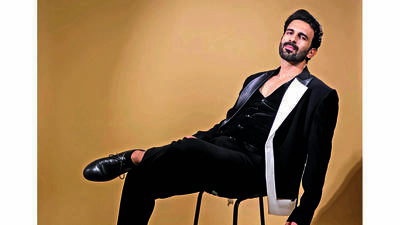
This visit was especially emotional for the Meerut Cantonment boy. “I spent time around Cantonment, met people I have known for years, caught up with friends and family, and of course, indulged in Meerut’s food. There is something very humbling about coming back to the same streets where you once dreamt about becoming an actor, and now having people recognise you for that very dream,” he says.
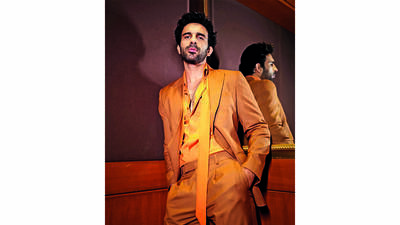
‘I wanted to understand the psychology of a soldier’
Ankit, who earned critical acclaim for playing Sepoy Ramlal Yadav in 120 Bahadur , says growing up around the armed forces shaped his approach to the role. “The most profound influence of growing up around the armed forces is that you absorb certain values without consciously studying them. Discipline, restraint, punctuality, physical endurance, camaraderie and an almost instinctive sense of responsibility, these things become part of your temperament,” he says, adding, “I didn’t want to merely imitate the external mannerisms of a soldier. I wanted to understand the psychology of someone who has been conditioned to place duty above personal comfort, and sometimes even above his own fear.”
The actor recalls the two-month Ladakh shoot for 120 Bahadur, based on the 1962 Battle of Rezang La, as an experience he still cannot get over. “We were all playing real-life characters. To enact a character who had a real existence and had given up his life for the country, at the place where we were shooting, was a feeling beyond words. It took six to eight months of rigorous practice to get into the character and enact the scene of sacrificing for the country. It affected me a lot at the internal level as I don’t consider this mere work. I was able to live a life which I always wanted to, of being in the Army, though for a short duration,” he says.
‘Recognition feels like a quiet reassurance’
120 Bahadur recently won three awards at the Asian Academy Creative Awards , a recognition Ankit receives with humility. “Cinema is an extraordinarily collaborative art form. There are writers, directors, technicians, cinematographers, costume teams, action departments, spot boys, assistants and countless people whose contribution never becomes visible to the audience. I receive this recognition with humility because I know I am only one small part of a much larger ecosystem,” he says, adding, “Personally, it also feels like a quiet reassurance. When you have struggled for something for years, moments like these tell you that perhaps the journey wasn’t as futile as it occasionally felt.”
‘Zameen se jude raho’
Ankit says Meerut taught him to remain grounded through both struggle and success, from sleeping in an ATM during his struggling days to representing Madam Driver at the New York Indian Film Festival. “The biggest lesson Meerut gave me was zameen se jude raho, remain rooted, irrespective of how high you rise. When you’ve experienced genuine uncertainty, success doesn’t make you arrogant in the same way. It makes you grateful,” he says. “Meerut also gave me a certain irreverence towards life. You learn to laugh at yourself, you learn not to take yourself too seriously and you learn that people matter more than appearances. Even today, whenever something good happens, there is a part of me that remembers the boy who was simply trying to survive and somehow keep the dream alive,” he says.
His ideal day in Meerut would begin with chai and aloo ki sabzi-puri at Sadar Bazar, followed by walks around Cantonment and meetings with old friends. “By evening, I’d want a proper adda with family and friends. No vanity, no professional conversations, no pretending to be interesting. That’s the luxury of home for me, you don’t have to perform,” he says.
‘Never compromise your dignity’
Having faced rejection, financial struggle and casting-couch pressures, Ankit has clear advice for young artistes. “Never confuse an opportunity with an obligation to compromise your dignity. If something makes you uncomfortable, walk away. If somebody tries to convince you that exploitation is simply ‘part of the industry’, remember that it isn’t,” he says, adding. “Don’t allow the profession to become the entirety of your identity. Have people outside the industry. Play a sport. Read. Fall in love. Travel. Make mistakes. Live a life. Ultimately, an actor’s greatest reservoir isn’t just technique, it is lived experience. Careers are rarely linear. Sometimes the chapter that feels like failure is merely an inconvenient chapter in a much larger story.”
‘Small towns give better stories’
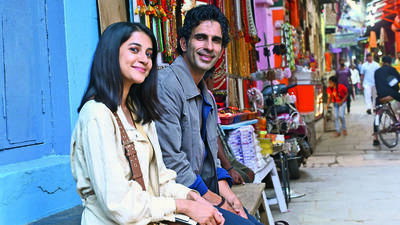
Ankit is currently in Varanasi shooting an untitled film as actor and producer, starring Simran Sharma opposite him. He calls the city central to his journey “Varanasi has always been part of all the important junctures of my life. Television show Rishtoh Ka Chakravyuh, which was my foray on television, was shot in the city. Stepping up to films also happened here with Banaras Vanilla. Now my journey as a film producer is beginning from Varanasi. The film was scheduled to be canned in Jaisalmer but somehow the location changed to Varanasi; this is some kind of divine intervention,” he says. “We will present Varanasi in the film in a way that has never been done before. It is a timeless love story with bits of sci-fi element as well and stars Simran Sharma and me in the main lead,” he adds.
As a producer, Ankit says he now has greater creative freedom, but also greater responsibility. “Creative freedom exists only if you are making the project happen. Whether it is films, OTT or television, if someone else is financing the project, then you have to mould accordingly. Now that I am producing the film, I can make things happen a certain way. At the same time, I cannot blame anyone now that I wanted to do certain things but could not do as someone else was helming the project. There is a greater responsibility now while producing the film,” he says.
‘I need to discover something in the character’
For Ankit, the non-negotiable in choosing a role is discovery. “I need to discover something in the character that I haven’t explored before. I don’t want to merely change the costume, accent or profession and call it a new role. After 120 Bahadur, I am particularly interested in characters that demand some degree of transformation, psychologically, physically or emotionally,” he says.
While a few projects are in the pipeline, he prefers not to announce them prematurely. “I have become slightly superstitious about announcing things before they are completely locked. At this stage of my career, I would rather have a smaller body of work with interesting characters than a long list of credits that don’t challenge me,” he signs off.
This visit was especially emotional for the Meerut Cantonment boy. “I spent time around Cantonment, met people I have known for years, caught up with friends and family, and of course, indulged in Meerut’s food. There is something very humbling about coming back to the same streets where you once dreamt about becoming an actor, and now having people recognise you for that very dream,” he says.
‘I wanted to understand the psychology of a soldier’
Ankit, who earned critical acclaim for playing Sepoy Ramlal Yadav in 120 Bahadur , says growing up around the armed forces shaped his approach to the role. “The most profound influence of growing up around the armed forces is that you absorb certain values without consciously studying them. Discipline, restraint, punctuality, physical endurance, camaraderie and an almost instinctive sense of responsibility, these things become part of your temperament,” he says, adding, “I didn’t want to merely imitate the external mannerisms of a soldier. I wanted to understand the psychology of someone who has been conditioned to place duty above personal comfort, and sometimes even above his own fear.”
The actor recalls the two-month Ladakh shoot for 120 Bahadur, based on the 1962 Battle of Rezang La, as an experience he still cannot get over. “We were all playing real-life characters. To enact a character who had a real existence and had given up his life for the country, at the place where we were shooting, was a feeling beyond words. It took six to eight months of rigorous practice to get into the character and enact the scene of sacrificing for the country. It affected me a lot at the internal level as I don’t consider this mere work. I was able to live a life which I always wanted to, of being in the Army, though for a short duration,” he says.
‘Recognition feels like a quiet reassurance’
120 Bahadur recently won three awards at the Asian Academy Creative Awards , a recognition Ankit receives with humility. “Cinema is an extraordinarily collaborative art form. There are writers, directors, technicians, cinematographers, costume teams, action departments, spot boys, assistants and countless people whose contribution never becomes visible to the audience. I receive this recognition with humility because I know I am only one small part of a much larger ecosystem,” he says, adding, “Personally, it also feels like a quiet reassurance. When you have struggled for something for years, moments like these tell you that perhaps the journey wasn’t as futile as it occasionally felt.”
‘Zameen se jude raho’
Ankit says Meerut taught him to remain grounded through both struggle and success, from sleeping in an ATM during his struggling days to representing Madam Driver at the New York Indian Film Festival. “The biggest lesson Meerut gave me was zameen se jude raho, remain rooted, irrespective of how high you rise. When you’ve experienced genuine uncertainty, success doesn’t make you arrogant in the same way. It makes you grateful,” he says. “Meerut also gave me a certain irreverence towards life. You learn to laugh at yourself, you learn not to take yourself too seriously and you learn that people matter more than appearances. Even today, whenever something good happens, there is a part of me that remembers the boy who was simply trying to survive and somehow keep the dream alive,” he says.
His ideal day in Meerut would begin with chai and aloo ki sabzi-puri at Sadar Bazar, followed by walks around Cantonment and meetings with old friends. “By evening, I’d want a proper adda with family and friends. No vanity, no professional conversations, no pretending to be interesting. That’s the luxury of home for me, you don’t have to perform,” he says.
‘Never compromise your dignity’
Having faced rejection, financial struggle and casting-couch pressures, Ankit has clear advice for young artistes. “Never confuse an opportunity with an obligation to compromise your dignity. If something makes you uncomfortable, walk away. If somebody tries to convince you that exploitation is simply ‘part of the industry’, remember that it isn’t,” he says, adding. “Don’t allow the profession to become the entirety of your identity. Have people outside the industry. Play a sport. Read. Fall in love. Travel. Make mistakes. Live a life. Ultimately, an actor’s greatest reservoir isn’t just technique, it is lived experience. Careers are rarely linear. Sometimes the chapter that feels like failure is merely an inconvenient chapter in a much larger story.”
‘Small towns give better stories’
Ankit is currently in Varanasi shooting an untitled film as actor and producer, starring Simran Sharma opposite him. He calls the city central to his journey “Varanasi has always been part of all the important junctures of my life. Television show Rishtoh Ka Chakravyuh, which was my foray on television, was shot in the city. Stepping up to films also happened here with Banaras Vanilla. Now my journey as a film producer is beginning from Varanasi. The film was scheduled to be canned in Jaisalmer but somehow the location changed to Varanasi; this is some kind of divine intervention,” he says. “We will present Varanasi in the film in a way that has never been done before. It is a timeless love story with bits of sci-fi element as well and stars Simran Sharma and me in the main lead,” he adds.
As a producer, Ankit says he now has greater creative freedom, but also greater responsibility. “Creative freedom exists only if you are making the project happen. Whether it is films, OTT or television, if someone else is financing the project, then you have to mould accordingly. Now that I am producing the film, I can make things happen a certain way. At the same time, I cannot blame anyone now that I wanted to do certain things but could not do as someone else was helming the project. There is a greater responsibility now while producing the film,” he says.
‘I need to discover something in the character’
For Ankit, the non-negotiable in choosing a role is discovery. “I need to discover something in the character that I haven’t explored before. I don’t want to merely change the costume, accent or profession and call it a new role. After 120 Bahadur, I am particularly interested in characters that demand some degree of transformation, psychologically, physically or emotionally,” he says.
While a few projects are in the pipeline, he prefers not to announce them prematurely. “I have become slightly superstitious about announcing things before they are completely locked. At this stage of my career, I would rather have a smaller body of work with interesting characters than a long list of credits that don’t challenge me,” he signs off.
Next Story