
Lesser Known Villages in Kashmir for a Quieter Himalayan Escape

Kashmir is often introduced through the familiar images of Dal Lake, Gulmarg, Pahalgam and Sonamarg. These destinations are undoubtedly scenic, but they represent only one part of the region's landscape. Beyond the famous tourist circuits, Kashmir has remote valleys, wooden villages, mountain meadows and riverside settlements where life continues at a much slower pace.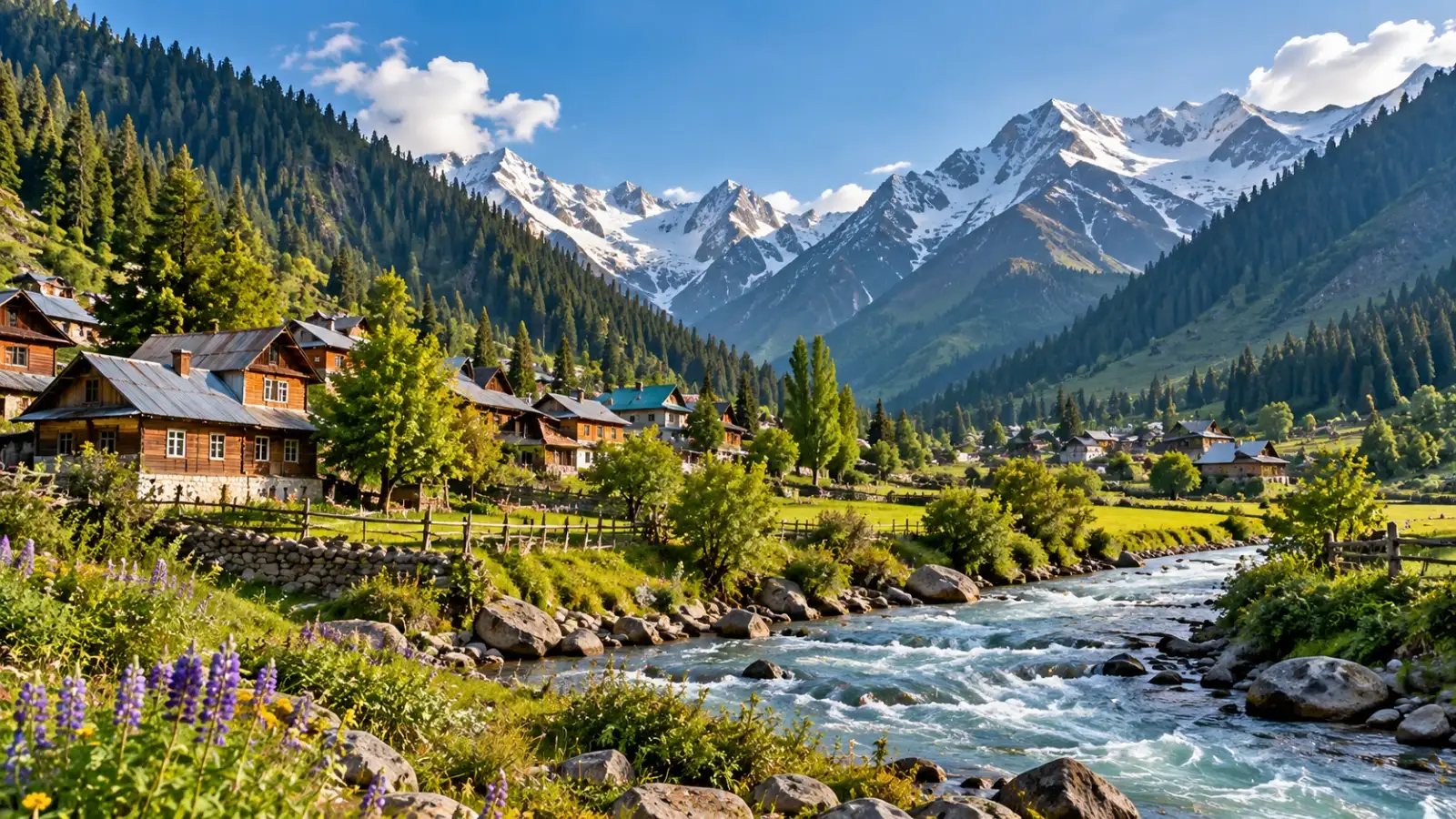
Some of these places are surrounded by forests and high mountains, while others sit beside streams or expansive grasslands. Several are also home to distinctive local communities and traditional architecture that offer a glimpse into everyday life in the mountains.
If you want to experience a quieter side of Kashmir, these villages and lesser explored destinations deserve a place on your travel list.
The setting is particularly striking because of the combination of pine and fir forests, open meadows and towering mountains. The wooden architecture gives the villages a distinctly Himalayan character that feels very different from the more commercialised parts of Kashmir.
Tulail is reached through Gurez, one of the more remote valleys in the region. The journey itself forms a major part of the experience, with winding mountain roads and changing landscapes leading towards this secluded corner of Kashmir.
The area is surrounded by forested hills and mountain scenery, making it particularly appealing to travellers looking for a peaceful break rather than a busy sightseeing itinerary. The landscape changes with the seasons, with greenery dominating the warmer months and snow transforming the surrounding mountains during winter.
Its relatively low profile is part of its attraction. Instead of spending the day moving between crowded attractions, visitors can use Chatpal as a base for experiencing the quieter side of south Kashmir.
The region is also associated with the Dard-Shin community, whose traditional lifestyle and cultural identity add another dimension to the landscape. Villages are surrounded by terraced fields, forests and high mountain slopes, while Habba Khatoon Peak provides one of the area's most recognisable natural landmarks.
Gurez is particularly interesting for travellers who want more than scenic viewpoints. Here, the landscape and village life remain closely connected, making the destination feel considerably removed from Kashmir's major tourist centres.
Beyond the waterfall, the surrounding countryside offers opportunities for photography, trekking and spending time in a forested mountain environment. The combination of pine and fir forests, meadows and nearby snow covered peaks gives the region a distinctly secluded character.
For travellers who want to combine a village style mountain setting with a natural attraction, Aharbal makes an interesting alternative to Kashmir's better known resort destinations.
The broad open landscape makes Bangus very different from the narrow, densely settled valleys found elsewhere. During the warmer months, the grasslands become particularly attractive, with mountain slopes forming a dramatic backdrop.
The Indian government's Incredible India portal also highlights Bangus Valley among Kashmir's lesser known destinations, alongside Gurez and other quieter areas in the north.
For photographers and travellers who enjoy open landscapes, Bangus offers the kind of scenery where the journey and surroundings are as important as any individual attraction.
The name means "Valley of Milk" and is associated with the milky appearance of the water flowing through the landscape. The valley is also used seasonally by shepherds who bring their livestock to graze in the meadows.
In spring and summer, the landscape becomes particularly green, while winter brings heavy snow and can make the area inaccessible for extended periods. This seasonal character is one reason Doodhpathri feels different at different times of the year.
The valley is particularly interesting for travellers who enjoy places that have not yet developed the same tourist infrastructure as Kashmir's established destinations. The surrounding region includes natural springs, lakes and areas known for wildlife.
Rather than being a conventional resort destination, Drangyari offers an opportunity to experience a more remote side of north Kashmir. Travellers should plan carefully, particularly when visiting less developed mountain areas where facilities can be limited.
The surrounding meadows create a broad, open landscape that changes dramatically throughout the year. Spring and summer bring green grass and wildflowers, while winter can cover the area in snow.
Yusmarg also acts as a starting point for trekking routes and mountain excursions. Horse riding, photography and seasonal winter activities add variety for visitors who want to explore beyond simply sightseeing.
During summer, shepherd communities can be seen grazing cattle in nearby areas, particularly around the meadows associated with Tosamaidan. This creates a landscape where natural springs, forests, open pasture and traditional livelihoods come together.
The destination is well suited to travellers who prefer gentle exploration rather than an itinerary packed with major attractions. The springs and surrounding countryside can easily form the centre of a slower day trip.
The landscape is especially attractive during the warmer months when the meadows become green and local pastoral activity adds life to the otherwise expansive setting. Deodar trees and mountain slopes frame the open grassland, creating a distinctly Himalayan atmosphere.
Tosamaidan is not about ticking off a long list of attractions. Its appeal lies in spending time in a wide natural landscape, walking through the meadows and experiencing a quieter environment away from the busiest tourist routes.
The area offers a different perspective on Kashmir because its appeal comes from the combination of mountain scenery, riverside settlements and local life. The surrounding landscape is particularly striking during the greener months.
Because Keran is in a sensitive border region, visitors should check current access rules, permitted areas and local travel requirements before planning a trip.
Travelling through these areas can also provide a broader understanding of Kashmir's geographical and cultural diversity. Wooden homes in Gurez, shepherd settlements around high altitude meadows, freshwater springs in the south and forested valleys in Kupwara all represent different sides of the region.
However, lesser known does not always mean easy to access. Mountain roads can be affected by snow, rain, landslides and local conditions, while some border areas may have specific restrictions. Checking official tourism information and local conditions before travelling is particularly important when visiting remote parts of Kashmir.
For travellers willing to spend more time on the road and less time following a conventional sightseeing itinerary, these places can offer a more peaceful Himalayan experience. The key is to travel responsibly, respect local communities and natural areas, and avoid treating remote villages simply as photo stops.
Kashmir's smaller settlements are often at their most memorable when experienced slowly, with time to appreciate the landscape rather than rushing from one attraction to another.
Some of these places are surrounded by forests and high mountains, while others sit beside streams or expansive grasslands. Several are also home to distinctive local communities and traditional architecture that offer a glimpse into everyday life in the mountains.
If you want to experience a quieter side of Kashmir, these villages and lesser explored destinations deserve a place on your travel list.
Tulail, Gurez Valley
Deep inside the Gurez region, Tulail is made up of picturesque mountain villages where traditional wooden houses blend naturally with the surrounding landscape. Jammu and Kashmir Tourism describes the villages as having log wood houses, with some settlements positioned along the river and others climbing the slopes.The setting is particularly striking because of the combination of pine and fir forests, open meadows and towering mountains. The wooden architecture gives the villages a distinctly Himalayan character that feels very different from the more commercialised parts of Kashmir.
Tulail is reached through Gurez, one of the more remote valleys in the region. The journey itself forms a major part of the experience, with winding mountain roads and changing landscapes leading towards this secluded corner of Kashmir.
Chatpal, Anantnag
Chatpal is one of the quieter destinations in south Kashmir and is located in the Chitergul-Shangus area of Anantnag district. Jammu and Kashmir Tourism places it around 20 kilometres from Achabal and highlights its proximity to Margan Top.The area is surrounded by forested hills and mountain scenery, making it particularly appealing to travellers looking for a peaceful break rather than a busy sightseeing itinerary. The landscape changes with the seasons, with greenery dominating the warmer months and snow transforming the surrounding mountains during winter.
Its relatively low profile is part of its attraction. Instead of spending the day moving between crowded attractions, visitors can use Chatpal as a base for experiencing the quieter side of south Kashmir.
Gurez Village, Bandipora
Gurez is technically a valley rather than a single village, but its scattered settlements make it one of the most rewarding places to experience traditional mountain life in Kashmir. Located at around 8,000 feet, the valley is known for wooden homes, alpine landscapes and the Kishanganga River.The region is also associated with the Dard-Shin community, whose traditional lifestyle and cultural identity add another dimension to the landscape. Villages are surrounded by terraced fields, forests and high mountain slopes, while Habba Khatoon Peak provides one of the area's most recognisable natural landmarks.
Gurez is particularly interesting for travellers who want more than scenic viewpoints. Here, the landscape and village life remain closely connected, making the destination feel considerably removed from Kashmir's major tourist centres.
Aharbal, Kulgam
Aharbal is best known for its dramatic waterfall, but the surrounding landscape is equally compelling. Located along the Veshav River in Kulgam district, the area combines dense forests, mountain scenery and flowing water. The main waterfall drops around 25 metres and has earned Aharbal the popular nickname "Niagara Falls of Kashmir".Beyond the waterfall, the surrounding countryside offers opportunities for photography, trekking and spending time in a forested mountain environment. The combination of pine and fir forests, meadows and nearby snow covered peaks gives the region a distinctly secluded character.
For travellers who want to combine a village style mountain setting with a natural attraction, Aharbal makes an interesting alternative to Kashmir's better known resort destinations.
Bangus Valley , Kupwara
Bangus Valley in north Kashmir is surrounded by mountains and expansive grasslands. Jammu and Kashmir Tourism describes both Bod Bangus, the larger valley, and Lokut Bangus, the smaller valley nearby.The broad open landscape makes Bangus very different from the narrow, densely settled valleys found elsewhere. During the warmer months, the grasslands become particularly attractive, with mountain slopes forming a dramatic backdrop.
The Indian government's Incredible India portal also highlights Bangus Valley among Kashmir's lesser known destinations, alongside Gurez and other quieter areas in the north.
For photographers and travellers who enjoy open landscapes, Bangus offers the kind of scenery where the journey and surroundings are as important as any individual attraction.
Doodhpathri , Budgam
Doodhpathri is becoming better known, but it still offers a much quieter experience than Kashmir's major tourist hubs. Located in Budgam district, the destination is centred around broad green meadows, pine forests and the Doodhganga River. The district administration places it at an altitude of about 8,957 feet.The name means "Valley of Milk" and is associated with the milky appearance of the water flowing through the landscape. The valley is also used seasonally by shepherds who bring their livestock to graze in the meadows.
In spring and summer, the landscape becomes particularly green, while winter brings heavy snow and can make the area inaccessible for extended periods. This seasonal character is one reason Doodhpathri feels different at different times of the year.
Drangyari, Kupwara
Drangyari is an emerging destination in the Chowkibal region of Kupwara district. It lies against the Shamsabari hills and is surrounded by natural water bodies, mountain landscapes and several lesser known sites.The valley is particularly interesting for travellers who enjoy places that have not yet developed the same tourist infrastructure as Kashmir's established destinations. The surrounding region includes natural springs, lakes and areas known for wildlife.
Rather than being a conventional resort destination, Drangyari offers an opportunity to experience a more remote side of north Kashmir. Travellers should plan carefully, particularly when visiting less developed mountain areas where facilities can be limited.
Yusmarg, Budgam
Yusmarg is more established than some of the villages on this list, but it remains considerably quieter than Gulmarg or Pahalgam. Situated in Budgam district, it is surrounded by pine and fir forests and the mountains of the Pir Panjal range.The surrounding meadows create a broad, open landscape that changes dramatically throughout the year. Spring and summer bring green grass and wildflowers, while winter can cover the area in snow.
Yusmarg also acts as a starting point for trekking routes and mountain excursions. Horse riding, photography and seasonal winter activities add variety for visitors who want to explore beyond simply sightseeing.
Kokernag, Anantnag
Kokernag is known for its freshwater springs and landscaped surroundings, but the wider area also provides a glimpse into rural south Kashmir. Jammu and Kashmir Tourism describes the destination as having some of the region's largest freshwater springs, surrounded by gardens and greenery.During summer, shepherd communities can be seen grazing cattle in nearby areas, particularly around the meadows associated with Tosamaidan. This creates a landscape where natural springs, forests, open pasture and traditional livelihoods come together.
The destination is well suited to travellers who prefer gentle exploration rather than an itinerary packed with major attractions. The springs and surrounding countryside can easily form the centre of a slower day trip.
Tosamaidan, Budgam
Tosamaidan is a vast mountain meadow in Budgam district and is among the quieter landscapes of Kashmir. Jammu and Kashmir Tourism refers to it as the "king of meadows", highlighting its extensive green grasslands, surrounding hills, springs and waterfalls.The landscape is especially attractive during the warmer months when the meadows become green and local pastoral activity adds life to the otherwise expansive setting. Deodar trees and mountain slopes frame the open grassland, creating a distinctly Himalayan atmosphere.
Tosamaidan is not about ticking off a long list of attractions. Its appeal lies in spending time in a wide natural landscape, walking through the meadows and experiencing a quieter environment away from the busiest tourist routes.
You may also like
- 8th Pay Commission: Will civil servants also get OROP? Demand raised
- Health Universities: Why India Needs an Urgent System Overhaul
- Asbestos dump: British company linked to thousands of cancer cases in India
- His grandfather was a Chambal 'baaghi': Meet Dev Prabhakar Singh Tomar who left a high-paying job in the Netherlands and secured UPSC Rank 629
- 6 free LPG gas cylinders to be provided; major announcement by this state government..
Keran, Kupwara
Keran is another northern destination that has gained attention as Kashmir expands its border tourism experiences. The Incredible India portal lists Keran and Teetwal among the newer border tourism sites in the region, highlighting their scenic riverfront settings and surrounding green landscapes.The area offers a different perspective on Kashmir because its appeal comes from the combination of mountain scenery, riverside settlements and local life. The surrounding landscape is particularly striking during the greener months.
Because Keran is in a sensitive border region, visitors should check current access rules, permitted areas and local travel requirements before planning a trip.
Why Kashmir's Villages Are Worth Exploring
The biggest difference between these places and Kashmir's famous tourist centres is not necessarily the scenery. It is the pace. In many smaller settlements, mountains, rivers, forests and meadows remain closely connected to everyday life rather than being separated into dedicated tourist attractions.Travelling through these areas can also provide a broader understanding of Kashmir's geographical and cultural diversity. Wooden homes in Gurez, shepherd settlements around high altitude meadows, freshwater springs in the south and forested valleys in Kupwara all represent different sides of the region.
However, lesser known does not always mean easy to access. Mountain roads can be affected by snow, rain, landslides and local conditions, while some border areas may have specific restrictions. Checking official tourism information and local conditions before travelling is particularly important when visiting remote parts of Kashmir.
A Different Way to Experience Kashmir
Kashmir's beauty does not end where the major tourist circuits do. Villages and lesser explored valleys such as Tulail, Chatpal, Bangus, Drangyari and Gurez reveal a quieter landscape shaped by mountains, forests, rivers and traditional communities.For travellers willing to spend more time on the road and less time following a conventional sightseeing itinerary, these places can offer a more peaceful Himalayan experience. The key is to travel responsibly, respect local communities and natural areas, and avoid treating remote villages simply as photo stops.
Kashmir's smaller settlements are often at their most memorable when experienced slowly, with time to appreciate the landscape rather than rushing from one attraction to another.






Loving Newspoint? Download the app now
