
10 Benefits of Eating Fresh Coconut and Why You Should Add It to Your Daily Diet

Fresh coconut is a familiar ingredient in Indian kitchens, where it is used in chutneys, curries, desserts and traditional snacks. Beyond its pleasant taste and natural texture, coconut provides dietary fibre, minerals and fats that contribute to its nutritional value. It can be enjoyed as a small snack or added to everyday meals in several ways. While it is not a magic food, including fresh coconut in moderate quantities can add variety to a balanced diet. From supporting normal digestion to providing energy, here are ten nutritional benefits worth knowing about.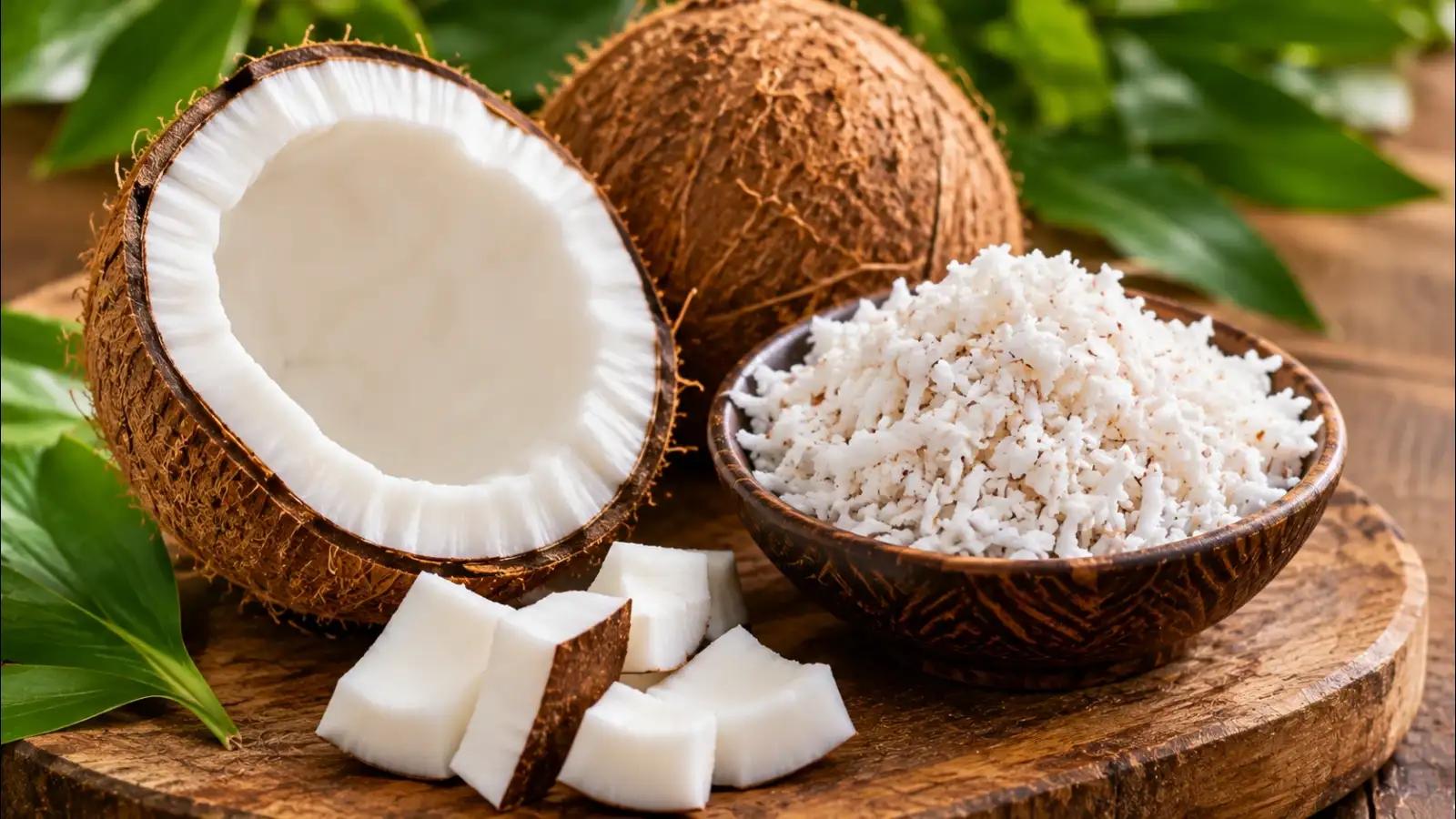
Adding a small quantity of grated coconut to vegetable dishes, salads or breakfast preparations can increase their fibre content. It works particularly well in homemade coconut chutney and vegetable stir-fries.
However, coconut's saturated fat content means that portion size matters. It is best enjoyed as part of a balanced diet rather than consumed in large quantities or treated as a replacement for unsaturated fat sources such as nuts, seeds and plant oils.
Manganese contributes to normal bone formation and energy metabolism, while copper supports connective tissue formation and normal iron transport. Including a variety of nutrient-rich foods helps meet daily mineral requirements.
You can add a small portion of grated coconut to breakfast bowls, fruit salads or homemade snacks. Pairing it with protein-rich foods such as yoghurt or nuts can make a more balanced snack.
A moderate serving of coconut can add energy and flavour to meals. However, it is relatively calorie-dense, so people monitoring their overall calorie intake should pay attention to portion sizes.
Fresh coconut can contribute these compounds to your diet, although its antioxidant content varies with the variety and maturity of the coconut.
The American Heart Association recommends limiting saturated fat and replacing it with unsaturated fats where possible. Therefore, coconut is best enjoyed occasionally or in moderate portions alongside foods such as walnuts, almonds, seeds and vegetable oils.
Although coconut can contribute some potassium to your diet, it should not be considered a primary treatment for muscle cramps or electrolyte deficiencies. Other sources include bananas, beans, leafy vegetables and potatoes.
You can use grated coconut in vegetable poha, upma, chutneys, salads and homemade snacks. It also works well in traditional South Indian preparations such as coconut rice and vegetable-based curries.
Try adding a little grated coconut to homemade desserts, fruit bowls or breakfast dishes. It is still important to remember that coconut contains calories and saturated fat, so moderation remains useful.
1. Provides Dietary Fibre
Fresh coconut contains dietary fibre, which supports normal digestive function and helps maintain regular bowel movements. Fibre also contributes to a feeling of fullness after meals.Adding a small quantity of grated coconut to vegetable dishes, salads or breakfast preparations can increase their fibre content. It works particularly well in homemade coconut chutney and vegetable stir-fries.
2. Contains Healthy Fats
Coconut contains a significant amount of fat, including saturated fats. These fats provide energy and contribute to the creamy texture and rich flavour of fresh coconut.However, coconut's saturated fat content means that portion size matters. It is best enjoyed as part of a balanced diet rather than consumed in large quantities or treated as a replacement for unsaturated fat sources such as nuts, seeds and plant oils.
3. Supplies Essential Minerals
Fresh coconut provides minerals such as manganese, copper, potassium and iron in varying amounts. These nutrients perform several important functions in the body.Manganese contributes to normal bone formation and energy metabolism, while copper supports connective tissue formation and normal iron transport. Including a variety of nutrient-rich foods helps meet daily mineral requirements.
4. Can Help You Feel Fuller
The combination of fibre and fat in fresh coconut can contribute to satiety, helping you feel satisfied after eating.You can add a small portion of grated coconut to breakfast bowls, fruit salads or homemade snacks. Pairing it with protein-rich foods such as yoghurt or nuts can make a more balanced snack.
5. Provides Energy
Fresh coconut contains fats that supply energy to the body. Dietary fats are an important part of a balanced eating pattern and help the body absorb fat-soluble vitamins.A moderate serving of coconut can add energy and flavour to meals. However, it is relatively calorie-dense, so people monitoring their overall calorie intake should pay attention to portion sizes.
6. Contains Antioxidant Compounds
Coconut contains naturally occurring plant compounds, including phenolic compounds, that have antioxidant activity. Antioxidants help protect cells against oxidative damage caused by free radicals.Fresh coconut can contribute these compounds to your diet, although its antioxidant content varies with the variety and maturity of the coconut.
7. Adds Variety to a Heart-Conscious Diet
Fresh coconut can be included in a varied diet, but its saturated fat content deserves attention when considering heart health.You may also like
- Plants that work like natural air purifier
- Semen Flowing Back into the Bladder and Its Effects on Male Fertility
- Gold prices rise, silver becomes cheaper on the second day of Chhath; check the latest rates for 24K and 22K gold
- The Right Time for Fixed Deposits (FDs): Banks Raise Interest Rates in November
- Children should be encouraged to explore different sports: Irfan Pathan
The American Heart Association recommends limiting saturated fat and replacing it with unsaturated fats where possible. Therefore, coconut is best enjoyed occasionally or in moderate portions alongside foods such as walnuts, almonds, seeds and vegetable oils.
8. Supports Normal Muscle and Nerve Function
Fresh coconut contains potassium, an essential mineral and electrolyte involved in normal muscle contraction, nerve signalling and fluid balance.Although coconut can contribute some potassium to your diet, it should not be considered a primary treatment for muscle cramps or electrolyte deficiencies. Other sources include bananas, beans, leafy vegetables and potatoes.
9. Makes Everyday Meals More Nutritious and Flavourful
One practical benefit of fresh coconut is how easily it can be included in different dishes. Its natural flavour and texture can make simple meals more enjoyable.You can use grated coconut in vegetable poha, upma, chutneys, salads and homemade snacks. It also works well in traditional South Indian preparations such as coconut rice and vegetable-based curries.
10. Offers a Versatile Alternative to Packaged Toppings
Fresh coconut can be used instead of some packaged sweet toppings and heavily processed garnishes. It adds natural flavour and texture without requiring additional artificial flavouring.Try adding a little grated coconut to homemade desserts, fruit bowls or breakfast dishes. It is still important to remember that coconut contains calories and saturated fat, so moderation remains useful.
How to Include Fresh Coconut in Your Daily Diet
There are several simple ways to enjoy fresh coconut without changing your usual meals.- Add grated coconut to poha, upma or vegetable dishes.
- Prepare fresh coconut chutney to serve with idli and dosa.
- Sprinkle small quantities over fruit or yoghurt bowls.
- Use coconut in homemade vegetable curries and rice preparations.
- Add it to traditional sweets or homemade energy bites.
- Enjoy a small portion of fresh coconut as an occasional snack.






Loving Newspoint? Download the app now
