
8 Benefits of Including Sweet Potatoes in Your Winter Diet

Winter brings plenty of seasonal foods, and sweet potatoes are among the most popular choices during colder months. Known as shakarkandi in India, this naturally sweet root vegetable is enjoyed roasted, boiled, baked and added to different recipes. Beyond its comforting taste, sweet potato provides fibre, vitamins, minerals and antioxidants that support overall nutrition.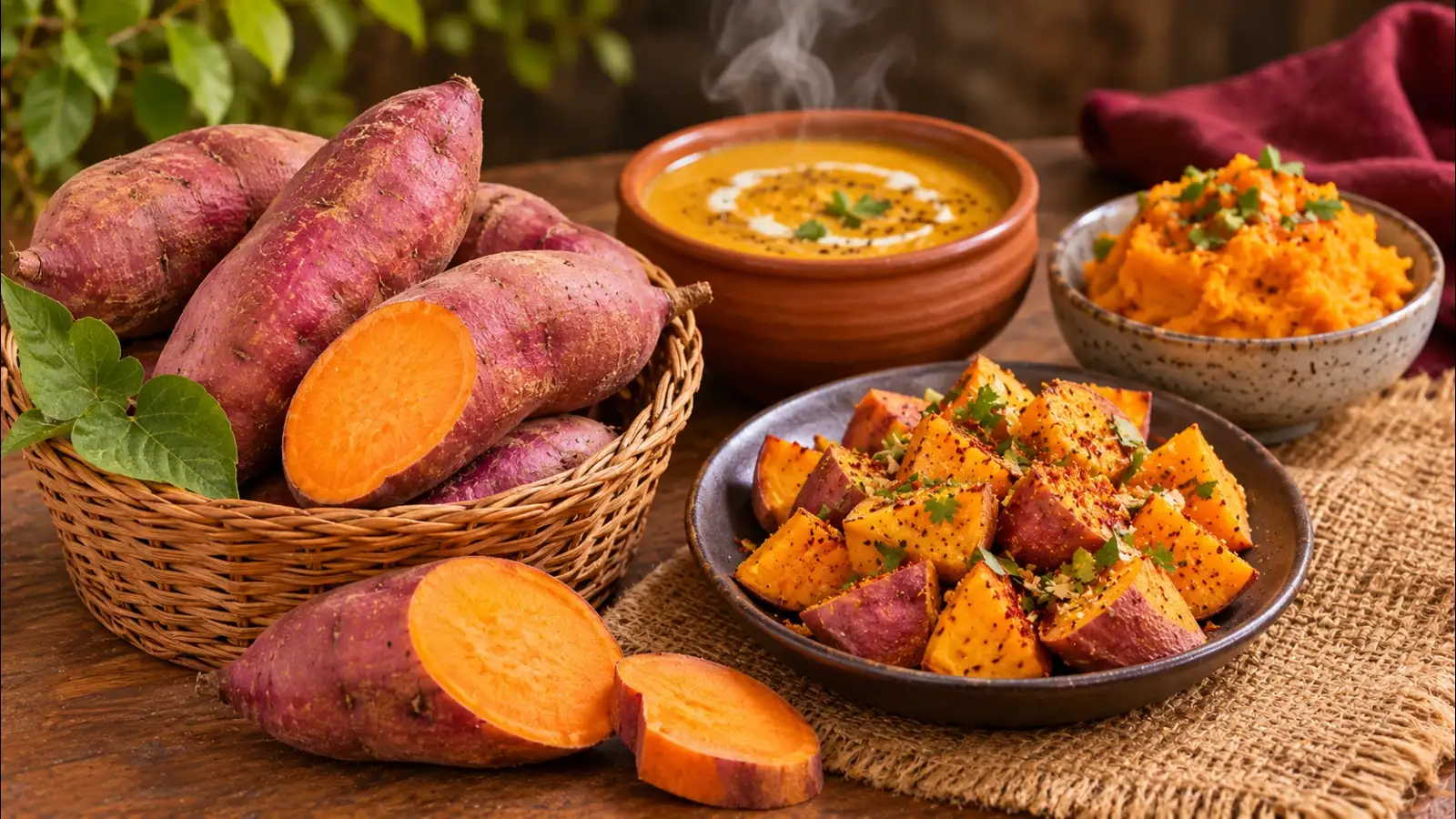
Including it in a balanced winter diet can be a simple way to add variety to everyday meals. From supporting digestion to providing energy, here are eight potential benefits of eating sweet potatoes during the winter season.
Eating sweet potatoes with their skin, after washing and cooking them properly, can provide additional fibre. You can include them in breakfast, lunch or evening snacks for a filling seasonal option.
Including beta-carotene-rich foods in your diet can help meet your vitamin A requirements. However, sweet potatoes should be part of a varied diet rather than treated as a standalone way to prevent winter infections.
Orange-fleshed varieties are particularly rich in beta-carotene, while purple sweet potatoes contain anthocyanins, which give them their distinctive colour. Eating different colourful vegetables can help increase the variety of antioxidants in your diet.
A boiled or roasted sweet potato can work as a convenient breakfast addition or an evening snack. Pair it with curd, nuts or another protein source to create a more balanced meal.
Adequate potassium intake also contributes to maintaining healthy blood pressure as part of an overall balanced diet. Roasted or boiled sweet potatoes can be included alongside other potassium-rich foods such as bananas, beans and leafy vegetables.
They also contain vitamin C, which supports normal collagen formation. Collagen is a protein that helps maintain the structure of skin and other tissues.
Eating sweet potatoes cannot replace moisturisers or proper skincare, but they can contribute useful nutrients to your daily diet.
A medium-sized boiled sweet potato can be a useful addition to breakfast or lunch. Combine it with protein-rich foods such as curd, paneer or chickpeas to make the meal more balanced and filling.
You can roast them with spices, prepare shakarkandi chaat, add them to vegetable soups or mash them as a side dish. They can also be used in homemade tikkis and stuffed parathas.
This variety makes it easier to include seasonal produce in everyday meals without relying on heavily processed snacks.
Including it in a balanced winter diet can be a simple way to add variety to everyday meals. From supporting digestion to providing energy, here are eight potential benefits of eating sweet potatoes during the winter season.
1. Provides Dietary Fibre for Better Digestion
Sweet potatoes contain dietary fibre, which helps support regular bowel movements and healthy digestion. Fibre adds bulk to stool and can help prevent constipation when consumed alongside adequate fluids.Eating sweet potatoes with their skin, after washing and cooking them properly, can provide additional fibre. You can include them in breakfast, lunch or evening snacks for a filling seasonal option.
2. Supports Immune Function With Vitamin A
The orange flesh of sweet potatoes is rich in beta-carotene, a plant pigment that the body converts into vitamin A. This vitamin plays an important role in maintaining healthy skin, vision and the normal functioning of the immune system.Including beta-carotene-rich foods in your diet can help meet your vitamin A requirements. However, sweet potatoes should be part of a varied diet rather than treated as a standalone way to prevent winter infections.
3. Offers Antioxidants That Protect Cells
Sweet potatoes contain antioxidants, including beta-carotene and other plant compounds. Antioxidants help protect cells from damage caused by unstable molecules known as free radicals.Orange-fleshed varieties are particularly rich in beta-carotene, while purple sweet potatoes contain anthocyanins, which give them their distinctive colour. Eating different colourful vegetables can help increase the variety of antioxidants in your diet.
4. Provides Energy During Cold Weather
Sweet potatoes are a source of complex carbohydrates, which provide energy for everyday activities. Their combination of carbohydrates and fibre can also make them more satisfying than many refined snack options.A boiled or roasted sweet potato can work as a convenient breakfast addition or an evening snack. Pair it with curd, nuts or another protein source to create a more balanced meal.
5. Contains Potassium for Normal Muscle Function
Sweet potatoes provide potassium, an essential mineral that supports normal muscle contraction, nerve signalling and fluid balance.Adequate potassium intake also contributes to maintaining healthy blood pressure as part of an overall balanced diet. Roasted or boiled sweet potatoes can be included alongside other potassium-rich foods such as bananas, beans and leafy vegetables.
6. Supports Skin Health Through Nutrients
Winter weather can leave skin feeling dry, particularly when humidity levels are low. Sweet potatoes provide beta-carotene, which the body converts into vitamin A. Vitamin A contributes to the maintenance of normal skin.They also contain vitamin C, which supports normal collagen formation. Collagen is a protein that helps maintain the structure of skin and other tissues.
Eating sweet potatoes cannot replace moisturisers or proper skincare, but they can contribute useful nutrients to your daily diet.
7. May Help You Feel Full for Longer
The fibre and carbohydrate content of sweet potatoes can help make meals more satisfying. This may reduce the urge to snack frequently between meals for some people.A medium-sized boiled sweet potato can be a useful addition to breakfast or lunch. Combine it with protein-rich foods such as curd, paneer or chickpeas to make the meal more balanced and filling.
8. Offers a Versatile and Naturally Sweet Food Choice
One of the biggest advantages of sweet potatoes is their versatility. Their naturally sweet flavour makes them suitable for both savoury and mildly sweet preparations.You can roast them with spices, prepare shakarkandi chaat, add them to vegetable soups or mash them as a side dish. They can also be used in homemade tikkis and stuffed parathas.
This variety makes it easier to include seasonal produce in everyday meals without relying on heavily processed snacks.
Easy Ways to Include Sweet Potatoes in Your Winter Diet
Here are a few simple ways to enjoy sweet potatoes during colder months:- Roasted Shakarkandi: Roast sweet potatoes and sprinkle lemon juice, black salt and chaat masala over them.
- Sweet Potato Chaat: Combine boiled cubes with onion, coriander, lemon juice and roasted cumin powder.
- Sweet Potato Soup: Blend cooked sweet potatoes with vegetables, black pepper and mild spices.
- Sweet Potato Tikki: Mix mashed sweet potatoes with herbs and spices, shape into patties and shallow-fry.
- Stuffed Paratha: Use mashed sweet potato with coriander, green chilli and spices as a filling.
Next Story