
Best Storage Containers For Rainy Season To Keep Food Fresh And Moisture-Free

The rainy season brings welcome relief from the heat, but increased humidity can create problems in the kitchen. Dry ingredients may absorb moisture, while biscuits, namkeen and other snacks can quickly lose their crisp texture when exposed to damp air.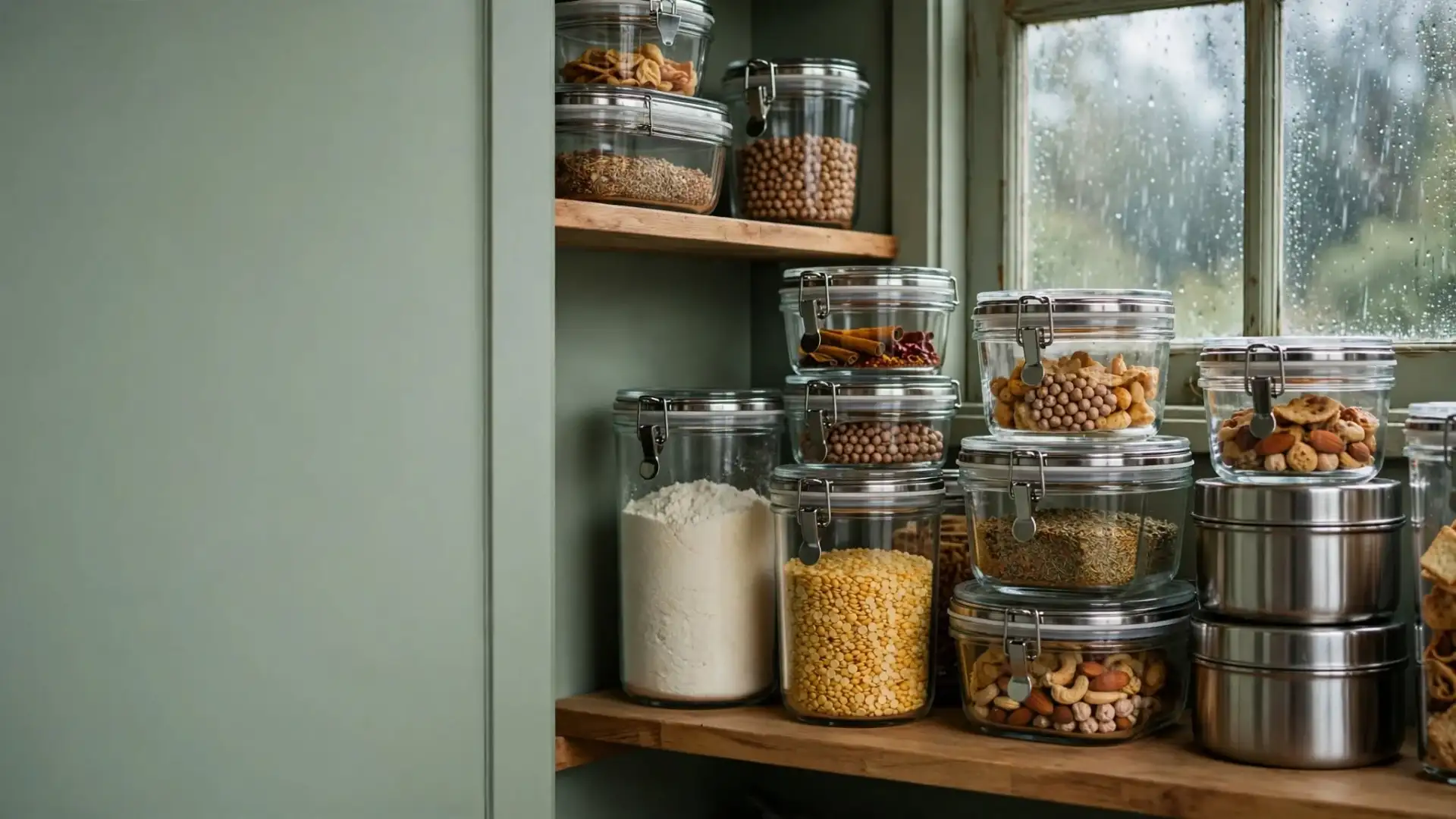
For everyday pantry storage, airtight food storage containers are a practical choice. According to experts, a secure seal can help reduce exposure to humid air and keep moisture-sensitive ingredients in better condition.
Rather than keeping everything in opened packets, transferring frequently used staples into properly sealed containers can also make the pantry easier to organise.
Transparent containers are useful for pantry organisation because their contents can be identified quickly. Stackable designs are another advantage, particularly if cupboard space is limited.
For larger quantities of rice, atta or dal, choose bigger containers that are easy to handle. Smaller containers are better suited to spices, dry fruits, biscuits and snacks that are consumed regularly.
Glass containers can be useful when you want to see the contents clearly and prefer a more rigid storage option. They are particularly practical for smaller quantities, although they are heavier and can break if dropped.
Stainless steel containers are durable and well suited to staples such as rice, flour and pulses. However, because they are opaque, you will need to open them to check their contents.
Make sure every container is completely dry before adding food. Industry experts also recommend keeping storage containers away from damp areas such as directly beside the sink and checking seals periodically for damage.
With the right combination of airtight food storage containers and sensible storage habits, it becomes easier to protect everyday ingredients from the challenges of humid rainy weather while keeping the kitchen neat and manageable.
Image Courtesy: Meta AI
For everyday pantry storage, airtight food storage containers are a practical choice. According to experts, a secure seal can help reduce exposure to humid air and keep moisture-sensitive ingredients in better condition.
Rather than keeping everything in opened packets, transferring frequently used staples into properly sealed containers can also make the pantry easier to organise.
Choose Airtight Containers For Dry Ingredients
Rice, flour, pulses, cereals, sugar and spices are among the items that benefit from well-sealed storage. Look for containers with tightly fitting lids, locking mechanisms or silicone gaskets that create a reliable seal.Transparent containers are useful for pantry organisation because their contents can be identified quickly. Stackable designs are another advantage, particularly if cupboard space is limited.
For larger quantities of rice, atta or dal, choose bigger containers that are easy to handle. Smaller containers are better suited to spices, dry fruits, biscuits and snacks that are consumed regularly.
Glass, Plastic Or Stainless Steel?
The best material depends on what you are storing and how you use your kitchen. Food-grade plastic containers are lightweight and convenient, making them suitable for everyday pantry use.Glass containers can be useful when you want to see the contents clearly and prefer a more rigid storage option. They are particularly practical for smaller quantities, although they are heavier and can break if dropped.
Stainless steel containers are durable and well suited to staples such as rice, flour and pulses. However, because they are opaque, you will need to open them to check their contents.
Pick Containers According To Your Needs
Not every container needs to be large or highly specialised. A practical monsoon kitchen storage setup can include a combination of large containers for staples, medium-sized ones for snacks and smaller jars for spices.Make sure every container is completely dry before adding food. Industry experts also recommend keeping storage containers away from damp areas such as directly beside the sink and checking seals periodically for damage.
With the right combination of airtight food storage containers and sensible storage habits, it becomes easier to protect everyday ingredients from the challenges of humid rainy weather while keeping the kitchen neat and manageable.
Image Courtesy: Meta AI
Next Story