
Bharatanatyam Mudras: Understanding the Hand Gestures That Tell Stories

In Bharatanatyam, a dancer can communicate an idea without speaking a single word. A movement of the fingers may represent a flower, a bird, an object or an action, while the face and body help complete the meaning. These hand gestures are known as mudras or hastas.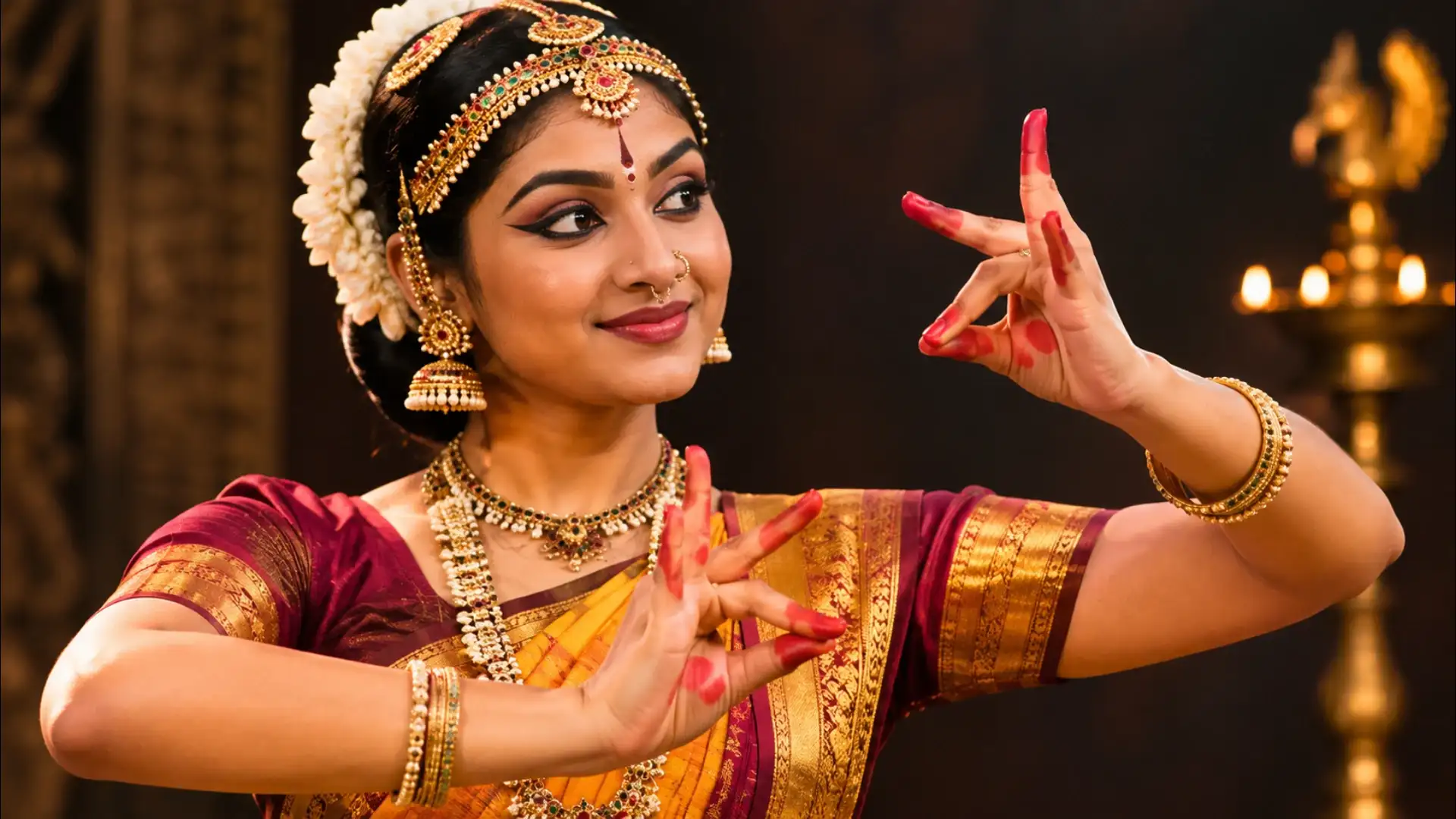
The dance form combines movement, rhythm, expression and storytelling. Its gestures are not simply decorative movements added to choreography. They form part of a structured vocabulary that dancers learn and practise over time.
Single-hand gestures are commonly known as asamyuta hastas, while gestures involving both hands are called samyuta hastas. Each category includes several recognised forms.
The names and descriptions of these gestures are recorded in classical dance literature, including the Abhinaya Darpana, a text associated with Indian performance traditions.
For example, a gesture may represent a flower in one sequence and be used to communicate a different idea in another. The dancer's facial expression, direction of movement and the words or music accompanying the performance all help establish the intended meaning.
This is why a mudra should not always be interpreted in isolation.
A dancer may use the eyes to follow an imagined object, show surprise or communicate affection. The position of the head and the movement of the torso add further meaning.
These elements work together to make the performance understandable to an audience, even when the story is unfamiliar.
Accuracy matters because a poorly formed gesture may become difficult for an audience to recognise. Repetition also helps dancers develop control and coordination.
Watching a live performance can be useful for understanding how gestures are connected to the music and narrative. Beginners can also learn from a qualified teacher who explains the traditional context rather than teaching gestures as isolated signs.
Understanding this vocabulary can make a performance more engaging for viewers and offer a deeper appreciation of the discipline behind classical Indian dance.
The dance form combines movement, rhythm, expression and storytelling. Its gestures are not simply decorative movements added to choreography. They form part of a structured vocabulary that dancers learn and practise over time.
What are mudras?
A mudra is a symbolic hand gesture used in Indian dance and other traditional practices. In Bharatanatyam, hand gestures can be performed with one hand or both hands.Single-hand gestures are commonly known as asamyuta hastas, while gestures involving both hands are called samyuta hastas. Each category includes several recognised forms.
The names and descriptions of these gestures are recorded in classical dance literature, including the Abhinaya Darpana, a text associated with Indian performance traditions.
How gestures create meaning
A dancer may use a hand gesture to indicate an object or represent an action. However, its meaning depends on the context of the performance.For example, a gesture may represent a flower in one sequence and be used to communicate a different idea in another. The dancer's facial expression, direction of movement and the words or music accompanying the performance all help establish the intended meaning.
This is why a mudra should not always be interpreted in isolation.
The role of facial expressions
Hand gestures are only one part of Bharatanatyam's expressive language. Facial expressions, particularly movements of the eyes and eyebrows, help convey emotion and character.You may also like
- 'Divine grace has no logic': Dr Jai Madaan on life, spirituality, humility and finding true prosperity
- Attention, UPI Users! Why Have Banks Issued a Warning to Fintech Companies?
- Gardening Tips: 5 Winter Vegetables You Can Easily Grow In Your Balcony
- Can Toxic Air Trigger a Heart Attack? Here's What Happens Inside Your Blood Vessels
- Has ambition become unfashionable to Gen Z?
A dancer may use the eyes to follow an imagined object, show surprise or communicate affection. The position of the head and the movement of the torso add further meaning.
These elements work together to make the performance understandable to an audience, even when the story is unfamiliar.
Learning mudras as a beginner
Students generally begin by learning basic hand positions and practising how to hold them clearly. They then work on combining gestures with eye movements, body positions and rhythm.Accuracy matters because a poorly formed gesture may become difficult for an audience to recognise. Repetition also helps dancers develop control and coordination.
Watching a live performance can be useful for understanding how gestures are connected to the music and narrative. Beginners can also learn from a qualified teacher who explains the traditional context rather than teaching gestures as isolated signs.
A language of movement
Bharatanatyam demonstrates how dance can combine physical movement with a detailed system of expression. Its mudras give performers a way to communicate stories, relationships and ideas through the hands.Understanding this vocabulary can make a performance more engaging for viewers and offer a deeper appreciation of the discipline behind classical Indian dance.






Loving Newspoint? Download the app now
