
Bisi Bele Bath Recipe: How to Make Karnataka's Famous Rice and Lentil Dish

Bisi bele bath is one of Karnataka's best-known vegetarian preparations. The name comes from Kannada words associated with hot rice and lentils, and the dish brings together rice, toor dal, vegetables and a distinctive spice mixture.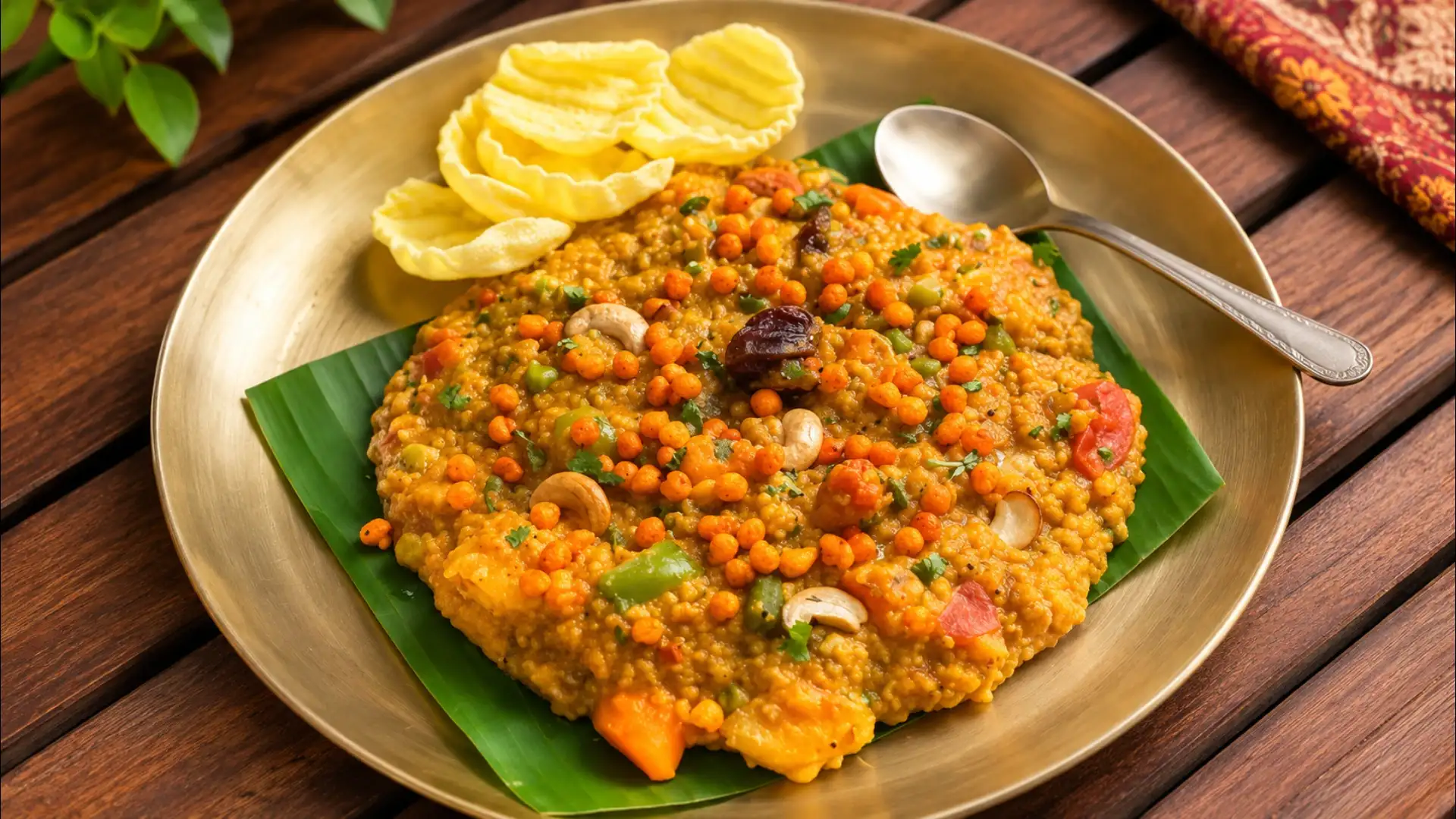
Its flavour comes from the balance of tamarind, roasted spices and a little jaggery. The finished dish is soft and slightly loose, rather than dry like a pulao. A tempering of ghee, cashews and curry leaves adds the final touch.
It is commonly associated with Karnataka's food traditions, particularly the Mysuru region. Unlike ordinary vegetable rice, bisi bele bath uses a special spice mixture that gives it its characteristic flavour.
Add the coconut towards the end and roast briefly. Allow everything to cool before grinding it into a fine powder.
You can also use ready-made bisi bele bath powder if you are short of time. However, roasting the ingredients at home allows you to adjust the spice level.
Cook the rice separately until tender. Avoid making it too dry, as it will be simmered further with the other ingredients.
Stir in the tamarind pulp, jaggery and two to three tablespoons of the prepared spice powder. Adjust the quantity according to your taste.
Simmer for a few minutes so the vegetables absorb the seasoning.
Allow the preparation to simmer for approximately 8 to 10 minutes, stirring regularly to prevent it from sticking. The consistency should be soft and slightly flowing. Add more hot water if necessary.
Taste and adjust the salt, tamarind and jaggery.
Add mustard seeds and allow them to splutter. Follow with curry leaves and asafoetida.
Pour the tempering over the bisi bele bath and mix gently.
Use the spice powder gradually because its strength can vary. A balanced mixture of tangy, spicy and gently sweet flavours is what makes this Karnataka preparation distinctive.
Its flavour comes from the balance of tamarind, roasted spices and a little jaggery. The finished dish is soft and slightly loose, rather than dry like a pulao. A tempering of ghee, cashews and curry leaves adds the final touch.
It is commonly associated with Karnataka's food traditions, particularly the Mysuru region. Unlike ordinary vegetable rice, bisi bele bath uses a special spice mixture that gives it its characteristic flavour.
Ingredients for four servings
For the rice and dal:- 1 cup short-grain rice
- ½ cup toor dal
- ½ teaspoon turmeric powder
- 4 cups water, approximately
- 1 carrot, diced
- ½ cup green beans, chopped
- ½ cup green peas
- 1 small potato, diced
- 1 small capsicum, optional
- 2 tablespoons tamarind pulp
- 1 teaspoon jaggery
- Salt to taste
- 2 tablespoons coriander seeds
- 1 tablespoon chana dal
- 1 teaspoon urad dal
- 4 dried red chillies
- ½ teaspoon cumin seeds
- ¼ teaspoon fenugreek seeds
- 1 small cinnamon stick
- 3 cloves
- 2 tablespoons grated dry coconut
- 2 tablespoons ghee
- 10 to 12 cashews
- ½ teaspoon mustard seeds
- A sprig of curry leaves
- A pinch of asafoetida
Prepare the spice powder
Heat a small pan and dry-roast the coriander seeds, chana dal, urad dal, red chillies, cumin, fenugreek, cinnamon and cloves separately or in stages over a low flame.Add the coconut towards the end and roast briefly. Allow everything to cool before grinding it into a fine powder.
You can also use ready-made bisi bele bath powder if you are short of time. However, roasting the ingredients at home allows you to adjust the spice level.
Cook the rice and lentils
Wash the rice and toor dal separately. Cook the dal with turmeric until it becomes soft enough to mash.Cook the rice separately until tender. Avoid making it too dry, as it will be simmered further with the other ingredients.
Prepare the vegetables
Place the chopped vegetables in a pan with enough water to cover them partially. Add salt and cook until tender but not mushy.Stir in the tamarind pulp, jaggery and two to three tablespoons of the prepared spice powder. Adjust the quantity according to your taste.
Simmer for a few minutes so the vegetables absorb the seasoning.
Bring everything together
Add the cooked dal and rice to the vegetable mixture. Pour in hot water gradually and mix gently.Allow the preparation to simmer for approximately 8 to 10 minutes, stirring regularly to prevent it from sticking. The consistency should be soft and slightly flowing. Add more hot water if necessary.
Taste and adjust the salt, tamarind and jaggery.
Prepare the final tempering
Heat ghee in a small pan. Add the cashews and cook until golden.Add mustard seeds and allow them to splutter. Follow with curry leaves and asafoetida.
Pour the tempering over the bisi bele bath and mix gently.
Serving suggestions
Serve bisi bele bath hot with a little additional ghee, roasted papad or a small portion of boondi on top. It can be enjoyed on its own as a complete lunch.Tips for a good result
Do not leave the finished dish too thick. It will continue to absorb moisture as it rests.Use the spice powder gradually because its strength can vary. A balanced mixture of tangy, spicy and gently sweet flavours is what makes this Karnataka preparation distinctive.
Next Story