
Bone Drugs and Why Your Dentist Asks About Them First


Before a tooth extraction, an implant placement, or even a deep gum cleaning, your dentist runs through a medical history. Most questions feel routine. One stops people short: are you taking any medication for bone density or bone metastases? The reason is not administrative. It is about a rare but serious complication that can turn a straightforward procedure into a months-long problem with no clean resolution.
What bone-modifying drugs actually doBisphosphonates, the most common class, which includes alendronate, zoledronic acid, and ibandronate, work by slowing the activity of osteoclasts, the cells responsible for breaking down old bone. In healthy bone remodelling, osteoclasts and osteoblasts work in a continuous cycle: old bone is resorbed, new bone is laid down. Bisphosphonates suppress the resorption side of that cycle, which is exactly what makes them effective for osteoporosis and for cancers that spread to bone. The skeleton becomes denser, or at least loses density more slowly.
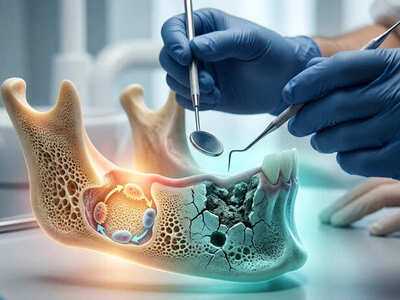
The problem is that the jawbone is one of the most metabolically active bones in the body. It is constantly remodelling in response to chewing forces, tooth movement, and the micro-trauma of everyday use. When osteoclast activity is suppressed in the jaw, the bone's ability to respond to injury, including the controlled injury of a dental procedure, is compromised. Blood supply to the area can become inadequate. Exposed bone that cannot heal becomes necrotic. This is medication-related osteonecrosis of the jaw, or MRONJ.
Who is at higher risk and why the route of delivery mattersThe risk is not the same for everyone on these drugs. Oral bisphosphonates taken for osteoporosis, typically at low doses over years, carry a much lower risk than intravenous bisphosphonates used in oncology settings, where doses are higher and frequency is greater. Estimates from the American Association of Oral and Maxillofacial Surgeons suggest MRONJ risk in patients on oral bisphosphonates for osteoporosis sits below one percent for most invasive dental procedures. For patients on intravenous bisphosphonates for cancer-related bone disease, that figure climbs substantially.
Duration of use matters too. The longer the drug has been in the system, the more the jawbone's remodelling capacity has been altered. Bisphosphonates are also incorporated into bone tissue and remain active long after a patient stops taking them, years, in some cases. This is why stopping the medication a few weeks before a procedure does not reliably reduce the risk. The drug does not simply clear the way antibiotics do.
Other bone-modifying agents, including denosumab, a monoclonal antibody that works differently but also suppresses bone resorption, carry a similar risk profile. Your dentist needs to know about these too.
What changes about your dental careFor patients on low-dose oral bisphosphonates, most routine dental treatment proceeds normally. The priority is keeping the mouth healthy enough that invasive procedures become less necessary, because a tooth extraction you never need is a risk you never face. Regular cleanings, prompt treatment of decay, and maintaining gum health all reduce the chance of reaching a point where extraction is the only option.
When an invasive procedure is unavoidable, your dentist and the prescribing physician, often an oncologist or a rheumatologist, need to communicate. The decision to proceed, modify the approach, or delay is made together. In some cases, a drug holiday may be considered, though the evidence that this reduces MRONJ risk is not conclusive and the decision carries its own implications for bone health.
Implants require particular care. Osseointegration, the process by which an implant fuses with the jawbone, depends on the same remodelling activity that bisphosphonates suppress. Implant failure rates are higher in patients on these medications, and MRONJ has been documented at implant sites. This does not mean implants are categorically off the table, but the conversation is more involved, and the outcome less predictable.
Why the question comes before anything elseMRONJ is difficult to treat once it develops. Exposed, non-healing bone in the jaw is painful, prone to infection, and resistant to standard wound care. Management ranges from conservative measures, antimicrobial rinses, limited debridement, to surgical removal of necrotic bone in severe cases. None of these are simple, and outcomes are variable. The complication is far easier to avoid than to reverse.
This is why the question about bone drugs sits at the front of the medical history, not as a formality but as a gate. A dentist who knows about bisphosphonate or denosumab use can plan around it. One who does not find out until after a procedure has fewer options. Keeping your dental team updated when your systemic medications change, not just at annual check-ups but whenever a prescription changes, is the practical version of this protection. The jawbone does not announce when its healing capacity has shifted. Your medication list does.
Discover expert advice and the latest updates in Skin Care, Hair Care, Wellness, Dermatology, and more at Stay Young guide to lasting beauty and holistic health!
What bone-modifying drugs actually doBisphosphonates, the most common class, which includes alendronate, zoledronic acid, and ibandronate, work by slowing the activity of osteoclasts, the cells responsible for breaking down old bone. In healthy bone remodelling, osteoclasts and osteoblasts work in a continuous cycle: old bone is resorbed, new bone is laid down. Bisphosphonates suppress the resorption side of that cycle, which is exactly what makes them effective for osteoporosis and for cancers that spread to bone. The skeleton becomes denser, or at least loses density more slowly.
The problem is that the jawbone is one of the most metabolically active bones in the body. It is constantly remodelling in response to chewing forces, tooth movement, and the micro-trauma of everyday use. When osteoclast activity is suppressed in the jaw, the bone's ability to respond to injury, including the controlled injury of a dental procedure, is compromised. Blood supply to the area can become inadequate. Exposed bone that cannot heal becomes necrotic. This is medication-related osteonecrosis of the jaw, or MRONJ.
Who is at higher risk and why the route of delivery mattersThe risk is not the same for everyone on these drugs. Oral bisphosphonates taken for osteoporosis, typically at low doses over years, carry a much lower risk than intravenous bisphosphonates used in oncology settings, where doses are higher and frequency is greater. Estimates from the American Association of Oral and Maxillofacial Surgeons suggest MRONJ risk in patients on oral bisphosphonates for osteoporosis sits below one percent for most invasive dental procedures. For patients on intravenous bisphosphonates for cancer-related bone disease, that figure climbs substantially.
Duration of use matters too. The longer the drug has been in the system, the more the jawbone's remodelling capacity has been altered. Bisphosphonates are also incorporated into bone tissue and remain active long after a patient stops taking them, years, in some cases. This is why stopping the medication a few weeks before a procedure does not reliably reduce the risk. The drug does not simply clear the way antibiotics do.
Other bone-modifying agents, including denosumab, a monoclonal antibody that works differently but also suppresses bone resorption, carry a similar risk profile. Your dentist needs to know about these too.
What changes about your dental careFor patients on low-dose oral bisphosphonates, most routine dental treatment proceeds normally. The priority is keeping the mouth healthy enough that invasive procedures become less necessary, because a tooth extraction you never need is a risk you never face. Regular cleanings, prompt treatment of decay, and maintaining gum health all reduce the chance of reaching a point where extraction is the only option.
When an invasive procedure is unavoidable, your dentist and the prescribing physician, often an oncologist or a rheumatologist, need to communicate. The decision to proceed, modify the approach, or delay is made together. In some cases, a drug holiday may be considered, though the evidence that this reduces MRONJ risk is not conclusive and the decision carries its own implications for bone health.
Implants require particular care. Osseointegration, the process by which an implant fuses with the jawbone, depends on the same remodelling activity that bisphosphonates suppress. Implant failure rates are higher in patients on these medications, and MRONJ has been documented at implant sites. This does not mean implants are categorically off the table, but the conversation is more involved, and the outcome less predictable.
Why the question comes before anything elseMRONJ is difficult to treat once it develops. Exposed, non-healing bone in the jaw is painful, prone to infection, and resistant to standard wound care. Management ranges from conservative measures, antimicrobial rinses, limited debridement, to surgical removal of necrotic bone in severe cases. None of these are simple, and outcomes are variable. The complication is far easier to avoid than to reverse.
This is why the question about bone drugs sits at the front of the medical history, not as a formality but as a gate. A dentist who knows about bisphosphonate or denosumab use can plan around it. One who does not find out until after a procedure has fewer options. Keeping your dental team updated when your systemic medications change, not just at annual check-ups but whenever a prescription changes, is the practical version of this protection. The jawbone does not announce when its healing capacity has shifted. Your medication list does.
Discover expert advice and the latest updates in Skin Care, Hair Care, Wellness, Dermatology, and more at Stay Young guide to lasting beauty and holistic health!
Next Story