
How Birds Communicate With Other Species; Secrets Of Bird Communication Revealed

The natural world is full of hidden conversations, and birds are among its most vocal communicators. While we often associate bird calls with attracting mates or marking territory, scientists have discovered something even more fascinating, different bird species can actually “talk” to each other. This form of bird communication goes beyond simple sounds and reveals a complex network of shared signals in the wild.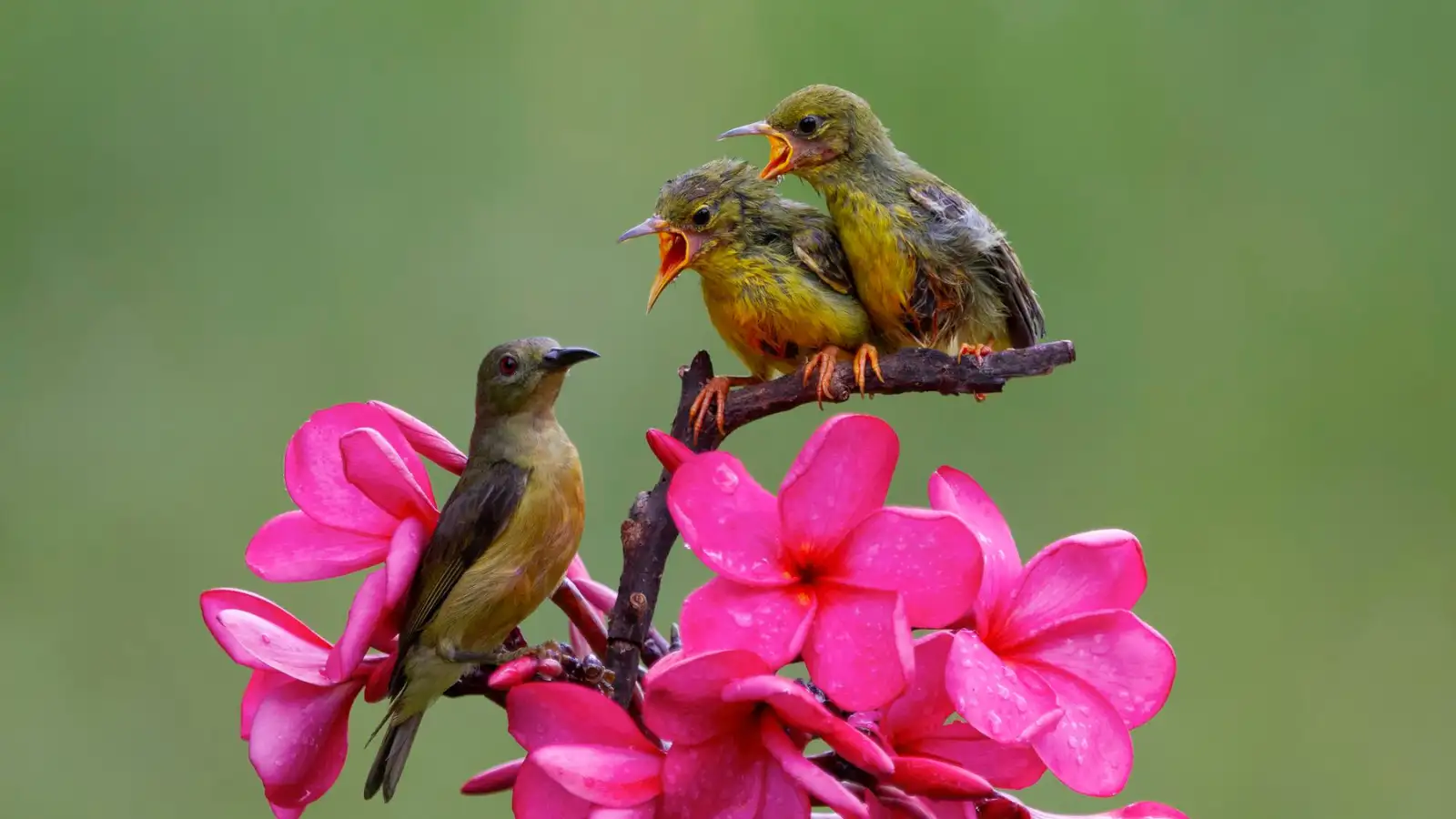
Do Birds Understand Each Other?
Birds do not “talk” in the human sense, but they can recognise and respond to the calls of other species. This is especially common in mixed-species flocks, where different birds travel and forage together. In such groups, bird communication becomes a shared system where species learn to interpret each other’s warning calls and behaviours.
For example, when one species detects a predator and sounds an alarm, nearby birds even of different species often react immediately. This ability to understand inter-species bird communication improves survival chances.
Read More: Why Birds Chirp At Night: Midnight Birdsong Explained
Why Do Birds Communicate Across Species?
The main reason birds communicate with other species is survival. Alarm calls are the most commonly shared signals. If one bird spots danger, its call can alert an entire group, regardless of species.
Another reason is finding food. Some birds observe the feeding patterns of others and use their calls or movements as cues. This behaviour shows how bird behaviour and communication are closely linked to environmental awareness.
Mixed-Species Flocks and Shared Signals
In forests and grasslands, it is common to see mixed-species flocks moving together. These groups often include small birds like warblers, tits, and drongos. Each species contributes to the group by sharing information.
Interestingly, some birds are known as “sentinel species” because they are particularly good at spotting threats. Other birds rely on them, proving that bird communication between species can be highly strategic.
Read More: From Owls To Oilbirds: 6 Birds You’ll Only Spot After Sunset
Can Birds Learn Other Birds’ ‘Languages’?
Yes, to some extent. Studies suggest that birds can learn to associate certain sounds with specific meanings, even if they come from a different species. Over time, they become familiar with these calls and respond appropriately.
This learning ability highlights the intelligence of birds and their adaptability. It also shows that how birds communicate is not fixed but can evolve based on their surroundings.
Limitations of Bird Communication
While birds can understand certain signals from other species, this communication is usually limited to basic messages like danger or movement. Complex interactions, such as mating calls or territory claims, remain species-specific.
So, while birds don’t have full conversations across species, their ability to share critical information is still impressive.
The idea that birds can “talk” to each other across species is both fascinating and scientifically significant. Through shared warning calls, behavioural cues, and learned responses, birds have developed a simple yet effective communication system. This remarkable ability highlights the intelligence of birds and the importance of cooperation in nature.
Do Birds Understand Each Other?
Birds do not “talk” in the human sense, but they can recognise and respond to the calls of other species. This is especially common in mixed-species flocks, where different birds travel and forage together. In such groups, bird communication becomes a shared system where species learn to interpret each other’s warning calls and behaviours. For example, when one species detects a predator and sounds an alarm, nearby birds even of different species often react immediately. This ability to understand inter-species bird communication improves survival chances.
Read More: Why Birds Chirp At Night: Midnight Birdsong Explained
Why Do Birds Communicate Across Species?
The main reason birds communicate with other species is survival. Alarm calls are the most commonly shared signals. If one bird spots danger, its call can alert an entire group, regardless of species.Another reason is finding food. Some birds observe the feeding patterns of others and use their calls or movements as cues. This behaviour shows how bird behaviour and communication are closely linked to environmental awareness.
Mixed-Species Flocks and Shared Signals
In forests and grasslands, it is common to see mixed-species flocks moving together. These groups often include small birds like warblers, tits, and drongos. Each species contributes to the group by sharing information. Interestingly, some birds are known as “sentinel species” because they are particularly good at spotting threats. Other birds rely on them, proving that bird communication between species can be highly strategic.
Read More: From Owls To Oilbirds: 6 Birds You’ll Only Spot After Sunset
Can Birds Learn Other Birds’ ‘Languages’?
Yes, to some extent. Studies suggest that birds can learn to associate certain sounds with specific meanings, even if they come from a different species. Over time, they become familiar with these calls and respond appropriately. This learning ability highlights the intelligence of birds and their adaptability. It also shows that how birds communicate is not fixed but can evolve based on their surroundings.
Limitations of Bird Communication
While birds can understand certain signals from other species, this communication is usually limited to basic messages like danger or movement. Complex interactions, such as mating calls or territory claims, remain species-specific. So, while birds don’t have full conversations across species, their ability to share critical information is still impressive.
The idea that birds can “talk” to each other across species is both fascinating and scientifically significant. Through shared warning calls, behavioural cues, and learned responses, birds have developed a simple yet effective communication system. This remarkable ability highlights the intelligence of birds and the importance of cooperation in nature.
Next Story