
Career Catfishing: When the Job You Applied For Isn’t the Job You Get

The job description sounded perfect: flexible working, a fast-growing company, great work-life balance, and a competitive salary. You read it twice, maybe three times, and thought, Finally. This actually sounds good. You apply, sit through the interviews, ask a few questions and eventually get the offer. Naturally, you are excited. Maybe you've already imagined your first day, your desk, your colleagues and what you're going to tell your friends.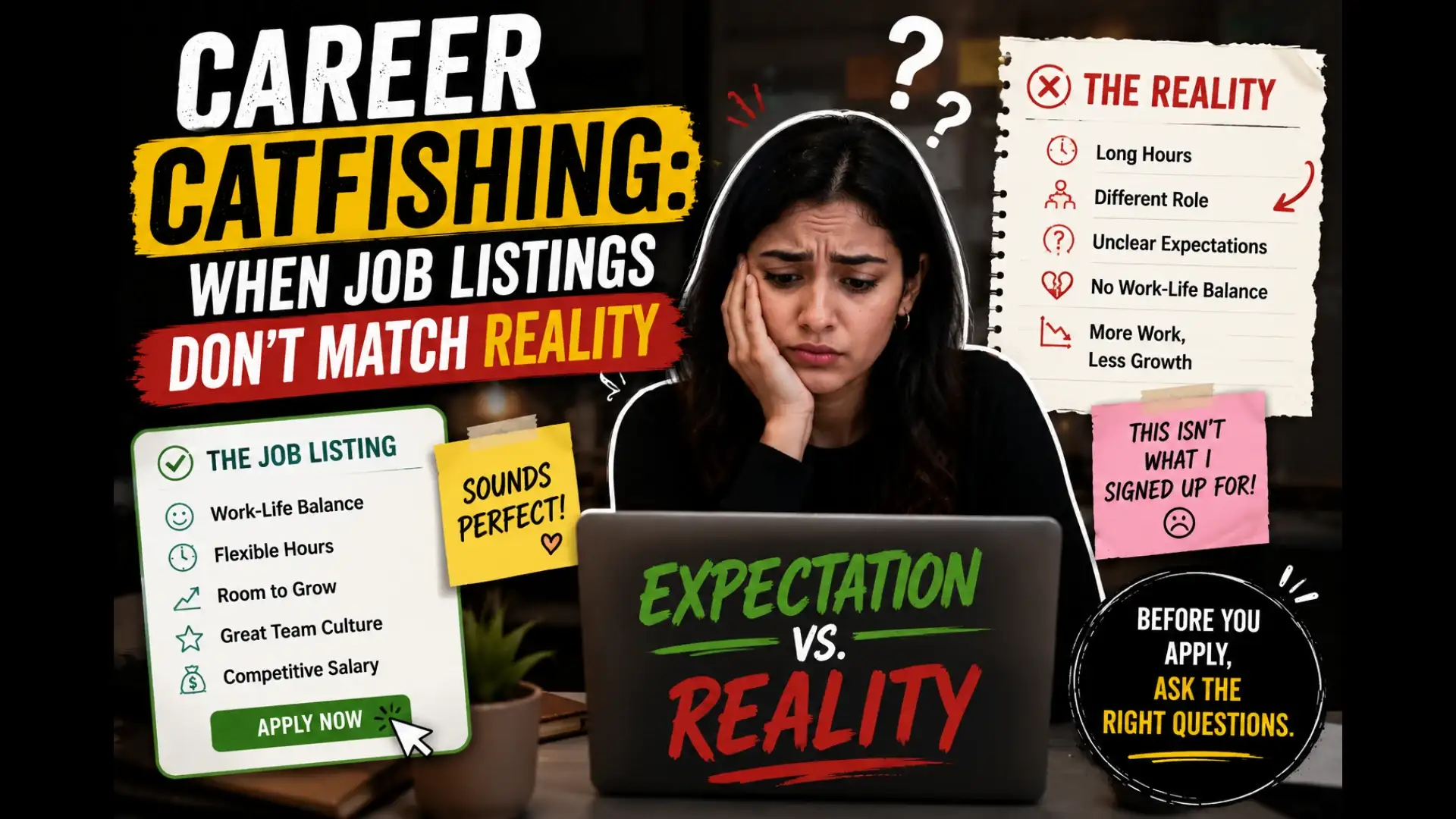
Then you actually start working. And suddenly, the “flexible” job needs you online at 9 sharp. The supposedly hybrid role turns out to be mostly office-based. The position advertised as “content creation” somehow involves customer support, sales calls, graphic design and managing someone's personal Instagram account. You stare at your screen and think, Wait. Wasn't this supposed to be a completely different job? That experience has a name now: career catfishing .
A company may advertise “work-life balance” while expecting employees to answer messages late at night. A role may promise professional growth but leave someone doing repetitive tasks with no real path forward. Even the salary or benefits discussed during interviews can feel different once the actual paperwork arrives. And that's where frustration begins.
A boring responsibility becomes an “exciting opportunity". Extra work becomes “wearing multiple hats". Long hours become “working in a fast-paced environment". The words sound nicer. The job doesn't necessarily become nicer with them.
That has made job seekers more suspicious and, in some ways, more informed. Questions that once felt awkward are becoming normal: What does a typical day actually look like? How often do people work beyond their stated hours? Why did the previous person leave? Is the advertised salary fixed? How is performance measured?
These questions aren't being asked because workers don't want to work. They're being asked because people want to know what they're agreeing to.
When the reality turns out to be completely different, they may find themselves stuck. And there is an emotional cost too. Starting a new job already comes with enough uncertainty. Discovering that the version of the company you were sold doesn't really exist can make you question your decision before you've even settled in.
But there is a difference between putting your best foot forward and hiding the reality. Because eventually, the employee finds out. And no amount of impressive wording on a job listing can make someone stay in a role they were never actually signing up for.
It's asking better questions. Because sometimes the biggest red flag isn't a terrible job description. It's a job description that sounds almost too good
Then you actually start working. And suddenly, the “flexible” job needs you online at 9 sharp. The supposedly hybrid role turns out to be mostly office-based. The position advertised as “content creation” somehow involves customer support, sales calls, graphic design and managing someone's personal Instagram account. You stare at your screen and think, Wait. Wasn't this supposed to be a completely different job? That experience has a name now: career catfishing .
When the Job Description and Reality Don't Match
Career catfishing is essentially the workplace version of being misled about what you're signing up for. It doesn't always mean a company is deliberately lying. Sometimes job descriptions are vague because companies want room to change responsibilities later. Sometimes the person hiring you genuinely doesn't know what the role will look like six months down the line. But sometimes, the gap is pretty obvious.A company may advertise “work-life balance” while expecting employees to answer messages late at night. A role may promise professional growth but leave someone doing repetitive tasks with no real path forward. Even the salary or benefits discussed during interviews can feel different once the actual paperwork arrives. And that's where frustration begins.
Why Companies Do It
From the employer's perspective, there is a simple reason: good candidates are difficult to attract. A job that sounds demanding, rigid or poorly paid is unlikely to receive hundreds of enthusiastic applications. So companies sometimes dress up the role.A boring responsibility becomes an “exciting opportunity". Extra work becomes “wearing multiple hats". Long hours become “working in a fast-paced environment". The words sound nicer. The job doesn't necessarily become nicer with them.
Workers Are Getting Better at Spotting the Red Flags
The interesting part is that employees are no longer as willing to shrug this off. People talk about their workplaces online. They compare salary offers, share interview experiences and discuss what actually happens behind the polished language of job advertisements.That has made job seekers more suspicious and, in some ways, more informed. Questions that once felt awkward are becoming normal: What does a typical day actually look like? How often do people work beyond their stated hours? Why did the previous person leave? Is the advertised salary fixed? How is performance measured?
These questions aren't being asked because workers don't want to work. They're being asked because people want to know what they're agreeing to.
You may also like
- Ganesh Chaturthi Rangoli Ideas: 7 Beautiful Designs to Give Your Home a Festive Makeover
- Jennifer Garner's garden isn't just for show: The vegetables, herbs, and hands-on hobby that have become part of the actor's life
- Kendall Jenner turned heads in the simplest golden dress at Venice Film Festival
- Clicking or Popping Hips During Pregnancy: Causes & Tips
- Create a Resume Using AI and Succeed in Job Interviews
The Cost of Getting the Wrong Job
The problem with career catfishing isn't just disappointment. Changing jobs takes time. People turn down other offers, relocate, leave existing positions and rearrange their lives based on what they were promised.When the reality turns out to be completely different, they may find themselves stuck. And there is an emotional cost too. Starting a new job already comes with enough uncertainty. Discovering that the version of the company you were sold doesn't really exist can make you question your decision before you've even settled in.
Maybe Job Hunting Needs More Honesty
Perhaps the bigger lesson from career catfishing is that hiring shouldn't feel like advertising. Companies want the best candidates. Candidates want the best opportunities. Both sides are naturally going to present themselves in the best possible light.But there is a difference between putting your best foot forward and hiding the reality. Because eventually, the employee finds out. And no amount of impressive wording on a job listing can make someone stay in a role they were never actually signing up for.
The Job Should Match the Pitch
A job interview is supposed to be a conversation between two sides deciding whether they are a good fit. It shouldn't feel like one side is selling a dream and hoping the other person doesn't read the fine print. Maybe the smartest thing a job seeker can do today isn't just polish their CV.It's asking better questions. Because sometimes the biggest red flag isn't a terrible job description. It's a job description that sounds almost too good






Loving Newspoint? Download the app now
