
Cast-Iron Cookware Care Made Simple: How to Clean, Dry and Protect Your Pan

Cast-iron cookware can last for years when it is used and maintained properly over time. It retains heat well, making it useful for browning vegetables, cooking flatbreads or preparing one-pan meals at home. Yet its weight and sensitivity to prolonged moisture can make owners unsure about cleaning and storage.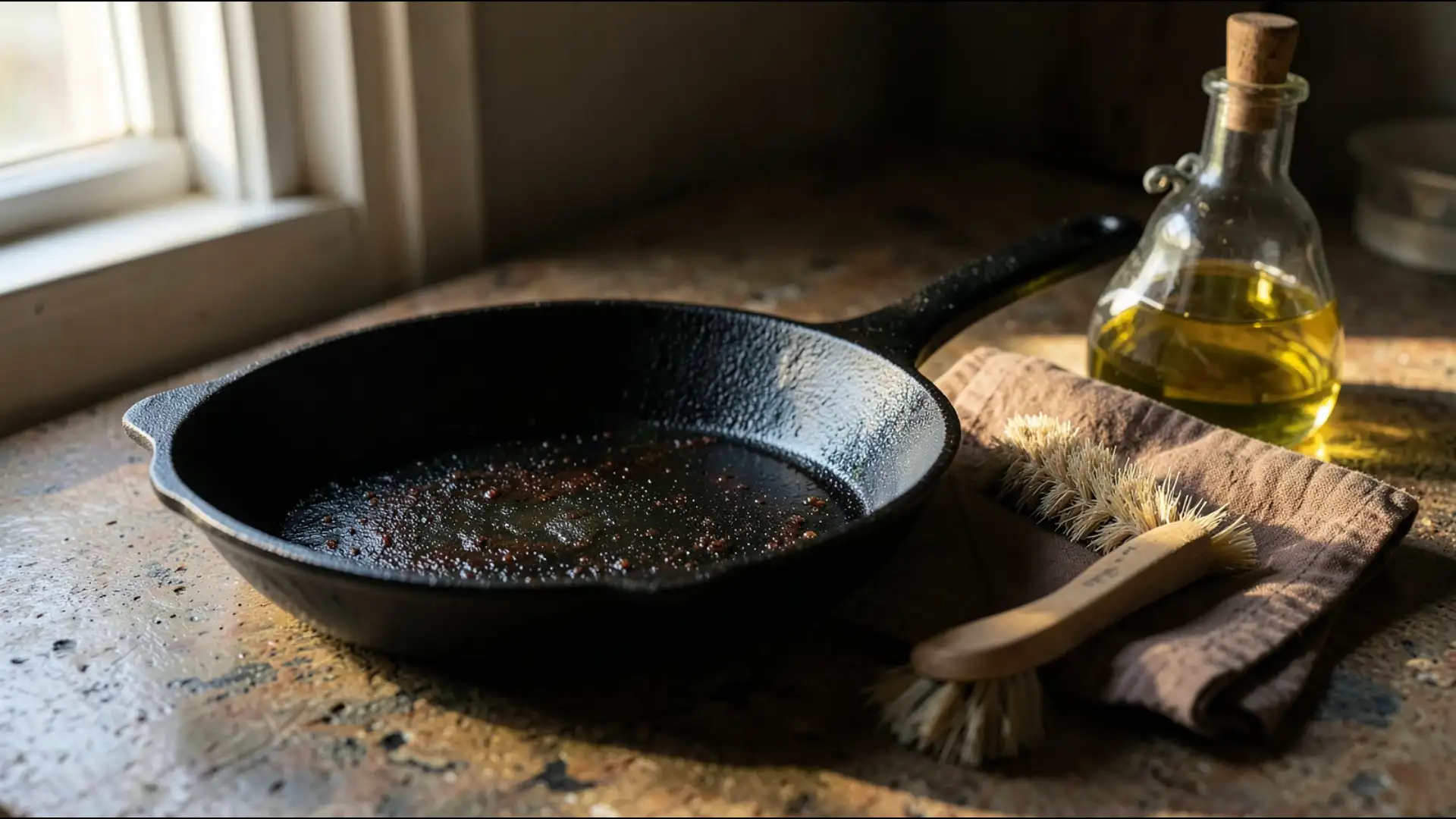
The key is to understand the pan’s surface well. Many cast-iron pans rely on seasoning, created as oil bonds to the metal during heating. That layer helps with cooking and rust resistance, but it is not indestructible. A simple cleaning routine and thorough drying usually do more good than extra rules.
For stuck-on food, add a little water and warm the pan briefly to loosen residue, then scrub gently. Do not use harsh chemicals or leave acidic foods sitting in the pan for long periods, particularly if the seasoning is new or patchy. Follow the manufacturer’s care instructions if the cookware has an enamel coating, as that surface needs different treatment.
If rust appears, it does not automatically mean the pan is ruined. Light rust can often be scrubbed away, followed by thorough drying and re-seasoning according to the cookware maker’s guidance. Avoid storing the pan while damp, and do not seal it under a lid if moisture is trapped inside.
Store the pan in a dry cupboard, with a paper towel between stacked pieces if needed to protect the surface. With steady care, cast iron becomes a dependable tool rather than a fussy kitchen project.
The key is to understand the pan’s surface well. Many cast-iron pans rely on seasoning, created as oil bonds to the metal during heating. That layer helps with cooking and rust resistance, but it is not indestructible. A simple cleaning routine and thorough drying usually do more good than extra rules.
Clean it after cooking
Let the pan cool slightly before washing; plunging very hot cast iron into cold water can cause thermal stress. Use warm water and a brush or non-abrasive scrubber to remove food. A small amount of washing-up liquid is generally fine for well-seasoned cookware, despite the common belief that soap must never touch it. Avoid leaving the pan soaking in water.For stuck-on food, add a little water and warm the pan briefly to loosen residue, then scrub gently. Do not use harsh chemicals or leave acidic foods sitting in the pan for long periods, particularly if the seasoning is new or patchy. Follow the manufacturer’s care instructions if the cookware has an enamel coating, as that surface needs different treatment.
Dry and protect the surface
Dry the pan immediately with a towel, then place it over low heat for a short time to remove remaining moisture. Once dry, rub a very thin layer of cooking oil over the interior. Too much oil can turn sticky rather than protective, so wipe away any visible excess before storing it.If rust appears, it does not automatically mean the pan is ruined. Light rust can often be scrubbed away, followed by thorough drying and re-seasoning according to the cookware maker’s guidance. Avoid storing the pan while damp, and do not seal it under a lid if moisture is trapped inside.
Cook with confidence
Preheat cast iron gradually rather than placing a cold pan over extreme heat. A little oil and a properly heated surface can help reduce sticking, although the result also depends on the food and cooking technique. Use oven gloves or a thick handle cover when necessary; cast iron stays hot long after it leaves the hob.Store the pan in a dry cupboard, with a paper towel between stacked pieces if needed to protect the surface. With steady care, cast iron becomes a dependable tool rather than a fussy kitchen project.
Next Story