
Chanderi Travel Guide: Explore Madhya Pradesh's Forts, Stepwells and Handlooms

Chanderi, in Madhya Pradesh, is a destination where historic architecture and traditional weaving remain closely connected. The town is widely recognised for its elegant handwoven textiles, but its heritage extends far beyond the sarees found in local shops.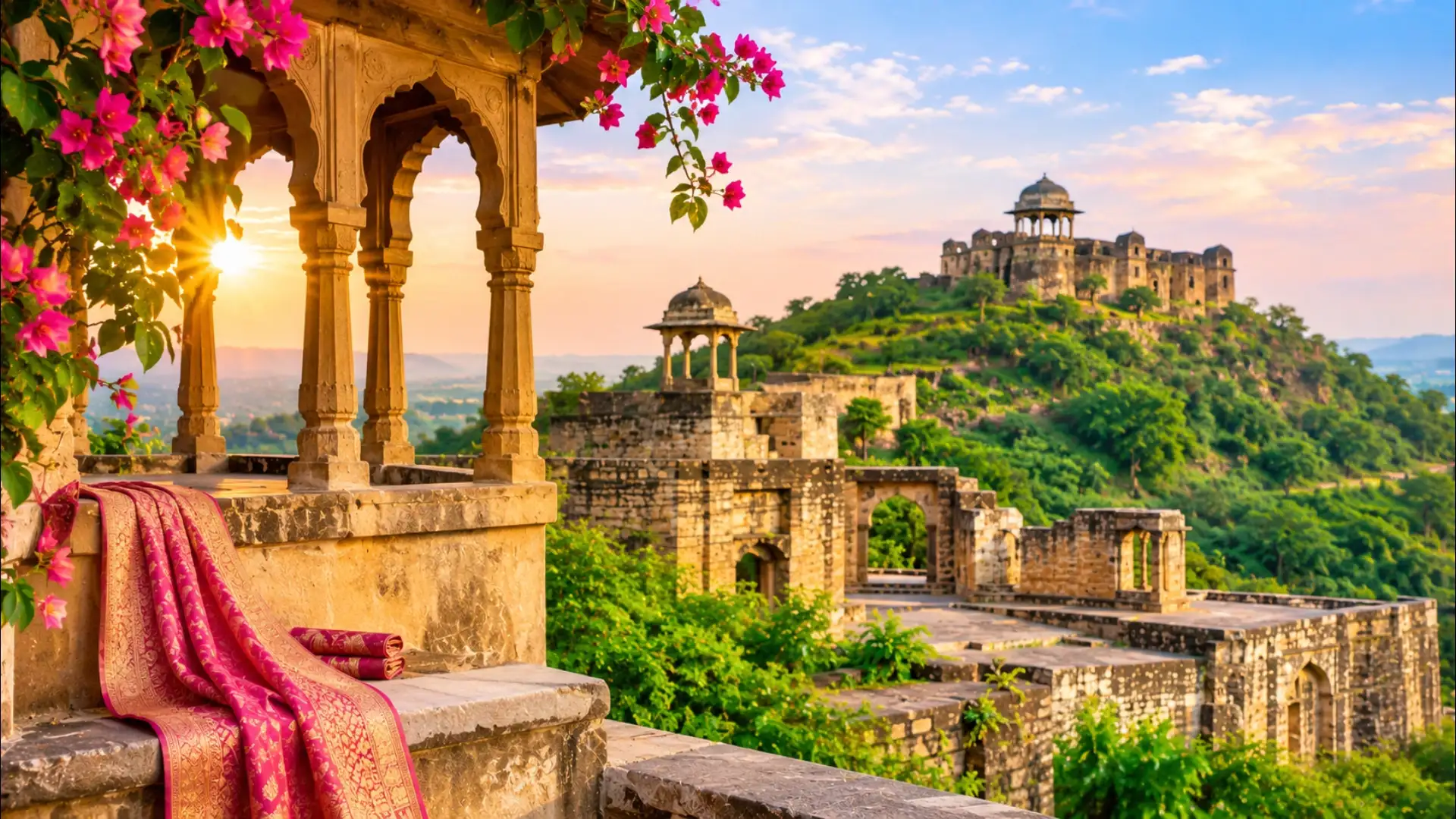
Fortifications, old gateways, stepwells, temples and historic buildings make Chanderi an interesting destination for travellers who enjoy exploring smaller heritage towns.
A visit here can combine sightseeing with an opportunity to understand how local weaving continues to shape the identity and economy of the region.
The fort is associated with different periods of regional history. Its gateways and defensive structures reflect the importance of the town in the political and military landscape of central India.
The approach involves walking, so wear comfortable footwear and carry water. Check local access arrangements before visiting, particularly if you are travelling with older family members or young children.
The structure offers an interesting example of how architecture and the natural landscape were brought together. Stop to observe the opening, the surrounding rock and the way the gateway connects the route through the area.
It is a worthwhile stop for visitors interested in historic engineering and stone construction.
The structure is associated with a system of steps leading down towards the water level. Its design reflects the importance of water access and storage in settlements where seasonal conditions shaped daily life.
Observe the layout and the relationship between the steps and the surrounding walls. Avoid entering restricted sections or climbing over protective barriers.
A visit to the Handloom Park can provide an opportunity to understand the weaving process. You may also explore Pranpur, a village associated with Chanderi's weaving community, where visitors can learn more about local textile work.
If you plan to buy a saree, ask about the fabric composition, weaving technique and care instructions. Compare the texture and finish rather than relying only on the appearance of the border or decorative work.
Use another part of the day to visit weaving-related locations and understand the work behind Chanderi textiles. If possible, speak to artisans or visit a workshop where demonstrations are available.
October to February is generally suggested by Madhya Pradesh Tourism for exploring Chanderi, although visitors should check current weather and travel conditions before booking.
Carry cash for small purchases, ask permission before photographing artisans and avoid bargaining in a way that undervalues handmade work.
Chanderi is best experienced slowly. Its monuments and weaving tradition together offer a fuller picture of the town than a quick visit to the local textile shops alone.
Fortifications, old gateways, stepwells, temples and historic buildings make Chanderi an interesting destination for travellers who enjoy exploring smaller heritage towns.
A visit here can combine sightseeing with an opportunity to understand how local weaving continues to shape the identity and economy of the region.
Begin with Chanderi Fort
Chanderi Fort stands on a hill overlooking the town. Its location offers views of the surrounding landscape and helps visitors understand the strategic importance of the settlement.The fort is associated with different periods of regional history. Its gateways and defensive structures reflect the importance of the town in the political and military landscape of central India.
The approach involves walking, so wear comfortable footwear and carry water. Check local access arrangements before visiting, particularly if you are travelling with older family members or young children.
Visit Kati Ghati
Kati Ghati is one of Chanderi's striking architectural features. It is a large gateway cut through a rock formation and is known for its impressive scale.The structure offers an interesting example of how architecture and the natural landscape were brought together. Stop to observe the opening, the surrounding rock and the way the gateway connects the route through the area.
It is a worthwhile stop for visitors interested in historic engineering and stone construction.
Discover Battisi Baoli
Stepwells are an important part of India's architectural heritage, and Battisi Baoli is among Chanderi's notable examples.The structure is associated with a system of steps leading down towards the water level. Its design reflects the importance of water access and storage in settlements where seasonal conditions shaped daily life.
Observe the layout and the relationship between the steps and the surrounding walls. Avoid entering restricted sections or climbing over protective barriers.
Explore Chanderi's handloom tradition
Chanderi is particularly known for its fine textiles, including silk-cotton and cotton varieties. The fabric is recognised for its light appearance, delicate texture and decorative motifs.A visit to the Handloom Park can provide an opportunity to understand the weaving process. You may also explore Pranpur, a village associated with Chanderi's weaving community, where visitors can learn more about local textile work.
If you plan to buy a saree, ask about the fabric composition, weaving technique and care instructions. Compare the texture and finish rather than relying only on the appearance of the border or decorative work.
Plan a relaxed itinerary
Spend the first part of your visit exploring the fort, gateways and historic structures. Keep time for the town's smaller streets and local markets.Use another part of the day to visit weaving-related locations and understand the work behind Chanderi textiles. If possible, speak to artisans or visit a workshop where demonstrations are available.
October to February is generally suggested by Madhya Pradesh Tourism for exploring Chanderi, although visitors should check current weather and travel conditions before booking.
Practical travel tips
Chanderi can be combined with other destinations in Madhya Pradesh, but allow enough time for road travel. Check accommodation and transport options in advance, especially during festivals and busy holiday periods.Carry cash for small purchases, ask permission before photographing artisans and avoid bargaining in a way that undervalues handmade work.
Chanderi is best experienced slowly. Its monuments and weaving tradition together offer a fuller picture of the town than a quick visit to the local textile shops alone.
Next Story