
Cleansing Balm vs Cleansing Oil vs Micellar Water: Which One Should You Use?

Removing makeup and sunscreen properly is an important part of a skincare routine, but choosing the right cleanser can be confusing. Cleansing balms, cleansing oils and micellar water are all popular options, and each is designed to remove dirt, excess oil and makeup. However, they differ in texture, application and how they fit into a daily routine.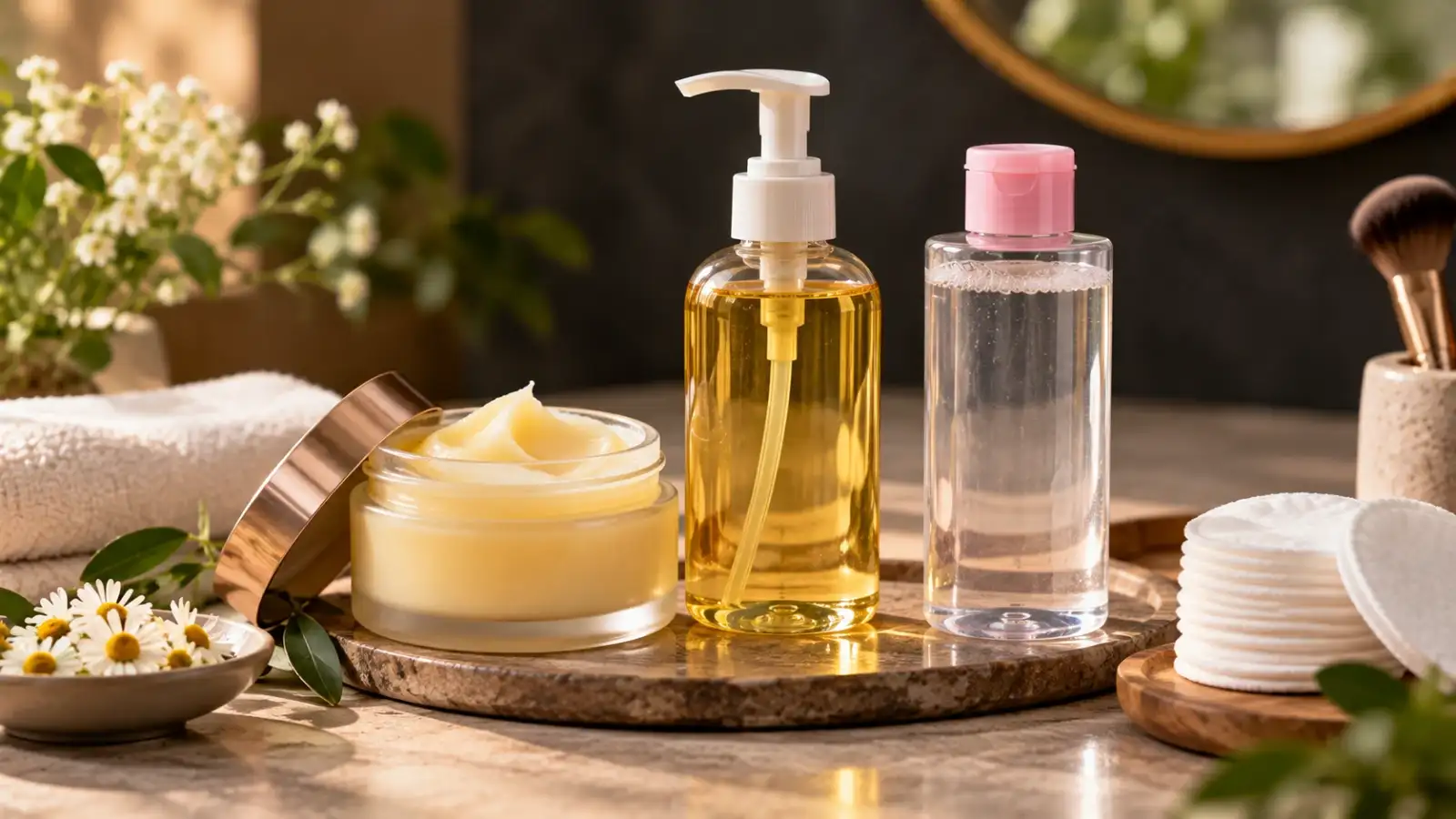
A cleansing balm has a rich, solid texture that melts into an oil, a cleansing oil is a liquid formula that dissolves makeup and sunscreen, and micellar water is a lightweight, water-based cleanser that lifts away impurities. None is automatically the best choice for everyone. The right option depends on how much makeup you wear, the type of sunscreen you use, your skin's needs and how much time you want to spend cleansing.
Its thicker consistency makes it convenient for people who prefer a rich texture rather than a runny liquid. Cleansing balms are particularly useful for removing long-wearing foundation, heavy makeup and some waterproof products, depending on the formula.
Follow with a gentle water-based cleanser if needed, particularly after wearing heavy makeup or water-resistant sunscreen. Use a clean spatula or dry hands when taking product from a jar to help keep it hygienic.
A cleansing balm may appeal to people with dry skin because of its rich texture, but the formulation matters more than the product category alone. Those with oily, acne-prone or sensitive skin can also use one if it suits their skin and rinses cleanly.
Unlike a balm, it is already liquid, so it spreads quickly across the face. Many rinse-off cleansing oils contain emulsifiers that allow the product to mix with water and rinse away more easily instead of leaving a heavy residue.
If your skin still feels coated or you have worn heavy makeup, follow with a mild facial cleanser. Avoid vigorous rubbing, particularly around the eyes. Use a product specifically suitable for the eye area when removing eye makeup.
A cleansing oil is a practical option for people who want the makeup-removing benefits of an oil-based cleanser without the thicker consistency of a balm. However, some formulas may irritate sensitive skin or leave residue if they are not rinsed properly, so choosing a suitable product is important.
Unlike cleansing balms and oils, micellar water does not have a thick or oily texture. It is usually applied using a cotton pad or reusable cleansing pad, making it a convenient option for everyday makeup removal, travel and quick cleansing when you do not have easy access to running water.
You may need a separate cleanser to remove heavy foundation, long-wearing makeup or water-resistant sunscreen thoroughly. If your skin feels sticky or irritated after using micellar water, rinse it off and consider following with a gentle cleanser.
Although micellar water is often marketed as a no-rinse product, individual formulas differ. Follow the instructions on the packaging, especially if you have sensitive skin.
Micellar water can also work well if you prefer a lightweight product, particularly on days when you wear little makeup.
Micellar water is another option for lighter makeup days. However, no cleansing format automatically prevents acne. If breakouts persist, review your entire skincare routine and seek advice from a dermatologist.
Use a soft touch when removing makeup, particularly around the eyes. Repeated rubbing can irritate the skin regardless of which product you choose.
For everyday makeup, you may not need such a rich first cleanser. Choose according to what you need to remove rather than buying multiple products unnecessarily.
You may find double cleansing useful when you wear heavy makeup, water-resistant sunscreen or several long-wearing cosmetic products. For example, you could use a cleansing balm or oil first, then wash your face with a gentle gel or cream cleanser.
However, double cleansing is not compulsory for everyone. If a single suitable cleanser removes your makeup and sunscreen effectively without leaving residue, another cleansing step may be unnecessary. Micellar water can also be used as the first step, followed by a face wash when needed.
Avoid cleansing repeatedly until your skin feels squeaky clean. That feeling can indicate excessive removal of the skin's natural oils. Use lukewarm water, avoid scrubbing and stop or change a product if it causes persistent irritation.
Cleansing balms, cleansing oils and micellar water all have a place in a skincare routine, but they serve slightly different needs. A balm offers a rich texture that melts into oil, a cleansing oil provides a fluid and easy-to-spread formula, and micellar water offers a lightweight, convenient way to remove everyday impurities and lighter makeup.
Choose a cleansing balm or oil if you regularly wear heavy makeup or water-resistant sunscreen. Consider micellar water if you prefer a quick, lightweight option. Most importantly, choose a formula that removes products effectively without leaving your skin uncomfortable.
You do not need all three. One suitable cleanser, or a simple two-step routine when necessary, can be enough for effective makeup removal.
A cleansing balm has a rich, solid texture that melts into an oil, a cleansing oil is a liquid formula that dissolves makeup and sunscreen, and micellar water is a lightweight, water-based cleanser that lifts away impurities. None is automatically the best choice for everyone. The right option depends on how much makeup you wear, the type of sunscreen you use, your skin's needs and how much time you want to spend cleansing.
1. What Is a Cleansing Balm?
A cleansing balm is usually a solid or semi-solid cleanser that melts into a smooth, oily texture when massaged between your fingers or onto your skin. It is designed to loosen makeup, sunscreen, excess sebum and other oil-based impurities without requiring vigorous rubbing.Its thicker consistency makes it convenient for people who prefer a rich texture rather than a runny liquid. Cleansing balms are particularly useful for removing long-wearing foundation, heavy makeup and some waterproof products, depending on the formula.
Benefits of a cleansing balm
- Its thick texture is easy to control and less likely to spill.
- It can effectively dissolve stubborn makeup and sunscreen.
- It spreads across the skin without requiring excessive rubbing.
- Many formulas leave the skin feeling comfortable rather than tight.
How to use it
Start with dry hands and a dry face unless the product instructions say otherwise. Take a small amount and gently massage it over your skin, paying attention to areas with makeup or sunscreen. Add a little water to help the balm emulsify, if it is designed to rinse off, and wash it away thoroughly.Follow with a gentle water-based cleanser if needed, particularly after wearing heavy makeup or water-resistant sunscreen. Use a clean spatula or dry hands when taking product from a jar to help keep it hygienic.
A cleansing balm may appeal to people with dry skin because of its rich texture, but the formulation matters more than the product category alone. Those with oily, acne-prone or sensitive skin can also use one if it suits their skin and rinses cleanly.
2. What Is a Cleansing Oil?
A cleansing oil is a liquid cleanser formulated to dissolve makeup, sunscreen and excess oil. Like a balm, it works on the principle that oil-based ingredients can help loosen other oil-based substances on the skin.Unlike a balm, it is already liquid, so it spreads quickly across the face. Many rinse-off cleansing oils contain emulsifiers that allow the product to mix with water and rinse away more easily instead of leaving a heavy residue.
Benefits of a cleansing oil
- Its liquid texture makes application quick and straightforward.
- It can remove long-wearing makeup and many water-resistant sunscreens.
- It spreads easily across the face, including around the nose and forehead.
- It can be a convenient first step in an evening skincare routine.
How to use it
Apply the product to dry hands and a dry face, following the label instructions. Massage gently to loosen makeup and sunscreen, then add water if the formula is designed to emulsify. Once it turns milky, rinse it off thoroughly.If your skin still feels coated or you have worn heavy makeup, follow with a mild facial cleanser. Avoid vigorous rubbing, particularly around the eyes. Use a product specifically suitable for the eye area when removing eye makeup.
A cleansing oil is a practical option for people who want the makeup-removing benefits of an oil-based cleanser without the thicker consistency of a balm. However, some formulas may irritate sensitive skin or leave residue if they are not rinsed properly, so choosing a suitable product is important.
3. What Is Micellar Water ?
Micellar water is a lightweight, water-based cleansing product containing tiny clusters of cleansing molecules called micelles. These molecules help attract and lift away dirt, excess oil and makeup from the skin's surface.Unlike cleansing balms and oils, micellar water does not have a thick or oily texture. It is usually applied using a cotton pad or reusable cleansing pad, making it a convenient option for everyday makeup removal, travel and quick cleansing when you do not have easy access to running water.
Benefits of micellar water
- It is lightweight and easy to use.
- It can remove light makeup, dirt and excess oil.
- Many formulas are suitable for dry or sensitive skin.
- It is convenient for travel and simple skincare routines.
- It can be used without rinsing when the product instructions permit it.
How to use it
Soak a cotton pad with micellar water and gently sweep it across your face without rubbing aggressively. For eye makeup, hold the damp pad against the closed eyelid briefly before wiping gently. This allows the product to loosen makeup and reduces the need for repeated rubbing.You may need a separate cleanser to remove heavy foundation, long-wearing makeup or water-resistant sunscreen thoroughly. If your skin feels sticky or irritated after using micellar water, rinse it off and consider following with a gentle cleanser.
Although micellar water is often marketed as a no-rinse product, individual formulas differ. Follow the instructions on the packaging, especially if you have sensitive skin.
4. Which One Should You Choose for Your Skin Type?
Your skin type can help narrow down your options, but it should not be the only factor. The amount of makeup you wear, the sunscreen you use and how your skin reacts to a product are equally important.For dry skin
A cleansing balm or a gentle cleansing oil may be worth considering if your skin feels tight after removing makeup. Choose a formula that rinses cleanly and does not leave your skin feeling stripped. Follow with a moisturiser to help maintain hydration.Micellar water can also work well if you prefer a lightweight product, particularly on days when you wear little makeup.
For oily or acne-prone skin
A lightweight cleansing oil or balm may help remove sunscreen and makeup without excessive scrubbing. Look for a product labelled non-comedogenic if you are concerned about clogged pores, and make sure it rinses off properly.Micellar water is another option for lighter makeup days. However, no cleansing format automatically prevents acne. If breakouts persist, review your entire skincare routine and seek advice from a dermatologist.
For sensitive skin
Look for gentle, fragrance-free formulas and avoid products that cause stinging, redness or itching. Micellar water may be convenient for sensitive skin, but some people tolerate a rinse-off balm or oil better.Use a soft touch when removing makeup, particularly around the eyes. Repeated rubbing can irritate the skin regardless of which product you choose.
For heavy makeup users
A cleansing balm or cleansing oil is often a practical first step for removing full-coverage foundation, long-wearing lipstick and many waterproof makeup products. Follow the product directions and use a second gentle cleanser if needed.For everyday makeup, you may not need such a rich first cleanser. Choose according to what you need to remove rather than buying multiple products unnecessarily.
5. Do You Need to Double Cleanse?
Double cleansing means using two cleansing steps, usually an oil-based cleanser followed by a gentle water-based face wash. The first step helps dissolve makeup, sunscreen and excess oil, while the second removes remaining residue and everyday impurities.You may find double cleansing useful when you wear heavy makeup, water-resistant sunscreen or several long-wearing cosmetic products. For example, you could use a cleansing balm or oil first, then wash your face with a gentle gel or cream cleanser.
However, double cleansing is not compulsory for everyone. If a single suitable cleanser removes your makeup and sunscreen effectively without leaving residue, another cleansing step may be unnecessary. Micellar water can also be used as the first step, followed by a face wash when needed.
Avoid cleansing repeatedly until your skin feels squeaky clean. That feeling can indicate excessive removal of the skin's natural oils. Use lukewarm water, avoid scrubbing and stop or change a product if it causes persistent irritation.
6. Common Mistakes to Avoid When Removing Makeup
Even a good cleansing product can cause problems if it is used incorrectly. Keep these common mistakes in mind.- Rubbing the skin aggressively, particularly around the eyes.
- Assuming that every micellar water formula removes waterproof makeup completely.
- Leaving a cleansing balm or oil on the skin when it is designed to be rinsed off.
- Using several cleansing products unnecessarily and causing dryness or irritation.
- Choosing products based on skin type alone without checking how the formula feels and performs.
- Going to bed with makeup still on because removing it seems time-consuming.
Cleansing balms, cleansing oils and micellar water all have a place in a skincare routine, but they serve slightly different needs. A balm offers a rich texture that melts into oil, a cleansing oil provides a fluid and easy-to-spread formula, and micellar water offers a lightweight, convenient way to remove everyday impurities and lighter makeup.
Choose a cleansing balm or oil if you regularly wear heavy makeup or water-resistant sunscreen. Consider micellar water if you prefer a quick, lightweight option. Most importantly, choose a formula that removes products effectively without leaving your skin uncomfortable.
You do not need all three. One suitable cleanser, or a simple two-step routine when necessary, can be enough for effective makeup removal.
Next Story