
Congenital Cataract in Babies: Causes, Detection and Treatment


A baby’s eyes continue developing after birth, and clear vision is important for normal visual development. A congenital cataract can make the eye’s natural lens cloudy instead of clear, reducing the amount of light reaching the retina. Some cataracts are small and may not significantly affect vision, while others can interfere with vision from an early age. Promptly identifying the problem allows doctors to decide whether observation or treatment is needed.
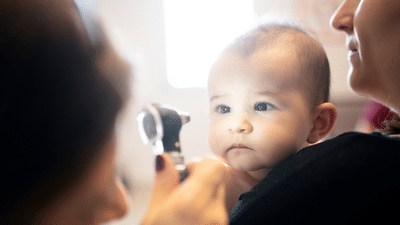
We spoke with Dr Vikas Taneja, Director & Unit Head – Pediatrics & PICU, Max Super Speciality Hospital, Dwarka, to understand congenital cataracts in babies.
What Is a Congenital Cataract in a Baby?A congenital cataract is a clouding of the eye’s natural lens that is present at birth. The lens normally allows light to pass through and helps focus images onto the retina, which sends visual information to the brain.
“A cataract is usually associated with ageing, but it can sometimes be present at birth or develop during infancy. Early identification is important because clear vision is essential for normal visual development.”

What Causes Congenital Cataracts in Babies?Congenital cataracts can develop for several reasons.
Possible causes include:
A mild cataract may cause little vision loss, while a dense cataract can significantly affect vision. In babies, untreated cataracts can interfere with normal visual development and may lead to amblyopia (lazy eye), especially when one eye is more affected.
How Are Congenital Cataracts Treated?Dr Vikas Taneja explains that treatment depends on the cataract’s size, location, and effect on vision.
Doctors may recommend:
1. Observation
If there is a family history of childhood cataracts, genetic counselling may also be helpful.
When Should You Speak to a Doctor?You should arrange an eye examination if you notice anything unusual about your baby's eyes, particularly:
Whether you’re pregnant, a new mom, or navigating postpartum, you don’t have to do it alone. Join our support group to connect, share, and support one another.
FAQs on Congenital Cataract in Babies: Causes, Detection and TreatmentCan congenital cataracts come back after treatment?
The original cataract does not return after the cloudy lens is removed. However, some children can develop clouding of the remaining lens capsule and need further treatment. Can congenital cataracts affect only one eye?
Yes. A cataract may occur in one eye or both. When only one eye is affected, doctors closely monitor the development of vision in that eye. Does every baby with a congenital cataract need surgery?
No. Surgery is not always necessary. If the cataract does not interfere with visual development, an eye specialist may recommend observation instead.
We spoke with Dr Vikas Taneja, Director & Unit Head – Pediatrics & PICU, Max Super Speciality Hospital, Dwarka, to understand congenital cataracts in babies.
What Is a Congenital Cataract in a Baby?A congenital cataract is a clouding of the eye’s natural lens that is present at birth. The lens normally allows light to pass through and helps focus images onto the retina, which sends visual information to the brain.
“A cataract is usually associated with ageing, but it can sometimes be present at birth or develop during infancy. Early identification is important because clear vision is essential for normal visual development.”
- Dr Vikas Taneja, Director & Unit Head – Pediatrics & PICU, Max Super Speciality Hospital, Dwarka
What Causes Congenital Cataracts in Babies?Congenital cataracts can develop for several reasons.
Possible causes include:
- Genetic factors: Inherited gene changes may cause cataracts.
- Infections during pregnancy: Some infections can increase the baby's risk.
- Metabolic conditions: Certain rare disorders can affect the eye's lens.
- Other medical conditions: Some genetic or developmental conditions may be linked to cataracts.
- Eye abnormalities: Problems with eye development can cause cataracts.
- Unknown causes: Sometimes, no clear cause is found.
- A white or grey appearance in the pupil
- An unusual reflection from the eye in photographs
- Eyes that do not appear to move together
- One eye appearing to look in a different direction
- Difficulty focusing on faces or objects
- Reduced visual response
- Rapid or unusual eye movements in some cases
A mild cataract may cause little vision loss, while a dense cataract can significantly affect vision. In babies, untreated cataracts can interfere with normal visual development and may lead to amblyopia (lazy eye), especially when one eye is more affected.
How Are Congenital Cataracts Treated?Dr Vikas Taneja explains that treatment depends on the cataract’s size, location, and effect on vision.
Doctors may recommend:
1. Observation
- Small cataracts may only need regular eye check-ups.
- The ophthalmologist monitors vision and checks whether the cataract is changing.
- Surgery may not be needed if vision remains unaffected.
- Surgery may be advised when the cataract significantly blocks vision.
- The cloudy lens is removed to allow light to reach the retina.
- Timing depends on the baby’s age, cataract severity, and whether one or both eyes are affected.
- After lens removal, babies may need glasses or special contact lenses.
- Some children may receive an artificial lens, depending on their age and eye development.
- Regular adjustments may be needed as the child grows.
- Treatment may be needed if vision is weaker in one eye.
- Patching the stronger eye for a prescribed period may encourage use of the affected eye.
- Follow-up visits help doctors track vision development and adjust treatment
If there is a family history of childhood cataracts, genetic counselling may also be helpful.
When Should You Speak to a Doctor?You should arrange an eye examination if you notice anything unusual about your baby's eyes, particularly:
- A white or cloudy-looking pupil
- Eyes that appear misaligned
- Persistent unusual eye movements
- Poor response to faces or visual objects
- A noticeable difference between the two eyes
Whether you’re pregnant, a new mom, or navigating postpartum, you don’t have to do it alone. Join our support group to connect, share, and support one another.
FAQs on Congenital Cataract in Babies: Causes, Detection and Treatment
The original cataract does not return after the cloudy lens is removed. However, some children can develop clouding of the remaining lens capsule and need further treatment.
Yes. A cataract may occur in one eye or both. When only one eye is affected, doctors closely monitor the development of vision in that eye.
No. Surgery is not always necessary. If the cataract does not interfere with visual development, an eye specialist may recommend observation instead.
Next Story