
Why Alpana Holds a Special Place in Bengali Culture

In Bengal, a freshly decorated floor can transform an ordinary courtyard into a space filled with beauty, symbolism and cultural meaning. Known as alpana, this traditional art form uses flowing patterns, dots, flowers, birds, fish and geometric shapes to decorate floors and other surfaces during festivals, ceremonies and important family occasions.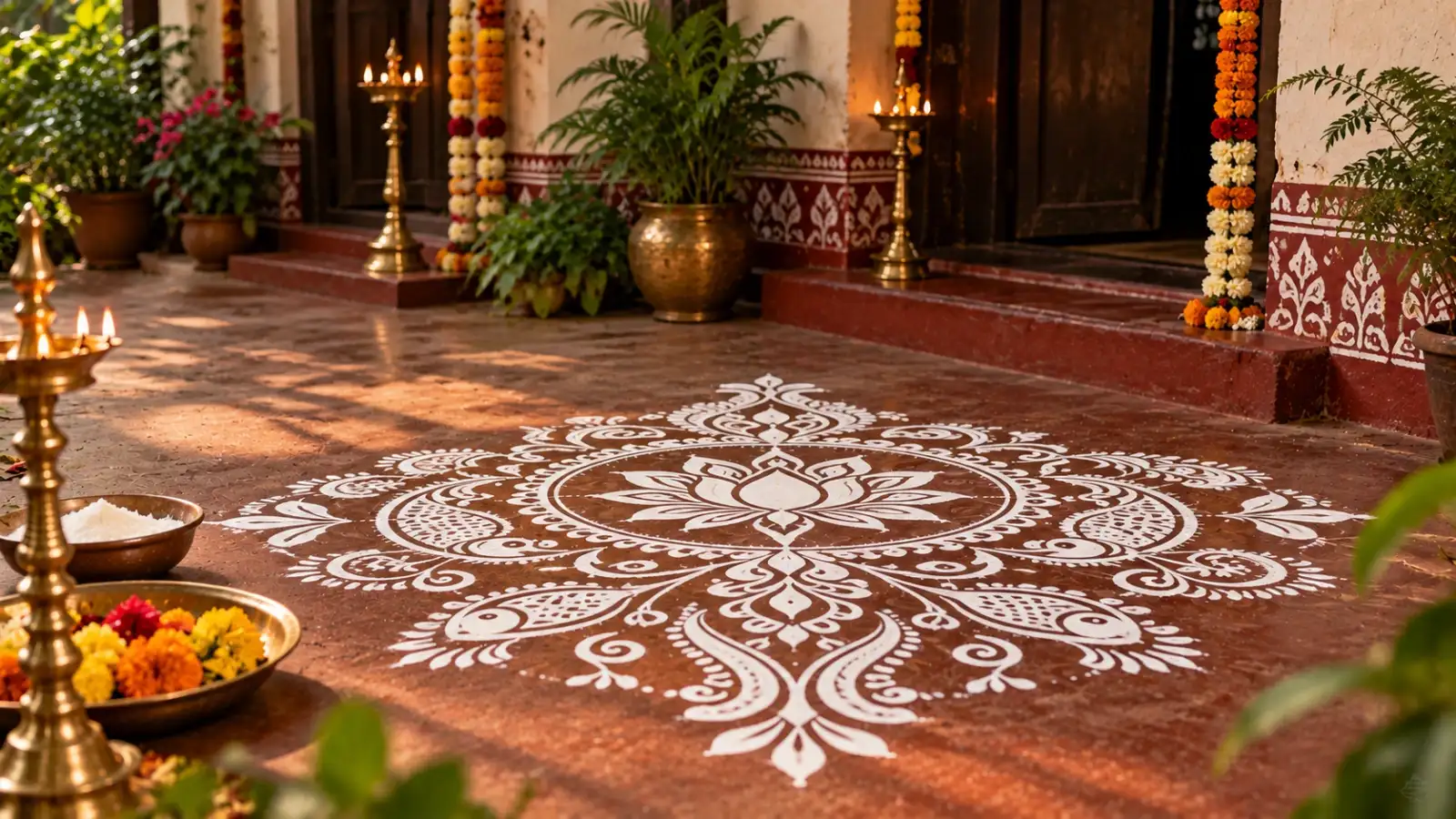
Traditionally created by women, alpana is more than a form of decoration. It reflects Bengali ideas about auspiciousness, hospitality, devotion and the relationship between everyday life and nature.
Although modern paints and ready-made stencils have changed the way many designs are created, alpana continues to hold an important place in Bengal’s cultural heritage.
Traditionally, rice flour mixed with water was used to prepare the white paste. Artists applied it with their fingers, creating delicate patterns directly on the surface.
The exact origins of alpana are difficult to trace to a single period. However, the practice is closely connected with agrarian life, ritual customs and the use of rice in Bengali households.
Since rice was an important part of everyday life, it naturally became one of the main materials used in this traditional art.
The white colour of the paste created a strong contrast against darker floors, making the designs clearly visible. Once dry, the patterns could gradually fade and be renewed for another occasion.
The use of rice also gave alpana a symbolic connection with food, prosperity and agricultural abundance. In many communities, grains are associated with nourishment and the well-being of the household.
However, the meanings attached to rice-based designs can differ across families and rituals.
The lotus is commonly associated with purity and spiritual symbolism in several Indian traditions. Fish may represent fertility, prosperity or good fortune in some Bengali customs.
Circular designs can suggest continuity, balance and completeness, while flowing vines and leaves reflect the close relationship between traditional art and nature.
Not every motif has one fixed meaning. Its interpretation may depend on the occasion, the artist and the community in which it is created.
Footprint motifs are sometimes included to symbolise the arrival of Goddess Lakshmi, who is associated with prosperity in Hindu traditions. These designs are often placed near doorways or leading towards the worship area.
Alpana may also be created during Durga Puja, Kali Puja, weddings, rice-feeding ceremonies and other auspicious occasions.
The designs and rituals vary, but the act of decorating the home often forms an important part of preparing for the celebration.
Many artists learned by watching their mothers, grandmothers and other relatives. The designs were often taught informally, through observation and repeated practice rather than written instructions.
This method allowed patterns to evolve naturally. Each generation could introduce new shapes while retaining familiar motifs and traditional techniques.
Alpana therefore became both a creative activity and a form of cultural education. It helped preserve household rituals, artistic knowledge and memories of important occasions.
The artwork can also reflect the natural world around the artist. Birds, flowers, fish and leaves appear frequently because they are familiar elements of Bengal’s landscape and daily life.
In some communities, alpana designs are created according to the needs of a particular ritual. The artwork becomes part of the ceremony rather than a separate decorative object.
This connection between art and everyday life is one of the reasons alpana remains culturally significant.
Traditional designs were usually created by hand, but modern artists may use brushes, acrylic colours, fabric paints or stencils. Alpana-inspired patterns are now also seen on walls, clothing, pottery, notebooks and public art installations.
Urban households may use reusable designs or printed decorations to save time. Although these methods offer convenience, hand-drawn alpana continues to be valued for its personal touch and connection with traditional rituals.
The art form has therefore adapted without completely losing its original identity.
Artists have adapted traditional motifs for paintings, textiles, graphic designs, stage decorations and cultural events. Its flowing lines and symbolic patterns have become recognisable elements of Bengal’s visual identity.
Alpana is also used during cultural festivals, educational programmes and exhibitions that aim to introduce younger audiences to regional traditions.
This wider use has helped the art form reach new audiences while keeping its traditional vocabulary visible.
For many families, the process is connected with memories of festive mornings, decorated courtyards and time spent learning from older relatives.
In a rapidly changing world, alpana offers a reminder that cultural heritage can survive through simple, repeated household practices.
At the same time, alpana should not be separated from the communities that have maintained it for generations. Recognising the contribution of household artists, especially women, is an important part of understanding its history.
From rice-paste patterns drawn during Lakshmi Puja to contemporary alpana-inspired artwork, this tradition continues to evolve while retaining its connection with Bengali cultural life.
Traditionally created by women, alpana is more than a form of decoration. It reflects Bengali ideas about auspiciousness, hospitality, devotion and the relationship between everyday life and nature.
Although modern paints and ready-made stencils have changed the way many designs are created, alpana continues to hold an important place in Bengal’s cultural heritage.
1. What Is Alpana and Where Did It Come From?
Alpana is a traditional form of decorative floor art practised mainly in Bengal and parts of eastern India. It is commonly created on courtyards, verandas, thresholds and floors before festivals or religious ceremonies.Traditionally, rice flour mixed with water was used to prepare the white paste. Artists applied it with their fingers, creating delicate patterns directly on the surface.
The exact origins of alpana are difficult to trace to a single period. However, the practice is closely connected with agrarian life, ritual customs and the use of rice in Bengali households.
Since rice was an important part of everyday life, it naturally became one of the main materials used in this traditional art.
2. Why Rice Paste Was Used in Alpana
Rice paste was practical, affordable and easily available in many Bengali homes. It could be prepared quickly and applied to mud floors, courtyards and other surfaces.The white colour of the paste created a strong contrast against darker floors, making the designs clearly visible. Once dry, the patterns could gradually fade and be renewed for another occasion.
The use of rice also gave alpana a symbolic connection with food, prosperity and agricultural abundance. In many communities, grains are associated with nourishment and the well-being of the household.
However, the meanings attached to rice-based designs can differ across families and rituals.
3. The Symbolism of Common Alpana Motifs
Alpana designs often include motifs inspired by nature and everyday surroundings. Lotus flowers, leaves, vines, fish, birds, conch shells and circular patterns are frequently seen in traditional artwork.The lotus is commonly associated with purity and spiritual symbolism in several Indian traditions. Fish may represent fertility, prosperity or good fortune in some Bengali customs.
Circular designs can suggest continuity, balance and completeness, while flowing vines and leaves reflect the close relationship between traditional art and nature.
Not every motif has one fixed meaning. Its interpretation may depend on the occasion, the artist and the community in which it is created.
4. Alpana and Bengali Festivals
Alpana is closely connected with festivals and religious observances in Bengal. During Lakshmi Puja, for example, families may create elaborate designs near the entrance or in the prayer area.Footprint motifs are sometimes included to symbolise the arrival of Goddess Lakshmi, who is associated with prosperity in Hindu traditions. These designs are often placed near doorways or leading towards the worship area.
Alpana may also be created during Durga Puja, Kali Puja, weddings, rice-feeding ceremonies and other auspicious occasions.
The designs and rituals vary, but the act of decorating the home often forms an important part of preparing for the celebration.
5. The Role of Women in Preserving Alpana
For generations, women in Bengali households have played a central role in creating and passing down alpana designs.Many artists learned by watching their mothers, grandmothers and other relatives. The designs were often taught informally, through observation and repeated practice rather than written instructions.
This method allowed patterns to evolve naturally. Each generation could introduce new shapes while retaining familiar motifs and traditional techniques.
Alpana therefore became both a creative activity and a form of cultural education. It helped preserve household rituals, artistic knowledge and memories of important occasions.
6. Alpana as a Form of Storytelling
Traditional alpana designs often communicate ideas without using written words. A particular pattern may refer to prosperity, protection, fertility, devotion or the arrival of a special occasion.The artwork can also reflect the natural world around the artist. Birds, flowers, fish and leaves appear frequently because they are familiar elements of Bengal’s landscape and daily life.
In some communities, alpana designs are created according to the needs of a particular ritual. The artwork becomes part of the ceremony rather than a separate decorative object.
This connection between art and everyday life is one of the reasons alpana remains culturally significant.
7. Regional Styles and Changing Techniques
Alpana designs differ across Bengal. Some are highly detailed and symmetrical, while others are made with simple lines and repeated patterns.Traditional designs were usually created by hand, but modern artists may use brushes, acrylic colours, fabric paints or stencils. Alpana-inspired patterns are now also seen on walls, clothing, pottery, notebooks and public art installations.
Urban households may use reusable designs or printed decorations to save time. Although these methods offer convenience, hand-drawn alpana continues to be valued for its personal touch and connection with traditional rituals.
The art form has therefore adapted without completely losing its original identity.
8. Alpana Beyond Religious Rituals
Although alpana is often associated with religious ceremonies, its influence extends into wider Bengali art and design.Artists have adapted traditional motifs for paintings, textiles, graphic designs, stage decorations and cultural events. Its flowing lines and symbolic patterns have become recognisable elements of Bengal’s visual identity.
Alpana is also used during cultural festivals, educational programmes and exhibitions that aim to introduce younger audiences to regional traditions.
You may also like
- Pay-slips to change for those earning between ₹15,000 and ₹25,000; find out how your take-home salary will be affected
- Traveling home for Chhath and Diwali just got easier! Railways to run 13 pairs of special trains; check the full list.
- Big news for millions of LPG customers: This gas cylinder rule changes from October 1
- He scored just 52% in Class 10, failed IIT entrance exam 3 times and missed IIM: How Rahul Sinha went on to become an SDM in Bihar at 34
- Placental Chorioangioma: What It Means for Pregnancy
This wider use has helped the art form reach new audiences while keeping its traditional vocabulary visible.
Why Alpana Still Matters Today
Alpana represents the connection between art, ritual, nature and community life. It does not require expensive materials or specialised equipment. A little rice paste, a clean surface and an understanding of traditional patterns are often enough to create a meaningful design.For many families, the process is connected with memories of festive mornings, decorated courtyards and time spent learning from older relatives.
In a rapidly changing world, alpana offers a reminder that cultural heritage can survive through simple, repeated household practices.
Preserving Bengal’s Alpana Tradition
The future of alpana depends on continued practice, documentation and appreciation. Schools, cultural organisations, artists and families can help preserve the art by teaching traditional techniques and recording regional variations.At the same time, alpana should not be separated from the communities that have maintained it for generations. Recognising the contribution of household artists, especially women, is an important part of understanding its history.
From rice-paste patterns drawn during Lakshmi Puja to contemporary alpana-inspired artwork, this tradition continues to evolve while retaining its connection with Bengali cultural life.






Loving Newspoint? Download the app now
