
Darjeeling Toy Train History: How a Historic Railway Became a UNESCO World Heritage Site

Winding through mist-covered hills, green tea gardens and charming mountain settlements, the Darjeeling Toy Train offers a railway experience unlike most others in India. Officially known as the Darjeeling Himalayan Railway , this narrow-gauge railway is famous for its historic locomotives, sharp curves and spectacular views of the Himalayan foothills. Its slow pace allows passengers to appreciate the scenery while experiencing a remarkable chapter of railway history. For travellers visiting West Bengal, the journey is not simply a way to reach a destination. It is an opportunity to discover the region’s heritage, landscapes and enduring connection with the railway.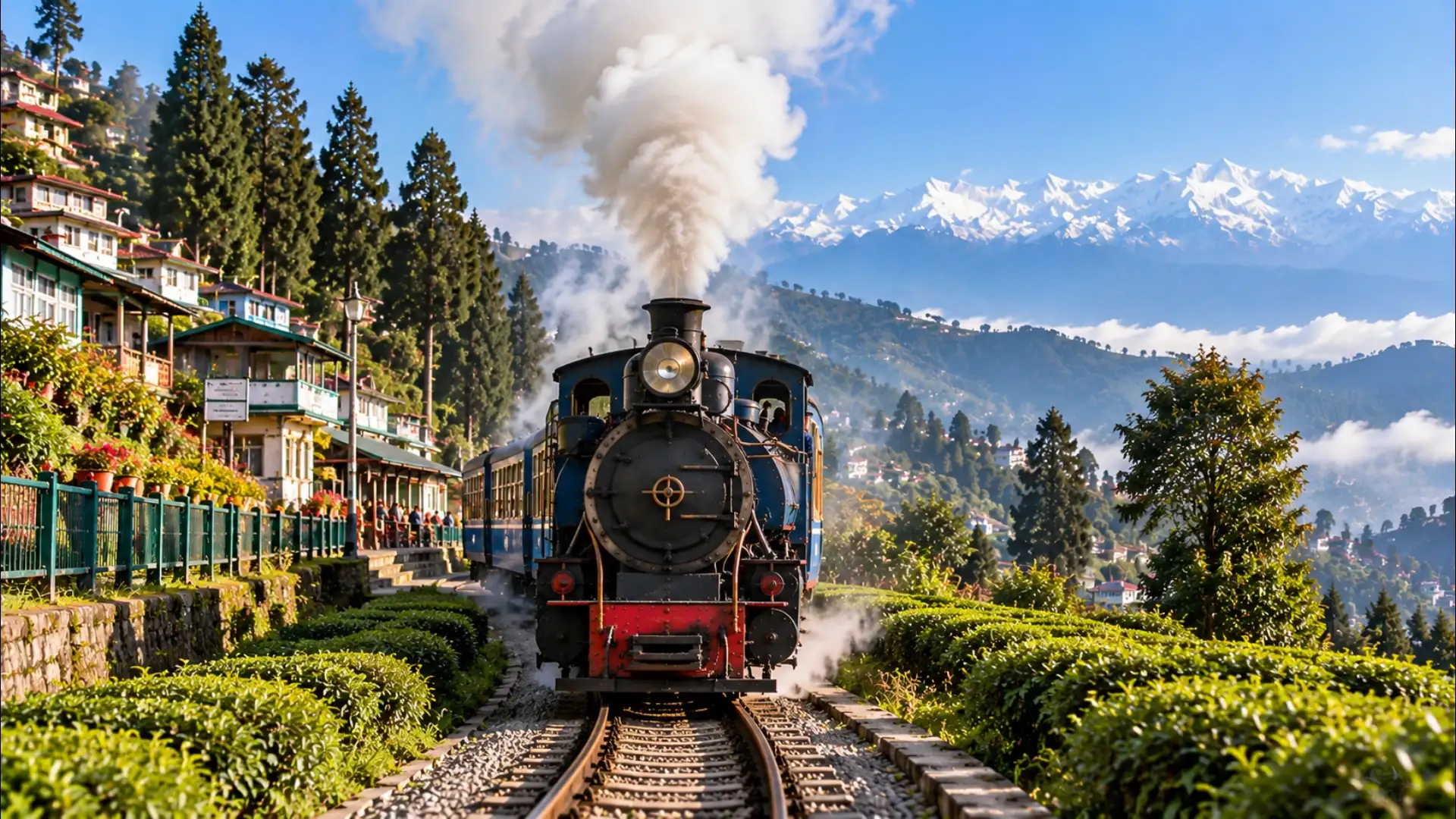
Built in the late nineteenth century, the railway continues to attract history enthusiasts, families and curious travellers. Its UNESCO World Heritage status further highlights its importance as an engineering achievement and a living part of India’s cultural heritage.
Its narrow-gauge tracks were designed to negotiate steep gradients and difficult mountain terrain. The railway became an innovative example of how engineering could connect remote hill communities with larger transport and commercial networks. UNESCO recognised the Darjeeling Himalayan Railway as a World Heritage Site in 1999.
The historic line stretches for approximately 88 kilometres between New Jalpaiguri and Darjeeling. However, many visitors choose shorter tourist rides departing from Darjeeling, which offer a taste of the railway without requiring the full journey.
Ghum, also spelt Ghoom, stands at around 2,258 metres above sea level and is among the highest railway stations in India. Both locations are popular stops for visitors exploring the heritage railway.
Unlike a preserved museum exhibit, the Darjeeling Himalayan Railway remains an operating railway. Its continued presence connects the region’s past with present-day travel and tourism.
Built in the late nineteenth century, the railway continues to attract history enthusiasts, families and curious travellers. Its UNESCO World Heritage status further highlights its importance as an engineering achievement and a living part of India’s cultural heritage.
How Did the Darjeeling Toy Train Begin?
The Darjeeling Himalayan Railway was built between 1879 and 1881 to improve transport between the plains and the hill town of Darjeeling. The railway officially opened in 1881, providing an important connection for people and goods travelling through the region.Its narrow-gauge tracks were designed to negotiate steep gradients and difficult mountain terrain. The railway became an innovative example of how engineering could connect remote hill communities with larger transport and commercial networks. UNESCO recognised the Darjeeling Himalayan Railway as a World Heritage Site in 1999.
What Makes the Toy Train Journey Special?
The railway’s distinctive charm comes from its small locomotives, winding tracks and close connection with everyday life in the hills. Along sections of the route, the train passes through settlements, forests, tea gardens and roadside markets.The historic line stretches for approximately 88 kilometres between New Jalpaiguri and Darjeeling. However, many visitors choose shorter tourist rides departing from Darjeeling, which offer a taste of the railway without requiring the full journey.
Batasia Loop and Ghum Station
Two of the best-known highlights are Batasia Loop and Ghum railway station. At Batasia Loop, the track curves around a landscaped area to help the train manage the steep ascent. On a clear day, the surrounding scenery can include impressive Himalayan views.Ghum, also spelt Ghoom, stands at around 2,258 metres above sea level and is among the highest railway stations in India. Both locations are popular stops for visitors exploring the heritage railway.
Why Is the Darjeeling Toy Train a UNESCO Heritage Treasure?
The railway is valued not only for its scenery but also for its engineering. Its curves, loops and zigzag reverses demonstrate how nineteenth-century railway builders adapted transport technology to challenging mountain conditions.Unlike a preserved museum exhibit, the Darjeeling Himalayan Railway remains an operating railway. Its continued presence connects the region’s past with present-day travel and tourism.
A Journey Worth Experiencing
The Darjeeling Toy Train combines mountain scenery, local life and railway heritage in one memorable experience. Whether you choose a short joy ride or explore more of the historic line, it offers a different way to appreciate the Darjeeling hills. For anyone interested in scenic train journeys in India , this heritage railway deserves a place on the travel list.Next Story