
Dasara jumbo Srirama panics at Mysuru palace, here's how jumbos are prepared for the festivities


A brief scare at Mysuru Palace on Friday highlighted why Dasara elephants need careful preparation before the grand Jamboo Savari . Dasara jumbo Srirama, who was calm moments earlier, suddenly panicked when musicians began beating drums loudly behind him. His mahout and kavadi quickly brought him under control.
The incident also underlines the importance of weeks of training and acclimatisation that the jumbos undergo before Dasara. The Forest Department, veterinarians, mahouts and kavadis work together to ensure the elephants are physically fit and accustomed to the sights and sounds of the city. As part of their preparation, the elephants are taken on regular walks along the Jamboo Savari route between Mysuru Palace and Bannimantap. They are gradually exposed to traffic, crowds, music and other sounds they may encounter during the festivities.
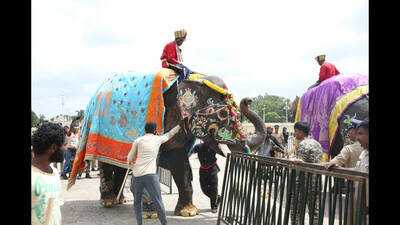
For Dasara 2026 , a team of 12 elephants has been selected, with the first batch already arriving in Mysuru.
Getting used to the city
The incident also underlines the importance of weeks of training and acclimatisation that the jumbos undergo before Dasara. The Forest Department, veterinarians, mahouts and kavadis work together to ensure the elephants are physically fit and accustomed to the sights and sounds of the city. As part of their preparation, the elephants are taken on regular walks along the Jamboo Savari route between Mysuru Palace and Bannimantap. They are gradually exposed to traffic, crowds, music and other sounds they may encounter during the festivities.
For Dasara 2026 , a team of 12 elephants has been selected, with the first batch already arriving in Mysuru.
Getting used to the city
- Acclimatisation walks: Jumbos are taken along the Jamboo Savari route between Mysuru Palace and Bannimantap to get used to traffic, crowds, vehicles and music.
- Load training: Elephants are gradually trained to carry procession loads. The Golden Howdah elephant undergoes special conditioning, with the weight increased gradually.
- Sound training: Cannon-firing rehearsals and exposure to crowds and loud sounds help them adjust to the atmosphere of Dasara.
- Special diet: Meals are planned according to age, weight and workload and include green fodder, sugarcane, rice, wheat, pulses, vegetables, jaggery and coconut.
- Health checks: Veterinarians monitor their food intake, appetite, digestion, movement and behaviour.
- Daily care: Baths, grooming and massages are part of their routine, with mahouts and kavadis closely involved in their everyday care.
- Trust matters: Mahouts and kavadis spend weeks feeding, bathing, walking and communicating with the elephants, building familiarity and trust.
- Safety first: By Vijayadashami , the jumbos have undergone weeks of training, nutrition, healthcare and acclimatisation to help keep both the elephants and people around them safe.
Next Story