
DAY 2 BRAHMACHARINI: A Letter to the Unfinished Self


Dear unfinished self ,
I owe you an apology. I have treated you like a waiting room, a place to endure until a wiser, calmer and more accomplished version of me arrives. I have hidden your doubts, hurried your apprenticeship and compared your first steps with another person’s tenth mile.
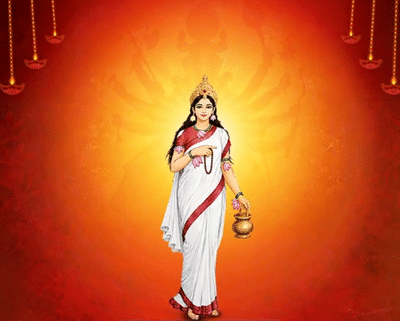
Brahmacharini asks me to see you differently. She walks barefoot, carrying a rosary and a water pot. There is no spectacle around her. Her strength is tapas, the quiet heat of staying with what is sacred after excitement has faded.
The Taittiriya Upanishad tells of Bhrigu approaching his father, Varuna, with the great question: What is Brahman, the ultimate reality? Varuna does not hand him a finished answer. He asks him to discover it through tapas. Bhrigu reflects, returns, questions again and moves gradually through food, breath, mind and understanding towards bliss. The seeker is not shamed for an incomplete insight. Each partial answer becomes a doorway to something deeper.
What a tender correction for our impatient age. We display achievement and conceal rehearsal. We announce a habit before it has roots. We want clarity without confusion, mastery without repetition and spiritual peace without passing through our own restlessness.
Contemporary psychology calls the ability to remain present with discomfort while acting according to one’s values psychological flexibility . It does not mean enjoying pain or suppressing doubt. It means allowing a difficult feeling to travel with us without giving it the right to choose our direction. This is close to the spirit of tapas: not punishment, but faithful movement towards what matters.
Psychology offers another consoling insight. Self-compassion after failure need not make us complacent; it can renew the wish to learn, repair and try again. Shame says, “You failed, therefore you are a failure.” Compassion says, “This hurt; now let us understand and continue.” Brahmacharini carries discipline in one hand and gentleness in the other.
The Devi Sukta says that through the Goddess one eats, sees, breathes and hears the spoken word. The sacred therefore lives inside ordinary continuities. Breath does not demand applause. It simply returns. The heart does not abandon its work because yesterday was difficult.
So, unfinished self, let us choose one small fidelity: one page read attentively, ten minutes of silence, one neglected duty completed, one promise kept when nobody is watching. The rosary teaches that no bead completes the prayer alone. Meaning is born from returning.
You are not evidence of failure. You are Bhrigu still walking towards the next understanding, and Brahmacharini beside him, reminding us that grace often enters life disguised as practice.
Keep walking. I will meet you at the next bead.
Authored by: Dr Shambo Samrat Samajdar and Dr Shashank R Joshi
I owe you an apology. I have treated you like a waiting room, a place to endure until a wiser, calmer and more accomplished version of me arrives. I have hidden your doubts, hurried your apprenticeship and compared your first steps with another person’s tenth mile.
Brahmacharini asks me to see you differently. She walks barefoot, carrying a rosary and a water pot. There is no spectacle around her. Her strength is tapas, the quiet heat of staying with what is sacred after excitement has faded.
The Taittiriya Upanishad tells of Bhrigu approaching his father, Varuna, with the great question: What is Brahman, the ultimate reality? Varuna does not hand him a finished answer. He asks him to discover it through tapas. Bhrigu reflects, returns, questions again and moves gradually through food, breath, mind and understanding towards bliss. The seeker is not shamed for an incomplete insight. Each partial answer becomes a doorway to something deeper.
What a tender correction for our impatient age. We display achievement and conceal rehearsal. We announce a habit before it has roots. We want clarity without confusion, mastery without repetition and spiritual peace without passing through our own restlessness.
Contemporary psychology calls the ability to remain present with discomfort while acting according to one’s values psychological flexibility . It does not mean enjoying pain or suppressing doubt. It means allowing a difficult feeling to travel with us without giving it the right to choose our direction. This is close to the spirit of tapas: not punishment, but faithful movement towards what matters.
Psychology offers another consoling insight. Self-compassion after failure need not make us complacent; it can renew the wish to learn, repair and try again. Shame says, “You failed, therefore you are a failure.” Compassion says, “This hurt; now let us understand and continue.” Brahmacharini carries discipline in one hand and gentleness in the other.
The Devi Sukta says that through the Goddess one eats, sees, breathes and hears the spoken word. The sacred therefore lives inside ordinary continuities. Breath does not demand applause. It simply returns. The heart does not abandon its work because yesterday was difficult.
So, unfinished self, let us choose one small fidelity: one page read attentively, ten minutes of silence, one neglected duty completed, one promise kept when nobody is watching. The rosary teaches that no bead completes the prayer alone. Meaning is born from returning.
You are not evidence of failure. You are Bhrigu still walking towards the next understanding, and Brahmacharini beside him, reminding us that grace often enters life disguised as practice.
Keep walking. I will meet you at the next bead.
Authored by: Dr Shambo Samrat Samajdar and Dr Shashank R Joshi
Next Story