
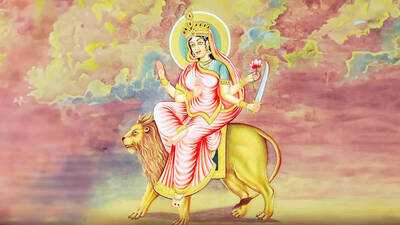
DAY 6 KATYAYANI: The Five Questions Anger Must Answer


Anger enters the body before it enters language.
The heart strikes harder. Breath shortens. The jaw closes and attention narrows towards the threat. The nervous system is performing ancient work: preparing us to confront danger. At its first arrival, anger is neither virtue nor sin. It is energy carrying a message. Yet a body prepared for battle can become a poor courtroom.
The Bhagavad Gita describes the descent in one unforgettable sequence: “From anger comes delusion; from delusion, confusion of memory; from confused memory, the destruction of discernment; and from destroyed discernment, one falls.” This is not merely a condemnation of anger. It is an anatomy of ungoverned emotion. First comes the haze. Then memory loses the whole story. Finally, judgement loses proportion, and one moment creates consequences that may survive for years.
Katyayani stands at the narrow doorway between arousal and action. She is armed, but never possessed by her weapons. She does not extinguish anger. She asks it to kneel before dharma.
In the Rigvedic Devi Sukta, the Mother declares, “I stretch the bow for Rudra.” A drawn bow is concentrated power. The tension of its string is not weakness; it is mastery. Anyone can release an arrow. Wisdom knows whether to release it, when to release it and where it must never be aimed.
Contemporary psychology calls the precise naming of an emotion affect labelling. Saying, “Anger is present because I feel betrayed,” can create more inner distance than shouting, “You have ruined everything.” Naming turns a flood into information. One slow breath does not excuse the wrong; it prevents the body from writing its verdict before conscience has been heard.
Then Katyayani asks five questions.
What exactly happened? Remove the adjectives. Separate the fact from what pride, fear and rumour have added.
What am I protecting? A person, a principle or merely the image I wish others to admire?
What outcome do I seek? Justice repairs a violated order. Revenge wants another person to inherit our pain.
Which weapon fits? In the Durga Saptashati, different deities offer the Goddess different weapons. Not every weapon belongs in every battle. The right response may be evidence, speech, law, distance, forgiveness or firm resistance.
What must remain sacred? Truth, an innocent person’s safety, another person’s dignity and our own humanity must not become casualties of our righteousness.
The Gita then describes freedom from attachment and aversion as the path to prasada, a grace-filled clarity. This is not emotional numbness. Anger may knock at the door, but it is not given the keys.
On the sixth day, place one anger before Katyayani. Feel it without worshipping it. Name it without becoming it. Remove the wish to humiliate. What remains may still be fierce, but it will be clean.
Before drawing the bow, bow to the value you intend to defend. Katyayani does not take the warrior’s fire away. She stops the fire from choosing its own battlefield.
Authored by: Dr Shambo Samrat Samajdar and Dr Shashank R Joshi
The heart strikes harder. Breath shortens. The jaw closes and attention narrows towards the threat. The nervous system is performing ancient work: preparing us to confront danger. At its first arrival, anger is neither virtue nor sin. It is energy carrying a message. Yet a body prepared for battle can become a poor courtroom.
The Bhagavad Gita describes the descent in one unforgettable sequence: “From anger comes delusion; from delusion, confusion of memory; from confused memory, the destruction of discernment; and from destroyed discernment, one falls.” This is not merely a condemnation of anger. It is an anatomy of ungoverned emotion. First comes the haze. Then memory loses the whole story. Finally, judgement loses proportion, and one moment creates consequences that may survive for years.
Katyayani stands at the narrow doorway between arousal and action. She is armed, but never possessed by her weapons. She does not extinguish anger. She asks it to kneel before dharma.
In the Rigvedic Devi Sukta, the Mother declares, “I stretch the bow for Rudra.” A drawn bow is concentrated power. The tension of its string is not weakness; it is mastery. Anyone can release an arrow. Wisdom knows whether to release it, when to release it and where it must never be aimed.
Contemporary psychology calls the precise naming of an emotion affect labelling. Saying, “Anger is present because I feel betrayed,” can create more inner distance than shouting, “You have ruined everything.” Naming turns a flood into information. One slow breath does not excuse the wrong; it prevents the body from writing its verdict before conscience has been heard.
Then Katyayani asks five questions.
What exactly happened? Remove the adjectives. Separate the fact from what pride, fear and rumour have added.
What am I protecting? A person, a principle or merely the image I wish others to admire?
What outcome do I seek? Justice repairs a violated order. Revenge wants another person to inherit our pain.
Which weapon fits? In the Durga Saptashati, different deities offer the Goddess different weapons. Not every weapon belongs in every battle. The right response may be evidence, speech, law, distance, forgiveness or firm resistance.
What must remain sacred? Truth, an innocent person’s safety, another person’s dignity and our own humanity must not become casualties of our righteousness.
The Gita then describes freedom from attachment and aversion as the path to prasada, a grace-filled clarity. This is not emotional numbness. Anger may knock at the door, but it is not given the keys.
On the sixth day, place one anger before Katyayani. Feel it without worshipping it. Name it without becoming it. Remove the wish to humiliate. What remains may still be fierce, but it will be clean.
Before drawing the bow, bow to the value you intend to defend. Katyayani does not take the warrior’s fire away. She stops the fire from choosing its own battlefield.
Authored by: Dr Shambo Samrat Samajdar and Dr Shashank R Joshi
Next Story