
10 Traditional Desserts Made With Rice You Should Try

Rice is one of the most widely eaten foods in the world, but it is not limited to savoury meals. In many cultures, rice has also become the base for comforting puddings, sweet cakes, festive treats and creamy desserts. Some are cooked slowly with milk, while others are steamed, baked or wrapped in leaves.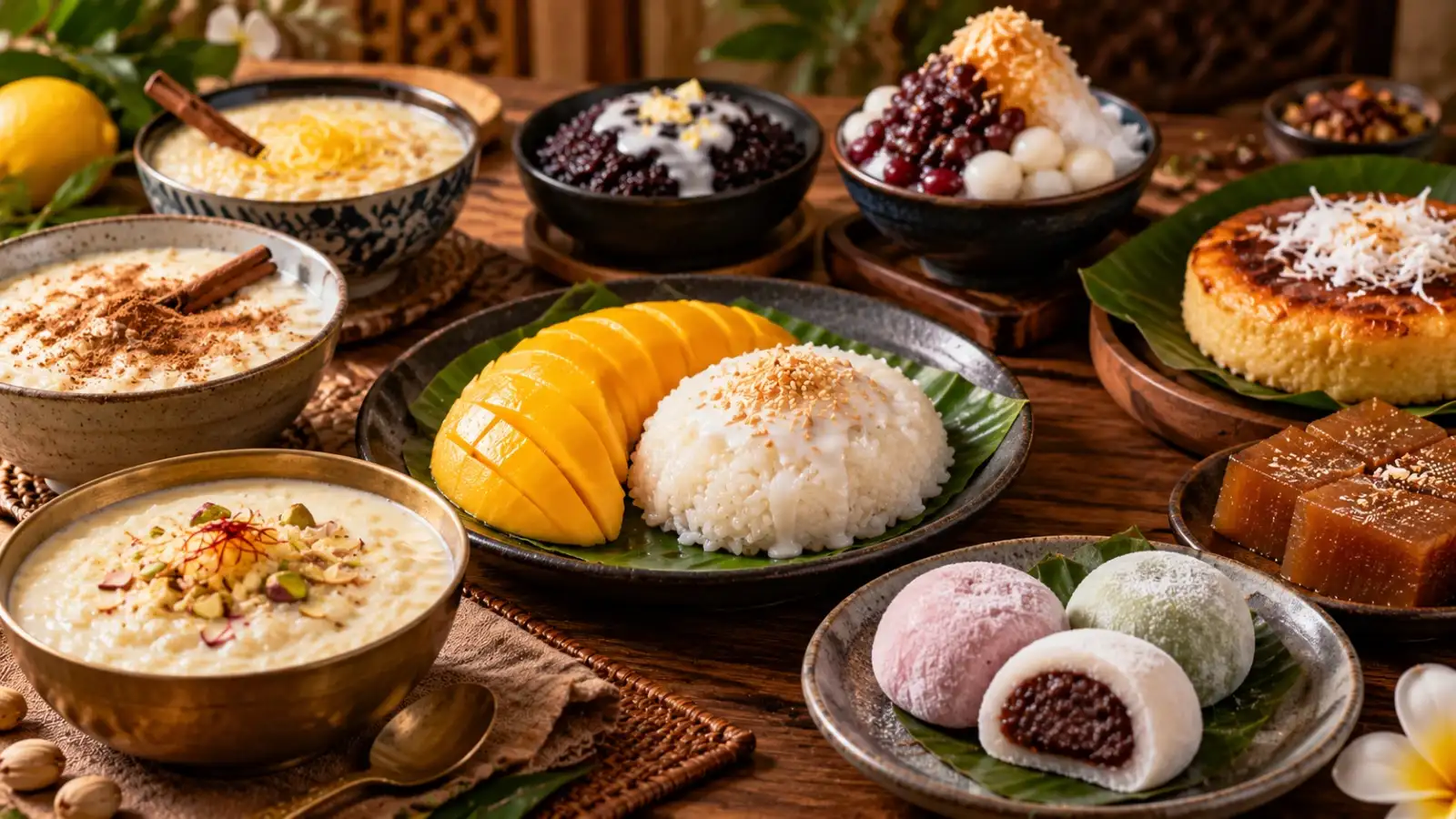
What makes traditional rice desserts particularly interesting is how differently countries use the same basic ingredient. Sugar, coconut, spices, fruit, nuts and dairy products can completely change the taste and texture. From creamy Indian kheer to Japan's delicate mochi, these desserts show just how versatile rice can be.
Kheer is commonly prepared during festivals, celebrations and family gatherings. Some regional versions use jaggery instead of refined sugar, while others include ingredients such as coconut or condensed milk. Its simple ingredients make it easy to prepare, but slow cooking gives it a rich texture.
Modern mochi comes in many flavours, but traditional versions may contain sweet red bean paste. The chewy texture is what makes this Japanese dessert especially distinctive. Mochi is also closely associated with Japanese celebrations and New Year traditions.
The dessert is usually enjoyed chilled, giving it a smooth and creamy texture. It is a good example of how a few everyday ingredients can become a comforting traditional dessert with a distinctive Mediterranean character.
Recipes vary considerably from one country to another. Some versions are thick and creamy, while others are lighter. In some places, condensed milk or additional spices are used. It is often served cold, although warm versions are also popular.
The rice is cooked until soft and sticky, then mixed with sweetened coconut milk. Fresh mango provides a juicy contrast to the rich rice. Sesame seeds or crispy mung beans may be added for texture. The dessert is especially popular when mangoes are in season.
Depending on the recipe, bibingka can contain coconut milk, sugar, eggs and butter. It may be topped with grated coconut or salted egg. Its soft centre and slightly smoky, toasted character make it very different from creamy rice puddings .
Rice cakes can also be added, giving the dessert a chewy texture alongside the soft ice. While modern patbingsu may include fruit, ice cream and colourful toppings, the traditional combination of shaved ice, sweet beans and rice cakes remains an important part of its identity.
Coconut milk is often used to add richness, while palm sugar provides sweetness. The deep colour of the rice gives the dessert a striking appearance, while its slightly nutty flavour makes it different from ordinary white rice pudding.
Niangao can be sweet and chewy, with recipes varying by region. It is often steamed and may later be sliced and pan-fried. The texture is quite dense and sticky, making it very different from soft rice puddings.
Depending on the region, jaggery, cashews, raisins and coconut may be added. Payasam is especially associated with festivals, temple celebrations and important occasions in South India. It is often served as part of a larger traditional meal rather than eaten as an everyday dessert.
Another reason rice appears in so many traditional desserts is its availability. In countries where rice has long been an important staple, cooks naturally found ways to use it beyond the main meal. Over generations, simple combinations of rice and local ingredients became dishes connected with festivals, family traditions and regional identity.
These desserts also show how much food culture can vary around the world. The same basic grain can become a creamy pudding in India, a chewy cake in China, a delicate sweet in Japan or a coconut-rich treat in Thailand.
Whether you prefer creamy rice pudding, chewy mochi, tropical mango sticky rice or a festive rice cake, these desserts offer an easy way to explore food traditions from different parts of the world. They also prove that some of the most interesting global desserts begin with ingredients that have been sitting in kitchens for generations.
What makes traditional rice desserts particularly interesting is how differently countries use the same basic ingredient. Sugar, coconut, spices, fruit, nuts and dairy products can completely change the taste and texture. From creamy Indian kheer to Japan's delicate mochi, these desserts show just how versatile rice can be.
1. Kheer, India
Kheer is one of the best-known traditional rice desserts from India. It is usually made by slowly cooking rice with milk and sugar until the mixture becomes creamy. Cardamom is often added for fragrance, while almonds, pistachios, cashews, raisins or saffron can be used as toppings.Kheer is commonly prepared during festivals, celebrations and family gatherings. Some regional versions use jaggery instead of refined sugar, while others include ingredients such as coconut or condensed milk. Its simple ingredients make it easy to prepare, but slow cooking gives it a rich texture.
2. Mochi, Japan
Mochi is a famous Japanese rice dessert made from glutinous rice. Traditionally, the cooked rice is pounded until it becomes smooth, sticky and stretchy. The resulting dough can be shaped into small pieces and filled or coated in different ways.Modern mochi comes in many flavours, but traditional versions may contain sweet red bean paste. The chewy texture is what makes this Japanese dessert especially distinctive. Mochi is also closely associated with Japanese celebrations and New Year traditions.
3. Rizogalo, Greece
Rizogalo is a Greek rice pudding that combines rice, milk and sugar with warming spices. Cinnamon is particularly important and may be sprinkled over the top before serving.The dessert is usually enjoyed chilled, giving it a smooth and creamy texture. It is a good example of how a few everyday ingredients can become a comforting traditional dessert with a distinctive Mediterranean character.
4. Arroz con Leche, Spain and Latin America
Arroz con leche translates simply as rice with milk and is a much-loved dessert across Spain and many parts of Latin America. Rice is gently cooked with milk and sugar, often with cinnamon and lemon or orange peel.Recipes vary considerably from one country to another. Some versions are thick and creamy, while others are lighter. In some places, condensed milk or additional spices are used. It is often served cold, although warm versions are also popular.
5. Sticky Rice With Mango, Thailand
Thailand's mango sticky rice is one of the world's most recognisable rice-based desserts. It combines sweet glutinous rice with ripe mango and coconut milk.The rice is cooked until soft and sticky, then mixed with sweetened coconut milk. Fresh mango provides a juicy contrast to the rich rice. Sesame seeds or crispy mung beans may be added for texture. The dessert is especially popular when mangoes are in season.
6. Bibingka, Philippines
Bibingka is a traditional Filipino rice cake with strong links to Christmas celebrations. It is made using rice flour and is traditionally cooked in a distinctive way that gives the cake a lightly toasted surface.Depending on the recipe, bibingka can contain coconut milk, sugar, eggs and butter. It may be topped with grated coconut or salted egg. Its soft centre and slightly smoky, toasted character make it very different from creamy rice puddings .
7. Patbingsu, South Korea
Patbingsu is a Korean shaved ice dessert that has evolved over time. Traditional versions feature finely shaved ice topped with sweet red beans, known as pat, along with other simple ingredients.Rice cakes can also be added, giving the dessert a chewy texture alongside the soft ice. While modern patbingsu may include fruit, ice cream and colourful toppings, the traditional combination of shaved ice, sweet beans and rice cakes remains an important part of its identity.
8. Black Sticky Rice Pudding, Southeast Asia
Black sticky rice pudding is enjoyed in several parts of Southeast Asia, particularly Thailand and neighbouring countries. It is made from dark-coloured glutinous rice that becomes soft and creamy when cooked.Coconut milk is often used to add richness, while palm sugar provides sweetness. The deep colour of the rice gives the dessert a striking appearance, while its slightly nutty flavour makes it different from ordinary white rice pudding.
9. Sweet Rice Cake, China
Rice has been used in Chinese desserts for centuries, and many traditional sweets are made with glutinous rice flour. One example is niangao, a sticky rice cake traditionally associated with Chinese New Year.Niangao can be sweet and chewy, with recipes varying by region. It is often steamed and may later be sliced and pan-fried. The texture is quite dense and sticky, making it very different from soft rice puddings.
10. Payasam, South India
Payasam is a broad family of traditional Indian desserts, and several versions are made with rice. Rice payasam is cooked with milk or coconut milk, sweetener and aromatic ingredients such as cardamom.Depending on the region, jaggery, cashews, raisins and coconut may be added. Payasam is especially associated with festivals, temple celebrations and important occasions in South India. It is often served as part of a larger traditional meal rather than eaten as an everyday dessert.
Why Rice Works So Well in Traditional Desserts
Rice has several qualities that make it ideal for sweet dishes. When cooked slowly with milk or coconut milk, it can absorb flavours and create a naturally creamy texture. Glutinous rice, meanwhile, becomes sticky and chewy, making it useful for cakes, dumplings and other desserts.Another reason rice appears in so many traditional desserts is its availability. In countries where rice has long been an important staple, cooks naturally found ways to use it beyond the main meal. Over generations, simple combinations of rice and local ingredients became dishes connected with festivals, family traditions and regional identity.
These desserts also show how much food culture can vary around the world. The same basic grain can become a creamy pudding in India, a chewy cake in China, a delicate sweet in Japan or a coconut-rich treat in Thailand.
A World of Rice Desserts
Traditional rice desserts are a reminder that familiar ingredients do not have to be boring. With milk, coconut, spices, fruit or sugar, rice can take on completely different flavours and textures.Whether you prefer creamy rice pudding, chewy mochi, tropical mango sticky rice or a festive rice cake, these desserts offer an easy way to explore food traditions from different parts of the world. They also prove that some of the most interesting global desserts begin with ingredients that have been sitting in kitchens for generations.
Next Story