
How to Grow Desert Rose: Sunlight, Watering and Potting Tips

The desert rose, scientifically known as Adenium obesum, is a popular ornamental plant recognised for its unusual appearance. It has a thick, swollen stem, attractive foliage and trumpet-shaped flowers in shades of pink, red and white.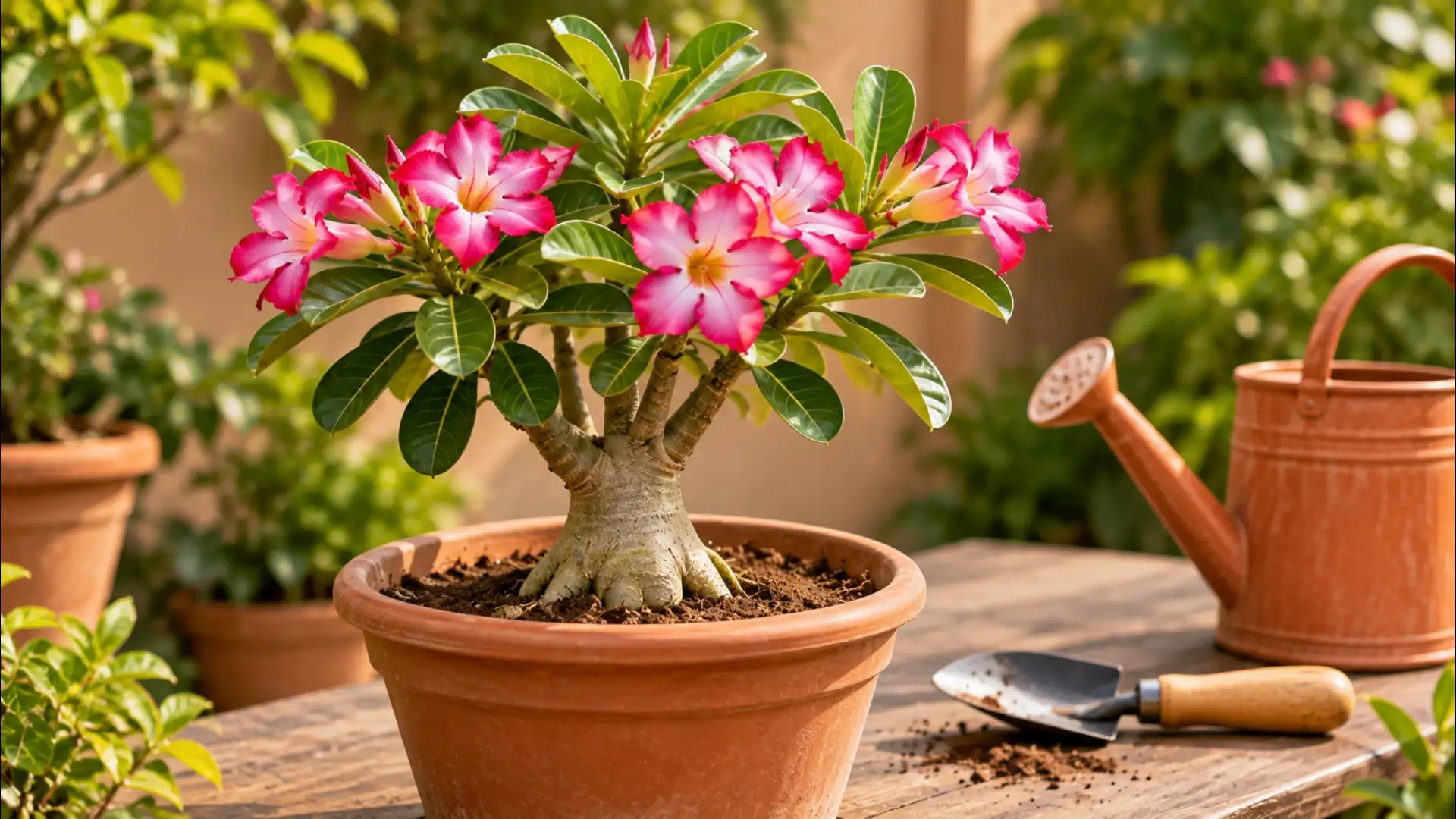
Unlike many flowering plants that require frequent watering, adenium is a succulent that stores water in its thickened stem. This makes it suitable for gardeners who want an attractive plant for a sunny balcony or outdoor space.
With the right container and growing conditions, adenium can become an interesting feature of a home garden.
Choose a sunny balcony, terrace or outdoor area where the plant can receive several hours of direct sunlight.
The University of Florida's IFAS Extension recommends at least six hours of bright light daily for flowering.
If a newly purchased plant has been kept indoors or in a shaded nursery, gradually introduce it to stronger sunlight rather than moving it directly into intense exposure.
Choose a sturdy pot with multiple drainage holes. A container that is wider than it is deep can be useful because the plant's swollen base needs room to develop.
Terracotta pots are one option because their porous material allows moisture to evaporate through the sides.
Avoid choosing an excessively large container for a small plant. The growing medium should dry appropriately between watering sessions.
Adenium should not be planted in heavy soil that remains wet for long periods.
A suitable succulent growing medium can include coarse sand, perlite and a quality potting base.
The mixture should allow water to pass through easily while providing enough support for the plant.
Fill the pot loosely and avoid compressing the growing medium excessively around the roots.
During active growth in warmer weather, water the plant thoroughly and allow excess water to drain. Wait until the growing medium has dried appropriately before watering again.
During cooler periods, growth may slow down and watering requirements can decrease.
Avoid leaving water collected in the pot's outer tray. Adenium prefers conditions that are not persistently wet.
During its active growing period, a fertiliser suitable for flowering succulents can be used according to the manufacturer's instructions.
Avoid excessive feeding. A balanced approach is preferable to repeatedly applying concentrated fertiliser.
Pruning can also help maintain the plant's shape and encourage branching. Use clean gardening tools and make careful cuts when the plant is actively growing.
Wear gardening gloves while pruning or handling damaged stems. Keep the plant away from young children and pets, and wash your hands after gardening.
The North Carolina State University Extension Plant Toolbox identifies the plant's sap as poisonous.
Its unusual shape makes it different from conventional flowering balcony plants.
With plenty of sunlight, suitable soil and careful watering, adenium can become a long-lasting ornamental feature in a home garden.
Disclaimer: This article is intended for general information only. Desert rose (Adenium) produces sap that can be toxic to humans and pets if ingested or handled improperly. Wear gloves when handling or pruning the plant and keep it away from children and pets. NewsPoint will not be responsible for any adverse effects arising from the use or handling of this plant.
Unlike many flowering plants that require frequent watering, adenium is a succulent that stores water in its thickened stem. This makes it suitable for gardeners who want an attractive plant for a sunny balcony or outdoor space.
With the right container and growing conditions, adenium can become an interesting feature of a home garden.
Choose a sunny location
Adenium requires plenty of bright light to grow well and produce flowers.Choose a sunny balcony, terrace or outdoor area where the plant can receive several hours of direct sunlight.
The University of Florida's IFAS Extension recommends at least six hours of bright light daily for flowering.
If a newly purchased plant has been kept indoors or in a shaded nursery, gradually introduce it to stronger sunlight rather than moving it directly into intense exposure.
Select the right pot
Adenium is well suited to container gardening.Choose a sturdy pot with multiple drainage holes. A container that is wider than it is deep can be useful because the plant's swollen base needs room to develop.
Terracotta pots are one option because their porous material allows moisture to evaporate through the sides.
Avoid choosing an excessively large container for a small plant. The growing medium should dry appropriately between watering sessions.
Prepare a well-draining growing medium
The most important consideration when preparing the potting mixture is drainage.Adenium should not be planted in heavy soil that remains wet for long periods.
A suitable succulent growing medium can include coarse sand, perlite and a quality potting base.
The mixture should allow water to pass through easily while providing enough support for the plant.
Fill the pot loosely and avoid compressing the growing medium excessively around the roots.
Water according to the growing season
Watering requirements depend on temperature, sunlight and the plant's growth stage.During active growth in warmer weather, water the plant thoroughly and allow excess water to drain. Wait until the growing medium has dried appropriately before watering again.
During cooler periods, growth may slow down and watering requirements can decrease.
Avoid leaving water collected in the pot's outer tray. Adenium prefers conditions that are not persistently wet.
Encourage flowering
Adequate sunlight, suitable watering and balanced feeding support the plant's growth.During its active growing period, a fertiliser suitable for flowering succulents can be used according to the manufacturer's instructions.
Avoid excessive feeding. A balanced approach is preferable to repeatedly applying concentrated fertiliser.
Pruning can also help maintain the plant's shape and encourage branching. Use clean gardening tools and make careful cuts when the plant is actively growing.
You may also like
- In 2013, she joined Nvidia as CFO; 13 years later, she takes over as interim CEO: Meet Colette Kress, who's now leading the AI giant as Jensen Huang steps down
- 7 Vintage-Inspired Shoe Styles Taking Over Fashion in 2026
- Wedding Season Jewellery: Kundan or Meenakari Jhumkas, Which Should You Pick?
- Chhath Puja 2026: 5 Traditional Saree Looks Inspired by Bhojpuri Actresses
A note about handling adenium
Adenium produces milky sap that can be harmful if swallowed or if it comes into contact with sensitive areas.Wear gardening gloves while pruning or handling damaged stems. Keep the plant away from young children and pets, and wash your hands after gardening.
The North Carolina State University Extension Plant Toolbox identifies the plant's sap as poisonous.
Add colour to your balcony garden
Desert rose is particularly attractive when grown in a decorative container where its thick stem and flowers can be appreciated.Its unusual shape makes it different from conventional flowering balcony plants.
With plenty of sunlight, suitable soil and careful watering, adenium can become a long-lasting ornamental feature in a home garden.
Disclaimer: This article is intended for general information only. Desert rose (Adenium) produces sap that can be toxic to humans and pets if ingested or handled improperly. Wear gloves when handling or pruning the plant and keep it away from children and pets. NewsPoint will not be responsible for any adverse effects arising from the use or handling of this plant.






Loving Newspoint? Download the app now
