
Dholavira, Gujarat: What to See Beyond the Ancient Harappan Ruins

On the remote island-like landscape of Khadir Bet in Gujarat's Kutch region, Dholavira offers a fascinating glimpse into one of the world's earliest urban civilisations. The ancient Harappan city flourished thousands of years ago, leaving behind fortified walls, carefully planned streets, reservoirs and structures that reveal how its inhabitants adapted to a dry environment.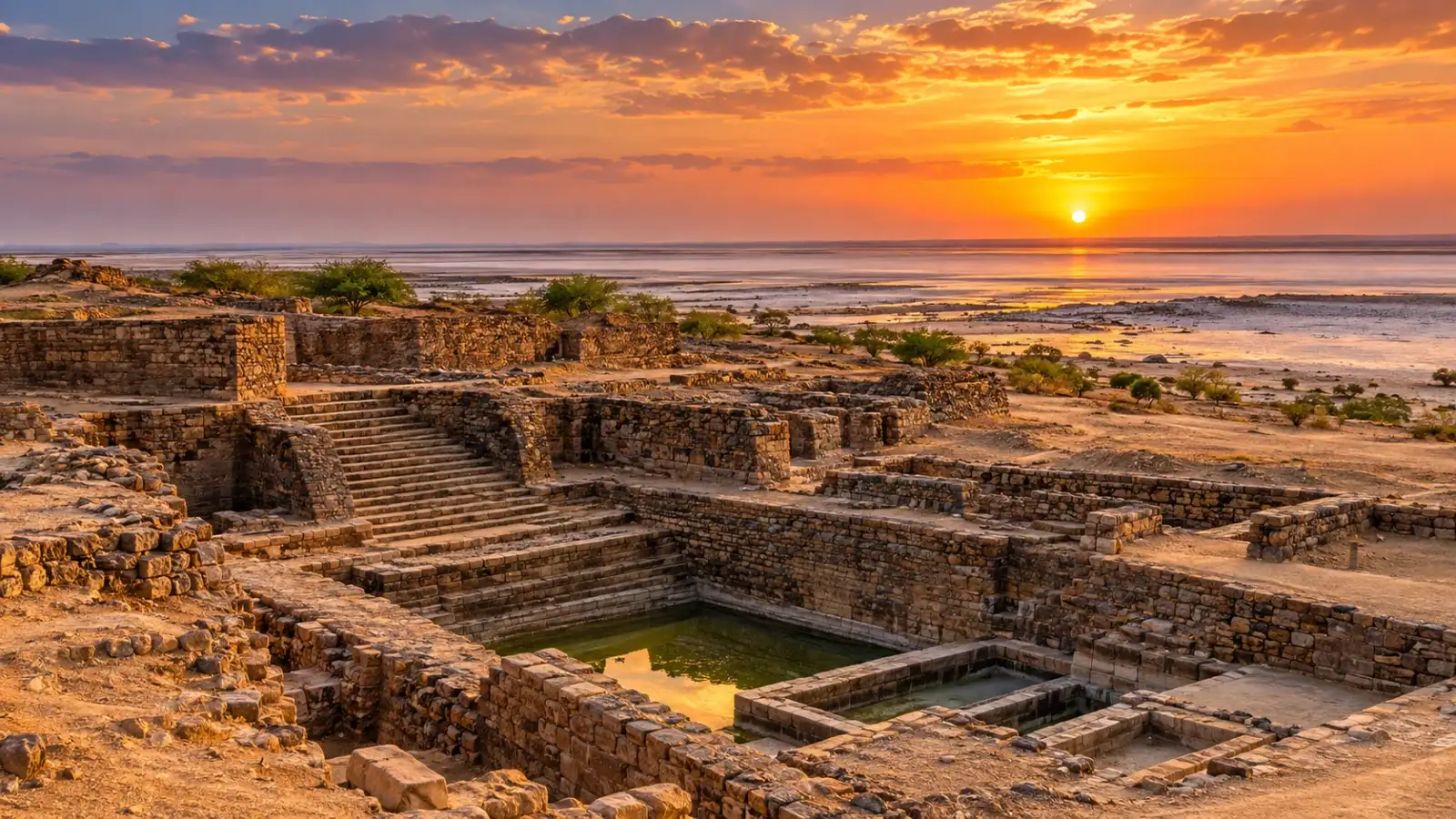
Recognised as a UNESCO World Heritage Site in 2021, Dholavira is an important destination for anyone interested in archaeology and ancient history. Yet a visit here can offer more than a walk through excavated ruins. The nearby salt desert, unusual geological features, fossil discoveries and quiet rural surroundings add another dimension to the experience.
For travellers willing to make the long journey through Kutch, Dholavira offers a combination of history, landscape and isolation that is difficult to find elsewhere in Gujarat.
The Harappans constructed large reservoirs, channels and drainage systems to capture and manage water from seasonal streams and rainfall. These structures demonstrate how carefully the settlement was planned around its environmental limitations.
As you explore the site, look beyond the size of the reservoirs and consider their purpose. Their arrangement reflects an understanding of water flow, storage and the need to make limited resources last.
This is what makes Dholavira particularly interesting. Its achievements were not limited to architecture or trade. The settlement also provides evidence of practical engineering developed in response to a challenging climate.
Findings associated with Harappan life include pottery, tools, ornaments, seals and objects connected with craft production and trade. These discoveries provide clues about the skills, social organisation and commercial relationships of the people who lived here.
The museum can also make the ruins easier to interpret. A stone foundation or an empty reservoir may seem difficult to understand when viewed alone, but archaeological context helps reveal how individual structures fitted into the wider city.
Allow enough time for the displays rather than treating the museum as a brief stop. It is particularly useful for travellers who are visiting an Indus Valley Civilisation site for the first time.
Its significance lies partly in the mystery surrounding the writing system. Researchers have identified many Indus signs, but their language and meaning remain unresolved.
For visitors, the inscription provides a reminder that the Harappans had systems of communication that modern researchers are still trying to understand. The signs cannot simply be translated into familiar words, which makes them an intriguing part of the site's archaeological story.
Look for the interpretation provided at the site to understand the inscription's context. Displays and reconstructions may differ from the original arrangement, so check the accompanying information rather than assuming every representation is an original surviving structure.
The scenery changes with the season. During drier periods, stretches of pale salt-encrusted ground can create an almost uninterrupted horizon. After rainfall, parts of the surrounding landscape may look different, with temporary water bodies and changes in surface conditions.
This setting helps explain why the ancient city is so interesting. Its inhabitants built an organised settlement in a region where managing water and making use of local resources required careful planning.
Take time to appreciate the landscape during the drive, but stop only at safe, permitted locations. Salt flats can be deceptive, and conditions may change with rainfall. Avoid driving onto unfamiliar surfaces or wandering into restricted areas.
For travellers visiting Dholavira, the surrounding journey can be as memorable as the destination itself. Long stretches of road, sparse settlements and vast skies reveal a quieter side of Gujarat that differs from its cities and busy tourist centres.
Photographers may find the route especially appealing in the early morning or late afternoon, when the light creates greater contrast across the landscape.
However, do not assume every section will be accessible in all seasons. Water levels, weather, road conditions and local restrictions can affect travel. Confirm the route before setting out, and avoid stopping in places where vehicles could create a safety hazard.
Fossilised wood offers evidence of ancient environments that differed considerably from today's dry landscape. Such discoveries help researchers understand changes in vegetation, climate and geological conditions over long periods.
This creates an interesting contrast with the Harappan remains. The archaeological site documents human settlement and urban development, while fossils point towards environmental histories that began long before the city existed.
Check local information before including the park in your itinerary, as access, facilities and the condition of nearby roads may vary. Follow site rules and do not collect fossils or geological material.
It can provide a useful change of pace after several hours spent examining archaeological remains. Rather than interpreting walls and reservoirs, visitors can appreciate the scale of the region and its relative isolation.
The experience depends on weather, visibility and the exact route taken. Ask local accommodation providers or guides about current access and suitable visiting times before travelling there.
Carry drinking water and avoid venturing into unfamiliar areas without guidance. Remote viewpoints may have limited facilities, so plan accordingly.
Accommodation providers and local residents can often offer practical information about transport, weather and nearby places of interest. Depending on availability, visitors may also encounter regional food and handicrafts associated with Kutch.
Keep expectations realistic. Dholavira is a remote destination, not a large tourist town with extensive shopping streets, nightlife or a wide choice of restaurants. Its quieter atmosphere is part of the experience, but it also means that visitors should arrange accommodation and meals in advance.
Respect local privacy, ask before photographing people and purchase handicrafts directly from artisans when possible.
Summer temperatures can become severe, while the monsoon season may affect road conditions and access to some surrounding areas. Even during winter, daytime sunlight can be strong, and shade across the ruins is limited.
Start your sightseeing early in the day or visit later in the afternoon, while allowing sufficient time to explore before the site closes. Check the latest opening hours, entry arrangements and any visitor restrictions before travelling.
A practical option is to travel to Dholavira, stay overnight nearby and explore the archaeological site the following morning. This reduces the pressure of completing the visit and returning to Bhuj on the same day.
Public transport options may be limited, making a pre-arranged taxi or private vehicle useful for many travellers. Confirm fuel availability, accommodation, mobile connectivity and road conditions before departure.
Keep some cash available and do not rely entirely on mobile connectivity or digital payments. If you plan to hire a guide, confirm the arrangements in advance.
Most importantly, allow time to understand the site rather than rushing through it. Dholavira is not just a collection of old walls. Its reservoirs, fortifications, streets and craft-related discoveries reveal how an ancient society organised urban life in a difficult environment.
For travellers exploring Gujarat beyond its better-known cities, Dholavira offers an opportunity to connect archaeology with the natural history and landscape of Kutch. A thoughtful visit can make the ancient Harappan city far more meaningful than a quick stop for photographs.
Recognised as a UNESCO World Heritage Site in 2021, Dholavira is an important destination for anyone interested in archaeology and ancient history. Yet a visit here can offer more than a walk through excavated ruins. The nearby salt desert, unusual geological features, fossil discoveries and quiet rural surroundings add another dimension to the experience.
For travellers willing to make the long journey through Kutch, Dholavira offers a combination of history, landscape and isolation that is difficult to find elsewhere in Gujarat.
1. Understand the Ancient Water Management System
One of the most impressive features of Dholavira is its sophisticated approach to water conservation. The city developed in an arid region where water was scarce, making the collection and storage of rainwater essential for survival.The Harappans constructed large reservoirs, channels and drainage systems to capture and manage water from seasonal streams and rainfall. These structures demonstrate how carefully the settlement was planned around its environmental limitations.
As you explore the site, look beyond the size of the reservoirs and consider their purpose. Their arrangement reflects an understanding of water flow, storage and the need to make limited resources last.
This is what makes Dholavira particularly interesting. Its achievements were not limited to architecture or trade. The settlement also provides evidence of practical engineering developed in response to a challenging climate.
2. Visit the Dholavira Site Museum
Before or after exploring the archaeological remains, make time for the site museum, subject to its current opening arrangements. Archaeological objects and interpretative displays can help visitors understand what the excavated structures once represented.Findings associated with Harappan life include pottery, tools, ornaments, seals and objects connected with craft production and trade. These discoveries provide clues about the skills, social organisation and commercial relationships of the people who lived here.
The museum can also make the ruins easier to interpret. A stone foundation or an empty reservoir may seem difficult to understand when viewed alone, but archaeological context helps reveal how individual structures fitted into the wider city.
Allow enough time for the displays rather than treating the museum as a brief stop. It is particularly useful for travellers who are visiting an Indus Valley Civilisation site for the first time.
3. Look for the Famous Harappan Signboard
Dholavira is associated with a remarkable inscription made using signs from the still-undeciphered Indus script. The original arrangement is understood to have been displayed above a gateway, and the inscription is often discussed as one of the earliest known examples of a signboard.Its significance lies partly in the mystery surrounding the writing system. Researchers have identified many Indus signs, but their language and meaning remain unresolved.
For visitors, the inscription provides a reminder that the Harappans had systems of communication that modern researchers are still trying to understand. The signs cannot simply be translated into familiar words, which makes them an intriguing part of the site's archaeological story.
Look for the interpretation provided at the site to understand the inscription's context. Displays and reconstructions may differ from the original arrangement, so check the accompanying information rather than assuming every representation is an original surviving structure.
4. Explore the Great Rann of Kutch Landscape
Dholavira's setting is a major part of its appeal. Khadir Bet lies within the wider Rann of Kutch landscape, where salt flats, dry terrain and open horizons create a striking environment.The scenery changes with the season. During drier periods, stretches of pale salt-encrusted ground can create an almost uninterrupted horizon. After rainfall, parts of the surrounding landscape may look different, with temporary water bodies and changes in surface conditions.
This setting helps explain why the ancient city is so interesting. Its inhabitants built an organised settlement in a region where managing water and making use of local resources required careful planning.
Take time to appreciate the landscape during the drive, but stop only at safe, permitted locations. Salt flats can be deceptive, and conditions may change with rainfall. Avoid driving onto unfamiliar surfaces or wandering into restricted areas.
5. Drive Along the Road to Heaven
The route commonly known as the Road to Heaven is a popular attraction in the wider Kutch region. The road crosses an expansive landscape associated with the Rann and is known for its open views, changing light and unusual sense of scale.For travellers visiting Dholavira, the surrounding journey can be as memorable as the destination itself. Long stretches of road, sparse settlements and vast skies reveal a quieter side of Gujarat that differs from its cities and busy tourist centres.
Photographers may find the route especially appealing in the early morning or late afternoon, when the light creates greater contrast across the landscape.
However, do not assume every section will be accessible in all seasons. Water levels, weather, road conditions and local restrictions can affect travel. Confirm the route before setting out, and avoid stopping in places where vehicles could create a safety hazard.
6. Discover the Region's Fossil Heritage
The wider Dholavira area is also associated with geological and fossil discoveries. A visit to the nearby Wood Fossil Park, if accessible during your trip, can add a natural-history element to an itinerary otherwise focused on archaeology.Fossilised wood offers evidence of ancient environments that differed considerably from today's dry landscape. Such discoveries help researchers understand changes in vegetation, climate and geological conditions over long periods.
This creates an interesting contrast with the Harappan remains. The archaeological site documents human settlement and urban development, while fossils point towards environmental histories that began long before the city existed.
Check local information before including the park in your itinerary, as access, facilities and the condition of nearby roads may vary. Follow site rules and do not collect fossils or geological material.
7. Visit Chhipar Point for Open Desert Views
Chhipar Point is another location sometimes included in local itineraries around Dholavira. Its appeal is the surrounding landscape, with broad views across the arid terrain and the distinctive environment of Kutch.It can provide a useful change of pace after several hours spent examining archaeological remains. Rather than interpreting walls and reservoirs, visitors can appreciate the scale of the region and its relative isolation.
The experience depends on weather, visibility and the exact route taken. Ask local accommodation providers or guides about current access and suitable visiting times before travelling there.
Carry drinking water and avoid venturing into unfamiliar areas without guidance. Remote viewpoints may have limited facilities, so plan accordingly.
8. Experience the Quiet Life of Dholavira Village
The village near the archaeological site offers a glimpse of life in this remote part of Kutch. Although the ancient city is the main attraction, the surrounding settlement helps visitors understand that the region is not simply an empty desert landscape.Accommodation providers and local residents can often offer practical information about transport, weather and nearby places of interest. Depending on availability, visitors may also encounter regional food and handicrafts associated with Kutch.
Keep expectations realistic. Dholavira is a remote destination, not a large tourist town with extensive shopping streets, nightlife or a wide choice of restaurants. Its quieter atmosphere is part of the experience, but it also means that visitors should arrange accommodation and meals in advance.
Respect local privacy, ask before photographing people and purchase handicrafts directly from artisans when possible.
Best Time to Visit Dholavira
October to March is generally the most comfortable period for exploring Dholavira. Cooler weather makes it easier to walk through the open archaeological site and spend time outdoors.Summer temperatures can become severe, while the monsoon season may affect road conditions and access to some surrounding areas. Even during winter, daytime sunlight can be strong, and shade across the ruins is limited.
Start your sightseeing early in the day or visit later in the afternoon, while allowing sufficient time to explore before the site closes. Check the latest opening hours, entry arrangements and any visitor restrictions before travelling.
How to Reach Dholavira
Bhuj is a common starting point for journeys to Dholavira. The road trip is long, so travellers should allow several hours each way and avoid planning an overly crowded itinerary.You may also like
- Overthinking – The Modern Epidemic
- Beyond the Bend: The Divine Truth About Death
- Hair straightening: Why some countries have taken strict action against Keratin hair treatments
- Telangana man saves every Rs 10 coin for 3 years, buys scooter worth Rs 1.23 lakh; showroom staff take 2 hours to count them
- “How will they ever know who's their friend?”: Pitbull reveals why he keeps his children out of the spotlight; what modern parents can learn
A practical option is to travel to Dholavira, stay overnight nearby and explore the archaeological site the following morning. This reduces the pressure of completing the visit and returning to Bhuj on the same day.
Public transport options may be limited, making a pre-arranged taxi or private vehicle useful for many travellers. Confirm fuel availability, accommodation, mobile connectivity and road conditions before departure.
Practical Tips for Planning Your Visit
Wear comfortable walking shoes and carry enough drinking water for several hours outdoors. A hat, sunscreen, sunglasses and light clothing can make the visit more manageable. Carry basic supplies because shops and other facilities may be limited in remote areas.Keep some cash available and do not rely entirely on mobile connectivity or digital payments. If you plan to hire a guide, confirm the arrangements in advance.
Most importantly, allow time to understand the site rather than rushing through it. Dholavira is not just a collection of old walls. Its reservoirs, fortifications, streets and craft-related discoveries reveal how an ancient society organised urban life in a difficult environment.
For travellers exploring Gujarat beyond its better-known cities, Dholavira offers an opportunity to connect archaeology with the natural history and landscape of Kutch. A thoughtful visit can make the ancient Harappan city far more meaningful than a quick stop for photographs.






Loving Newspoint? Download the app now
